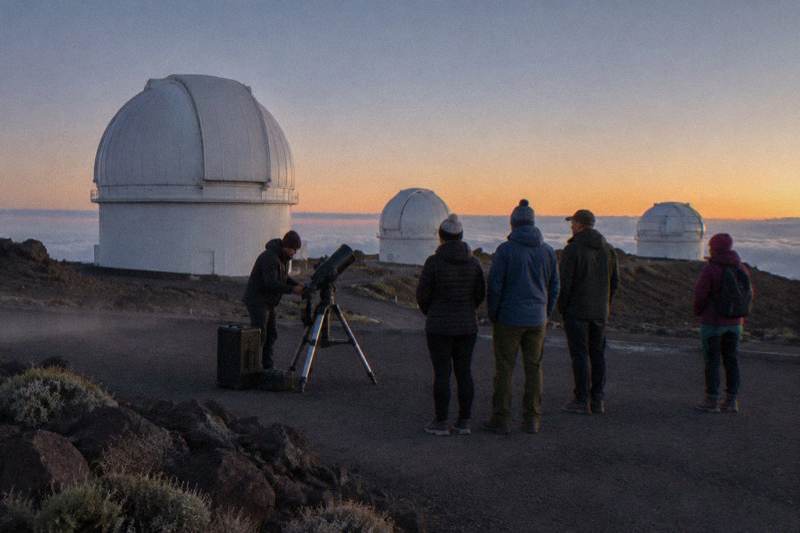
What Is The Best Time To Stargaze At Haleakala?
The best time to stargaze at Haleakala is on a moonless night between late spring and early fall, when the Milky Way arches overhead and the summit sits above the inversion layer. This guide covers month-by-month conditions, moon phases, and the small-group astronomy tours that make the most of the dark skies.
What Is The Best Time To Stargaze At Haleakala?
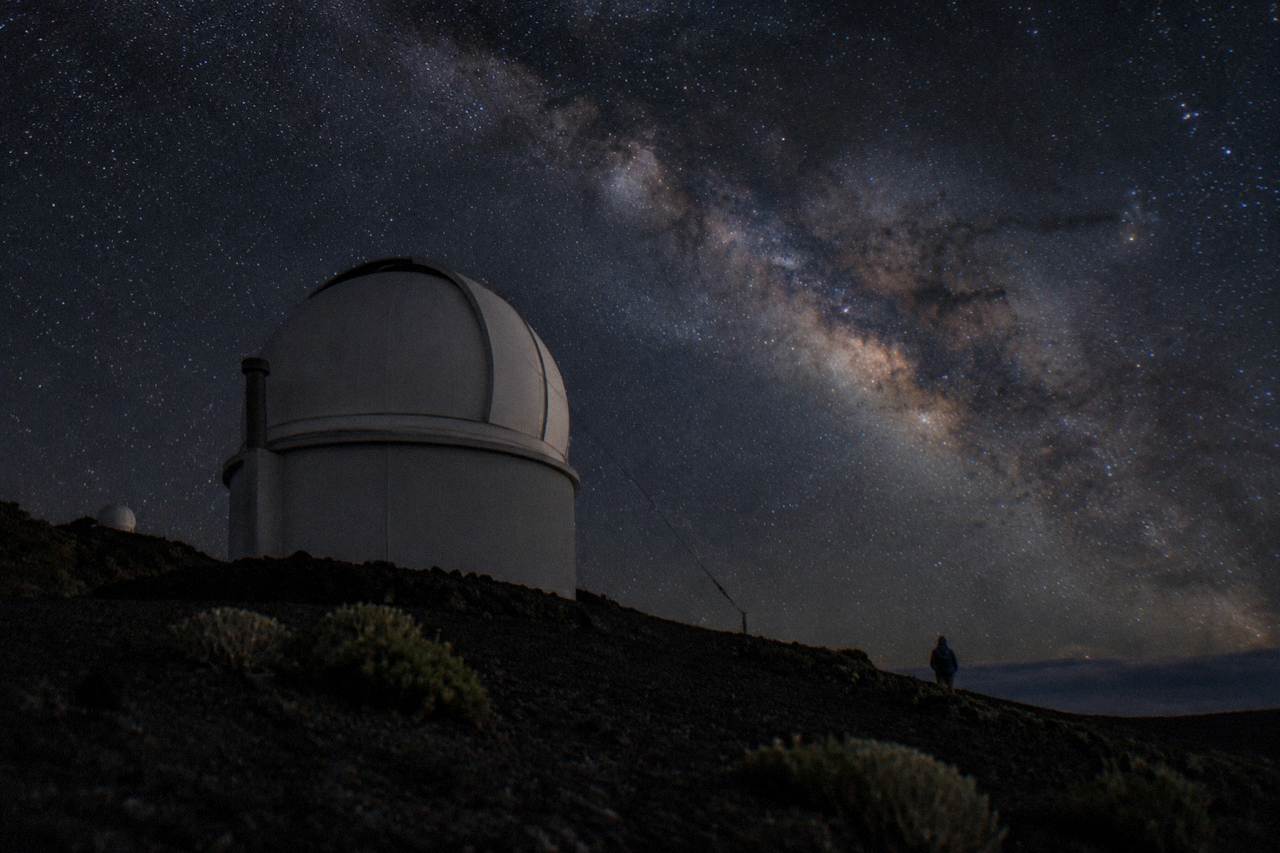
The best time to stargaze at Haleakala is on a moonless night between late May and early September, when the Milky Way’s core is visible and the summit sits above the inversion layer. Target the three nights around the new moon, and arrive in the hour after sunset to let the sky deepen. Even a thin crescent moon washes out fainter objects, so a window of three to four nights around the new moon is the sweet spot.
Timing a stargazing outing at Haleakala is not like picking a beach day. The summit is at 10,023 feet, well above the marine layer that blankets the coast, and on a clear night the Milky Way stretches horizon to horizon. But the mountain’s weather can change in minutes, and a thin crescent moon that looks harmless at sea level will obliterate the fainter nebulae and star clusters that make the summit famous. Understanding the interplay of season, moon phase, and the daily sunset-to-darkness window is what turns a cold, windy wait in a parking lot into a genuinely memorable night sky. For travelers who would rather let someone else handle the timing and the dark drive down the mountain, a private Haleakala tour with custom start times takes the guesswork out of the whole evening.
Commercial stargazing tours, like the small-group Haleakala Sunset and Astronomy Tour, build their schedules around these factors. The operator’s listing shows a 5.0 rating from 57 reviews, and guests routinely mention the quality of the telescope views and the guide’s knowledge of the night sky. Tours of this kind spend about four hours at elevation, so they catch the sunset, the twilight gradient, and the full dark-sky window in a single outing. That is a different experience from driving up on your own with a blanket and a pair of binoculars, and it is worth understanding what each option delivers before you commit.
Why Stargaze At Haleakala?
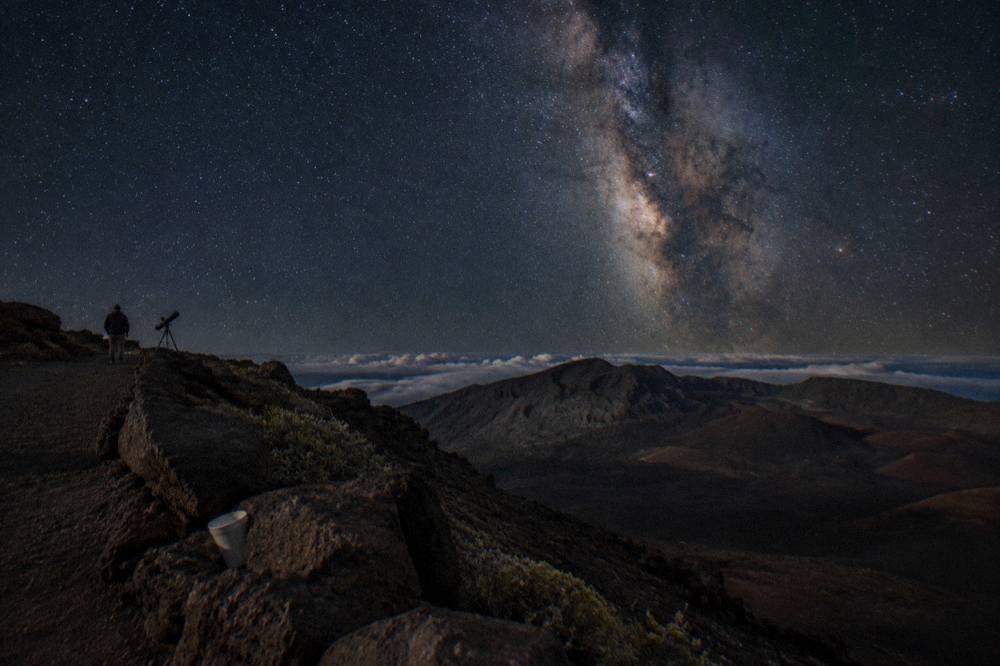
Haleakala’s summit sits above roughly a third of the Earth’s atmosphere and is shielded from Maui’s coastal light dome, and rangers celebrate those dark skies with free night sky programs year-round, including telescope viewing when weather allows or better, revealing the Andromeda Galaxy and the Milky Way’s dust lanes in dry, stable air that minimizes twinkling.
The summit’s elevation is the first reason the stargazing is so good. At 10,023 feet, you are above roughly a third of the atmosphere’s mass, and the air is noticeably thinner and drier than at sea level. The trade-wind inversion, a layer of warm air that caps the moist marine layer, usually sits below the summit, so the peak pokes into a different climate. When the coast is overcast or drizzly, the summit is often clear and cold. That inversion is not a guarantee, but it is reliable enough that the stargazing tours hub on this site consistently points visitors toward the summer and fall months for the highest probability of clear skies. Haleakala National Park Tours has covered the park’s stargazing credentials in detail, and the summit’s conditions are well documented.
The dark-sky designation matters because it is not just a marketing label. Rangers ask night sky visitors to use red lights only and bring warm layers. The road up the mountain has no lights or guard rails, so drive slowly after dark. The visitor center closes at noon, so there are no building lights after dark. The only artificial light you will see is the occasional red headlamp of another stargazer or the faint glow of a ranger’s tablet during a night-sky program. That level of darkness is rare on an island with a growing population, and it is one reason the summit draws astrophotographers from around the world.
A common question is how Haleakala compares to Mauna Kea on the Big Island. Mauna Kea is higher, and its visitor center sits at a higher elevation, which gives it a slight advantage in atmospheric clarity. But Haleakala is far more accessible: the road is paved all the way to the summit, the drive from Kahului takes 45 minutes to an hour, and you do not need a four-wheel-drive vehicle. The summit is also about 30 degrees cooler than the coast, so you will need layers, but you will not face the same altitude-sickness risk that comes with a rapid ascent to a much higher elevation. For most Maui visitors, Haleakala offers the best balance of dark skies and manageable logistics.
What Makes A Good Stargazing Night?
A good stargazing night at Haleakalā demands a moon below the horizon or a thin crescent that sets early, a summit above the inversion layer with minimal cloud cover, and low wind speeds to keep telescopes steady. The clearest skies typically occur from late spring through early fall, when the North Pacific High stabilizes the inversion, but always check the summit forecast before driving up, as conditions can shift rapidly.
The moon is the single biggest variable you can control by choosing your date. A full moon at the summit is bright enough to read a book by, and it washes out everything except the brightest planets and first-magnitude stars. The Milky Way’s core becomes invisible to the naked eye under a moon that is more than about 30 percent illuminated. The new moon dates for the rest of 2026 are October 10, November 9, and December 9, and the three nights on either side of those dates are the prime windows. A waxing crescent that sets before midnight can also work, but you will lose the early-evening dark-sky window.
Cloud cover is harder to predict, but the seasonal pattern is well documented. The summit has a cloud-free line of sight roughly 66 percent of the time overall, one study found, according to a peer-reviewed study of Haleakala’s cloud-free line-of-sight probability. That number drops in the winter, when the inversion is weaker and cold fronts can push cloud decks up to the summit. The NPS weather page warns that rain and wind are common from November through March, and the summit can be socked in for days at a time. The park’s own FAQ states that summit temperatures range from below freezing to highs of 50 to 65 degrees Fahrenheit year-round, and wind chill makes it feel much colder. A clear night in January is possible, but the odds are not in your favor.
Wind is the third factor, especially if you plan to use binoculars or a telescope. The summit is exposed, and the trade winds can gust strongly enough to make it difficult to keep a telescope on target. The small-group astronomy tours, like the one operated by Amazing Maui Stars, use compact, high-quality telescopes that are easier to shield from the wind, and the guides know which pullouts offer natural wind breaks. On your own, the best strategy is to arrive early, park on the leeward side of a building or a cinder cone, and be ready to move if the wind shifts.
Best Months For Stargazing
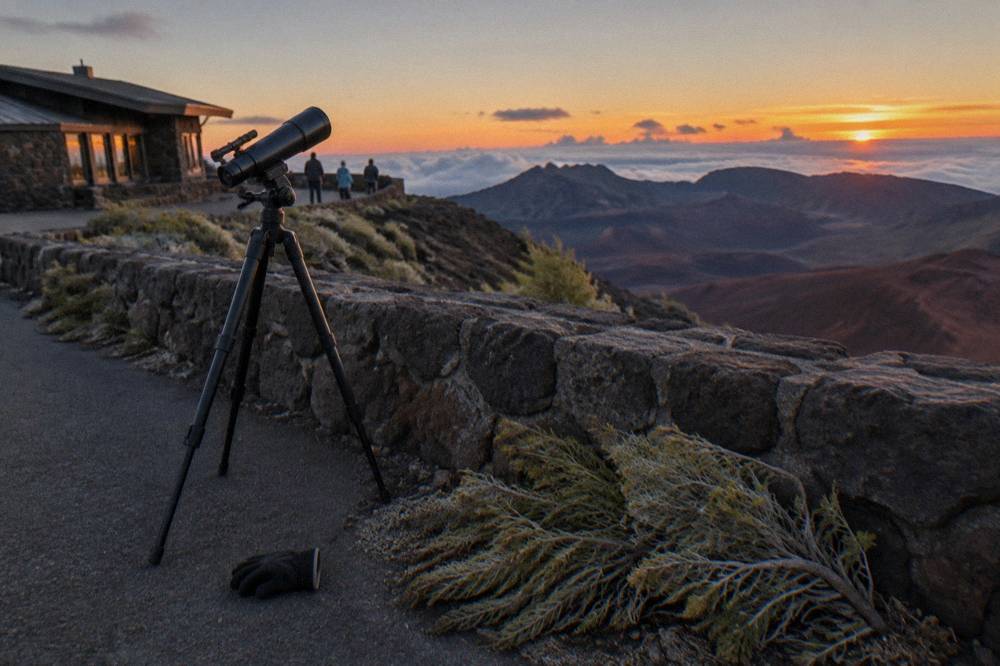
The core stargazing season runs from May through September, with June and July offering the longest nights and the highest probability of cloud-free skies. The Milky Way’s brightest region, the galactic center in Sagittarius, is above the horizon from about March through October, but it reaches its highest point in the sky during the summer months. October and November can still deliver excellent nights, especially around the new moon, though the inversion weakens and summit cloud cover increases.
The table below summarizes what you can expect each month, based on the NPS weather guidance and the seasonal precipitation pattern from the NOAA station at 6,962 feet. Summit temperatures are colder than the station readings, but the precipitation signal is a useful proxy for cloud cover.
| Month | Typical Summit Temperature Range | Precipitation (inches) | Cloud-Free Probability | Milky Way Core Visible |
|---|---|---|---|---|
| January | Below freezing to 61°F | 4.5 | Moderate | No |
| February | Below freezing to 60°F | 4.2 | Moderate | No |
| March | Below freezing to 60°F | 4.7 | Moderate | Yes, low |
| April | Below freezing to 62°F | 3.3 | Moderate to high | Yes, rising |
| May | 35°F to 62°F | 2.9 | High | Yes |
| June | 40°F to 66°F | 0.5 | High | Yes, highest |
| July | 42°F to 66°F | 2.2 | High | Yes |
| August | 42°F to 67°F | 2.7 | High | Yes |
| September | 40°F to 65°F | 2.6 | High | Yes, setting |
| October | 40°F to 64°F | 2.4 | Moderate to high | Yes, early month |
| November | 38°F to 64°F | 5.3 | Moderate | No |
| December | 35°F to 61°F | 6.6 | Low to moderate | No |
The precipitation numbers are for the mid-elevation station, not the summit, but they track the seasonal pattern well. June stands out with an average of only half an inch of rain, which is why many local astrophotographers consider it the single best month. July and August are nearly as dry, and the summer Milky Way is at its most vertical, which makes for dramatic wide-angle photos. September and October are transitional: the air is still dry, but the nights are lengthening and the galactic center is setting earlier each evening. By November, the rainy season is underway and the chances of a clear summit drop noticeably.
Moon Phase And Timing
For the darkest skies at Haleakalā, plan your visit within three days of the new moon, when the moon is absent or a thin crescent that sets early, leaving the summit inky black. Avoid the full moon, which floods the crater with light, washing out all but the brightest stars and reducing naked-eye visibility by several magnitudes.
The table below shows the moon phases for the last quarter of 2026, along with the approximate moonrise and moonset times for the summit on the 15th of each month. Use it to plan a window when the moon is either absent or sets before 9:00 p.m., which gives you several hours of truly dark sky before midnight.
| Month | New Moon Date | First Quarter | Full Moon | Last Quarter | Best Dark Window |
|---|---|---|---|---|---|
| October 2026 | Oct 10 | Oct 17 | Oct 26 | Oct 3 | Oct 7-13 |
| November 2026 | Nov 9 | Nov 16 | Nov 25 | Nov 2 | Nov 6-12 |
| December 2026 | Dec 9 | Dec 16 | Dec 25 | Dec 2 | Dec 6-12 |
The best dark window is the three nights on either side of the new moon, but the exact quality depends on what time the moon sets. In October, the new moon on the 10th means the nights of October 8 through 12 will have no moonlight after about 8:30 p.m. By the 13th, a thin waxing crescent sets around 9:15 p.m., which still leaves several hours of dark sky. The full moon on October 26 will wash out everything except the brightest planets, so avoid that week entirely if stargazing is your priority.
One nuance that catches first-time visitors: the Milky Way’s core is a summer object. By late October, it is setting in the southwest soon after dusk and is gone by 9:00 p.m. In November and December, the core is below the horizon, but the winter sky offers its own rewards: the Pleiades, the Orion Nebula, and the Andromeda Galaxy are all well placed. A guided astronomy tour will pivot to these targets naturally, and the telescope views of the Orion Nebula in particular are stunning. If you are driving up on your own, a star chart app and a pair of 10x50 binoculars will let you find these objects without much trouble.
Sunset To Stargazing: Tours That Combine Both
To pair a Haleakalā summit sunset with stargazing, book a guided tour that handles the drive, provides warm clothing and telescopes, and times the outing from dusk into full darkness. Top choices include Amazing Maui Stars for small-group astronomy, Bike Maui for private sunset dinners, and Polynesian Adventure for coach twilight tours.
The Haleakala Sunset and Astronomy Tour is the most focused on the night sky. It runs with a maximum of eight people, spends about four hours at elevation, and includes a telescope session with a guide who can point out planets, star clusters, and galaxies. The listing carries a 5.0 rating from 57 reviews, and guests consistently note that the small group size means everyone gets time at the eyepiece. The tour does not include hotel pickup, so you meet at a central location, but the operator provides detailed directions and the drive up is part of the experience.
For travelers who want a meal with their sunset, the Haleakala’s Best Sunset Tour with Dinner is a private vehicle tour that includes a sit-down dinner after the sunset. The listing shows a 4.3 rating from 29 reviews and a price from $314 per person. The private format means you set the pace, and the operator can adjust the itinerary based on cloud conditions. The trade-off is a shorter stargazing window, because the dinner takes time that could otherwise be spent under the stars. The coach-based Haleakala Maui Sunset Twilight Tour with Dinner from Polynesian Adventure Tours is a larger-group option, with up to 24 travelers, and includes hotel pickup from specific Maui hotels. Its 4.4 rating from 263 reviews suggests it delivers a reliable experience, and the coach format means you can relax on the winding road without worrying about the drive.
All three of these tours operate under the park’s commercial use authorization, which means they do not need the individual sunrise reservation that self-drive visitors must secure. Sunset and stargazing do not require a reservation at all, but the entrance fee still applies: $30 per private vehicle, good for three days in both districts. If you are driving yourself, pay the fee at the entrance station or the self-pay machine, and be aware that the summit lots can fill up well before sunset. Arriving by 4:00 p.m. is a safe bet, and earlier if you want a spot at the highest lot near Pu‘u ‘Ula‘ula.
The Maui: Haleakala Sunset Tour with Snacks and Photos is a smaller-group alternative that focuses on the photography side of the experience. The operator, MauiHoppin, provides snacks and takes photos of your group against the sunset and the emerging stars. The listing has a 4.4 rating from 32 reviews and a price from $222 per person, making it one of the more affordable sunset tours on the roster. It does not include a formal telescope session, so it is better suited to travelers who want the sunset and the ambiance of the dark summit rather than a deep dive into deep-sky objects.
What To Expect On A Stargazing Tour
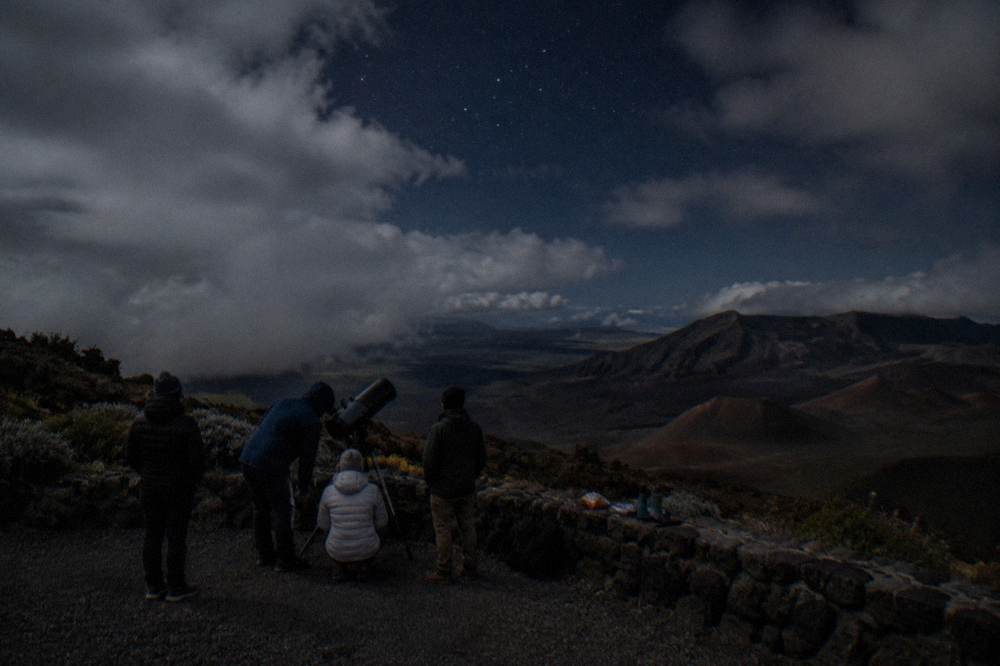
A stargazing tour at Haleakala typically includes a mid-afternoon pickup, a scenic drive to the summit, watching the sunset and alpenglow, then an hour-long telescope session where guides point out planets, star clusters, nebulae, and galaxies while sharing insights into Hawaiian celestial navigation.
The cold is the thing that surprises most people. The summit is about 30 degrees cooler than the coast, and after sunset the temperature drops quickly. Even in July, a night at the summit can feel like a winter evening in the mountains. The tour operators typically provide heavy jackets or windproof layers, but you should still wear long pants, closed-toe shoes, and bring a hat and gloves. The NPS stargazing page recommends dressing as if you were going skiing, and that is not an exaggeration.
Altitude sickness is a real concern at 10,023 feet, especially if you have flown in from sea level that day. Symptoms include headache, nausea, dizziness, and shortness of breath. The NPS hiking page advises pregnant visitors and people with heart or respiratory conditions to consult a doctor before ascending, and the general rule is to descend if symptoms worsen. Most stargazing tours keep the physical activity to a minimum, so you are not hiking at altitude, but the thin air still affects everyone to some degree. Drink plenty of water, avoid alcohol, and take it slow.
The drive down after the tour is in complete darkness, with no streetlights or guardrails. The NPS conditions page warns that the road is winding and narrow, and that emergency help is at least an hour away. If you are driving yourself, use low beams, watch for nēnē (the endangered Hawaiian goose) on the road, and pull over if you feel drowsy. The tour operators handle the driving, which is one of the main reasons travelers choose a guided experience over a self-drive stargazing outing.
If you are already planning a daytime hike in the crater, the Haleakala Crater Hiking Experience from Hike Maui is a natural complement. The seven-hour small-group hike covers the Sliding Sands area and includes a meal, and the listing carries a 4.8 rating from 74 reviews. Pairing a morning hike with an evening stargazing tour makes for a full summit day, but be mindful of the altitude: hiking at high elevation and then staying at 10,000 feet for stargazing is a lot of time at elevation, and you will feel it. The hike alone costs from $208 per person, and you will need to arrange your own transport between the trailhead and the stargazing meeting point.
Common Questions About Stargazing At Haleakala
What Is The Best Time To Stargaze At Haleakala?
The best time is on a moonless night between late May and early September, when the Milky Way is high and the summit is above the inversion layer. Target the three nights around the new moon, and arrive an hour before sunset to let your eyes adjust.
Do I Need A Reservation To Stargaze At Haleakala?
No. The sunrise reservation system applies only from 3:00 a.m. to 7:00 a.m. Sunset and stargazing do not require a reservation. You still need to pay the park entrance fee of $30 per vehicle, which is valid for three days.
Can I Stargaze At Haleakala On My Own?
Yes. The summit parking lots are open 24 hours, and there is no restriction on staying after dark. Bring warm layers, a red flashlight, and a star chart app. Be prepared for temperatures below freezing and wind, and drive carefully on the unlit road.
What Is The Best Month For Stargazing At Haleakala?
June is the driest month, with an average of only half an inch of precipitation at mid-elevation, and the Milky Way’s core is at its highest. July and August are nearly as good, and September offers a balance of clear skies and slightly fewer visitors.
Do I Need A Telescope To Stargaze At Haleakala?
No. On a moonless night, the naked-eye view is spectacular, and a pair of 10x50 binoculars will reveal star clusters and the moons of Jupiter. A guided tour provides telescopes and a knowledgeable guide, which is helpful if you want to see fainter objects like the Ring Nebula or the Whirlpool Galaxy.
Is Stargazing At Haleakala Worth It?
Yes, for anyone willing to dress warmly and plan around the moon. The combination of high elevation, dark skies, and the cultural significance of the summit makes it one of the best stargazing sites in the United States. A guided tour adds the convenience of transport, telescopes, and expert interpretation, which many travelers find worth the cost.