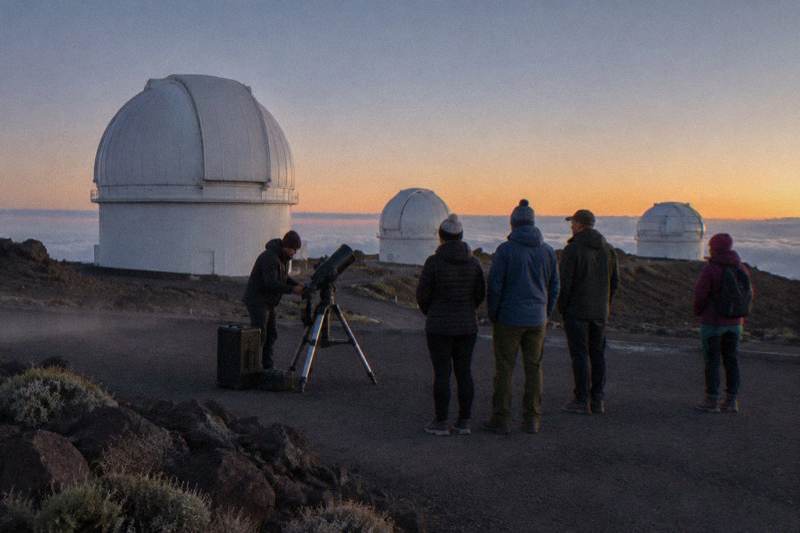
Haleakala Stargazing Tours: Summit Skies After Dark
Haleakala's summit sits above much of the island's cloud layer, and after sunset the dark skies over the crater become one of the most reliable places in Hawaii to see stars, planets and the Milky Way. This guide compares the guided sunset and stargazing tours you can book, what each one includes, and how to plan a night at 10,023 feet.
Short answer
Stargazing at Haleakala needs no reservation: sunset and night viewing are open to anyone who pays the $30 per vehicle entrance fee, valid 3 days. Guided options run from $222 per person for a small-group sunset with snacks to $555 per group for a private sunset tour. The small-group Haleakala Sunset and Astronomy Tour, 5 from 57 reviews, from $245 per person, spends about 4 hours at 10,000 ft.
Haleakala's summit rises to 10,023 ft at Pu'u 'Ula'ula, high enough that the park's own pages describe it as roughly 30 F cooler than the coast and regularly below freezing before dawn. The same elevation that makes sunrise tours cold also puts the summit above much of the moist marine air, which is why the National Park Service runs a dedicated stargazing page and why several operators run guided sunset and astronomy tours there. After the sun goes down, no reservation is needed to stay: the $1 sunrise vehicle reservation applies only to the 3:00 a.m. to 7:00 a.m. window, so sunset and night visitors simply pay the standard entrance fee at the gate.
This guide covers the stargazing side of the park in full: why the summit skies are so dark, what a guided tour adds over a self-driven visit, every sunset and stargazing tour on this site's roster with its printed price and rating, the best months and moon phases to plan around, and the cold-weather preparation the park itself insists on. Every price, duration and rating below comes straight from each operator's live listing or official park pages. If you're still weighing whether the trip up the mountain makes sense for you, our guide on whether stargazing at Haleakala is worth the drive, cold, and cost gives an honest verdict.
Why Is The Haleakala Summit So Good For Stargazing?
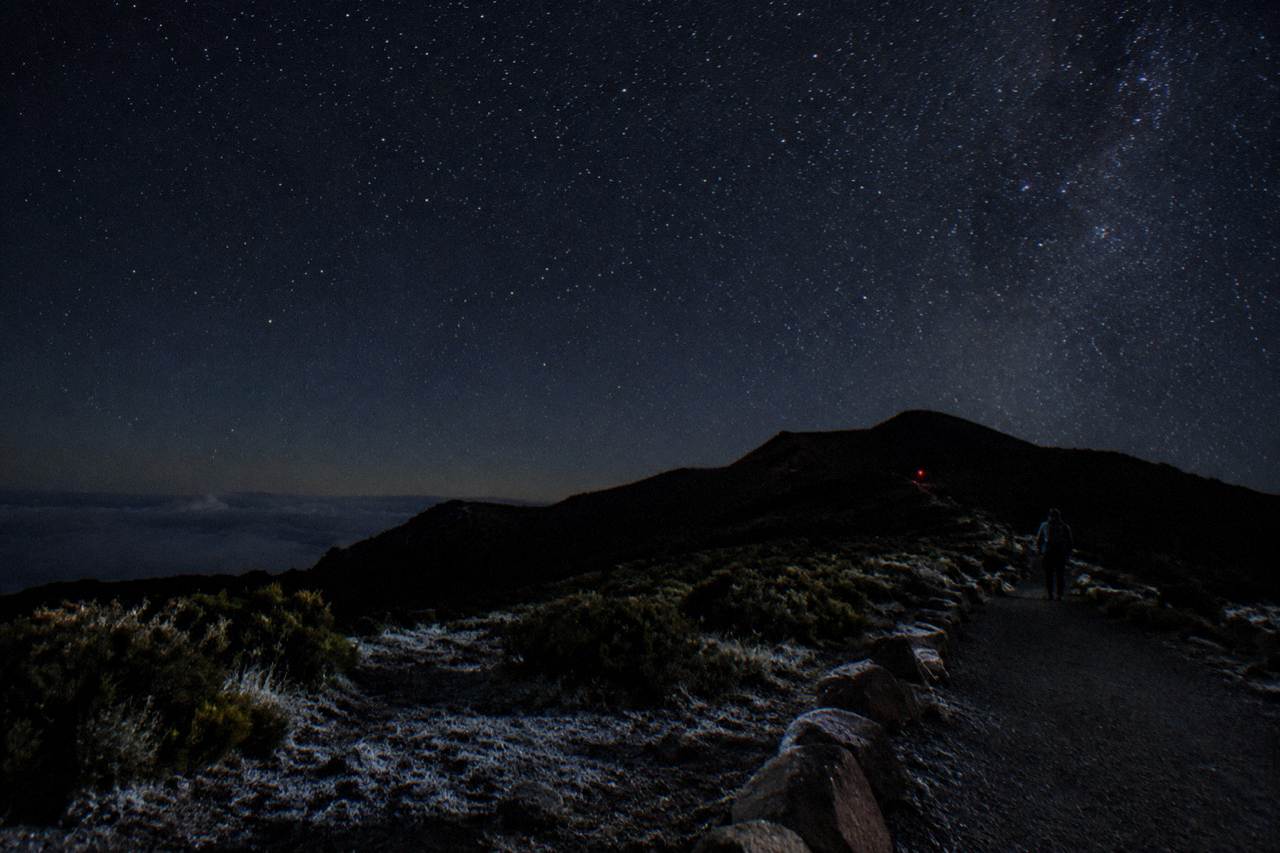
The summit of Haleakala stands 10,023 ft above sea level, high above the clouds and haze that sit below about 7,000 ft. The park's stargazing page points to the dark skies over the summit as a main draw, and there are no streetlights between the entrance gate and the top. The trade-off is cold: the park states summit temperatures run at least 20 degrees colder than sea level, and often below freezing after dusk. If you're weighing both island summits before committing, our guide to Mauna Kea versus Haleakala compares the two on height, weather, and tour access.
The Summit District begins at 7,000 ft, and the drive from the entrance station to the top takes about 30 minutes up 11 miles of paved road. There are no lights and no guard rails along much of that road, which is one reason the park's stargazing guidance tells visitors to turn off white lights and use red lights only, and one reason many travelers hand the driving to a tour. The park's own stargazing page also asks visitors to bring something to sit on and snacks, and notes that overnight stays are allowed only in designated campgrounds.
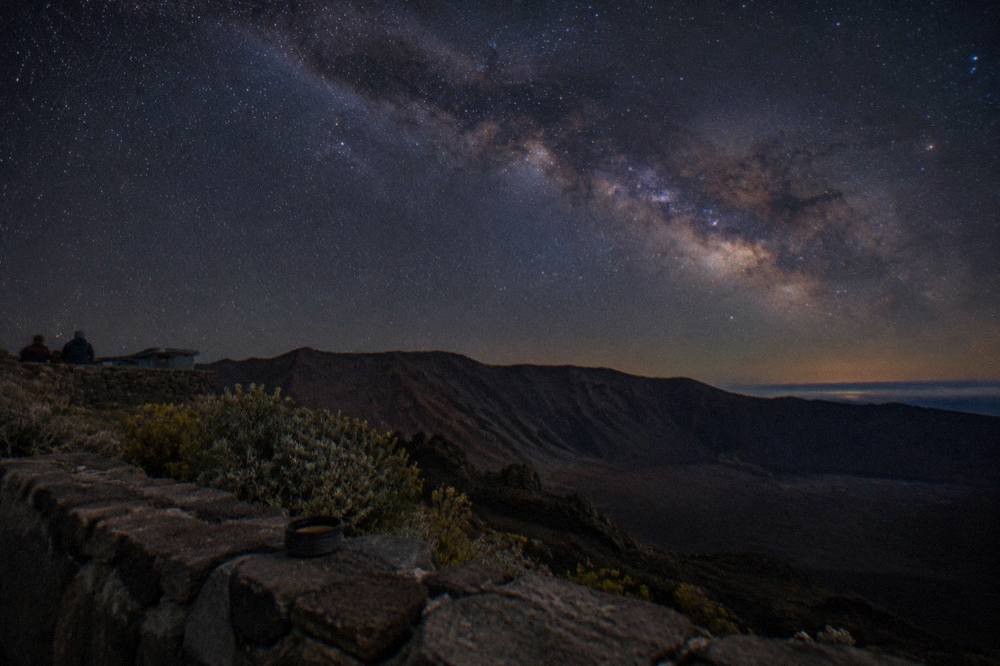
What the darkness buys you is real. Light pollution on Maui is concentrated near the coast, and from the summit the nearest significant glow is far below and to the west. On a clear night the Milky Way is visible to the naked eye, and the park's stargazing guidance is written for exactly that experience. Weather decides, though: the park promises nothing, clouds move in fast at this elevation, and a summit evening can go from clear to socked in within an hour. The park's stargazing page and its weather page are the two official references worth reading before any summit night, guided or not.
What Does A Stargazing Tour At Haleakala Actually Include?
A guided stargazing tour typically bundles four things a self-driven visit does not: a driver for the dark, winding summit road, a guide who can read the sky and the weather, equipment such as telescopes or binoculars on astronomy-focused departures, and often food. Inclusions here range from a full dinner on the coach tours to about 4 hours of guided time at 10,000 ft. Prices run $222 to $314 per person, or $555 per group.
The core value is the drive. The road up is unlit, frequently wet and cold at night, and the park states emergency help is at least an hour away and there is no gas or food inside the park. A tour removes that entirely: the coach tours pick up at specific Maui hotels, the private tours pick up at your hotel or rental on request, and the small-group astronomy tour lists no hotel pickup: guests meet in Makawao, then head up to the summit.
Here is how the guided options compare with driving yourself, built only from what the listings and the park state:
| What you need | Self-driven night visit | Guided sunset or stargazing tour |
|---|---|---|
| Drive up in the dark | You drive the unlit summit road | Operator drives; several tours include hotel pickup |
| Entrance fee | $30 per vehicle, 3 days, paid at the gate | Included on the tours whose listings state admission included |
| Sky interpretation | Your own knowledge | Guide or astronomer on astronomy departures |
| Food | None in the park; bring your own | Dinner on the two dinner tours; snacks on the small-group sunset |
| Weather call | You decide whether to go | Operator decides; trips can be rescheduled or cut short |
The trade is price and flexibility. A vehicle pays $30 total to self-drive, against guided prices that start at $222 per person and reach $555 at the private end of the range. What the money buys is the dark-road drive, the guide and, on the dinner tours, a meal. One guest on the Twilight Sunset with Dinner tour put the driving argument plainly: "Amazing experience and totally worth it. Glad we did the tour bus and didn't drive ourselves. It got really busy and it's a long drive! Sunset is 1000xs better than sunrise, too!" (Stefanie_R, 5 stars, verbatim traveler review).
If a guided night at the summit sounds like the right fit, these three tours cover the range of formats on the roster:
Which Stargazing And Sunset Tours Can You Book At Haleakala?
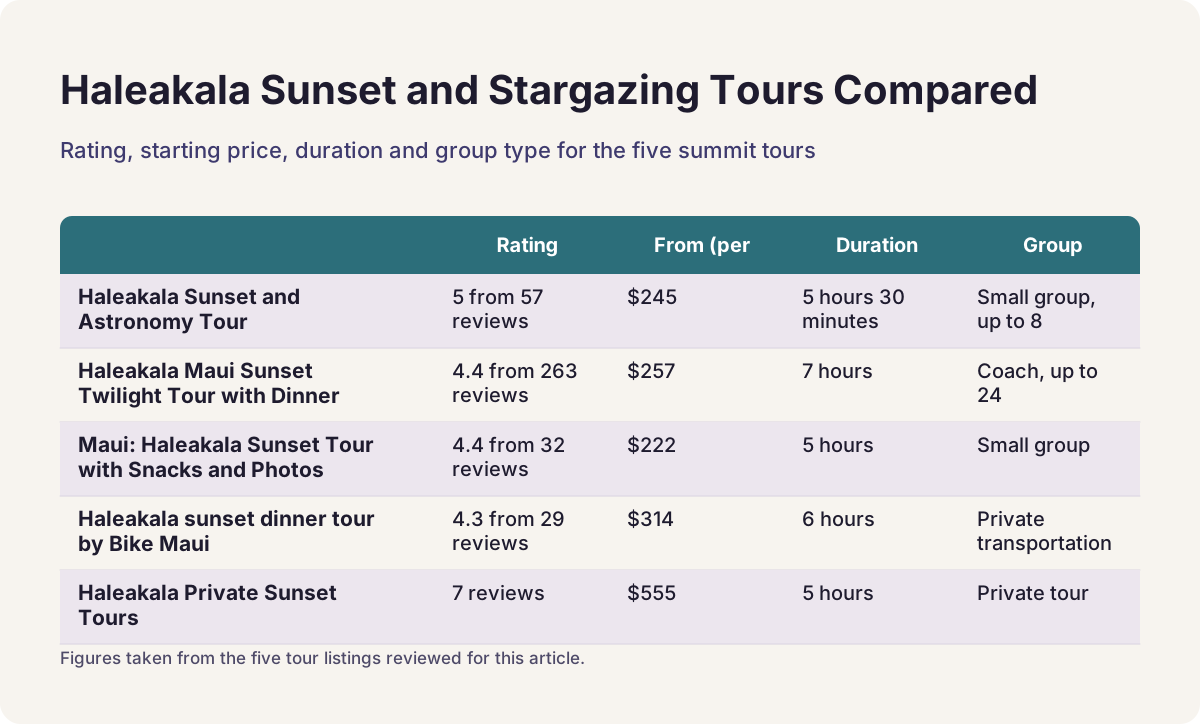
Five listings on this site cover sunset and stargazing at Haleakala: a small-group astronomy tour rated 5 from 57 reviews at from $245 per person, a coach dinner tour rated 4.4 from 263 reviews at from $257, a small-group sunset with snacks rated 4.4 from 32 reviews at from $222, a private sunset dinner at from $314 and a private sunset tour at from $555. Durations run from 5 hours to 7 hours.
The full comparison, exactly as the listings print it:
| Tour | Operator | Rating | From (per person) | Duration | Group |
|---|---|---|---|---|---|
| Haleakala Sunset and Astronomy Tour | Amazing Maui Stars | 5 from 57 reviews | $245 | 5 hours 30 minutes | Small group, up to 8 |
| Haleakala Maui Sunset Twilight Tour with Dinner | Polynesian Adventure Tours | 4.4 from 263 reviews | $257 | 7 hours | Coach, up to 24 |
| Maui: Haleakala Sunset Tour with Snacks and Photos | MauiHoppin | 4.4 from 32 reviews | $222 | 5 hours | Small group |
| Haleakala's Best Sunset Tour with Dinner | Bike Maui AND Haleakala EcoTours | 4.3 from 29 reviews | $314 | 6 hours | Private transportation |
| Haleakala Private Sunset Tours | Aloha Wild Tours | rating 5 across 7 reviews, priced per group | $555 | 5 hours | Private tour |
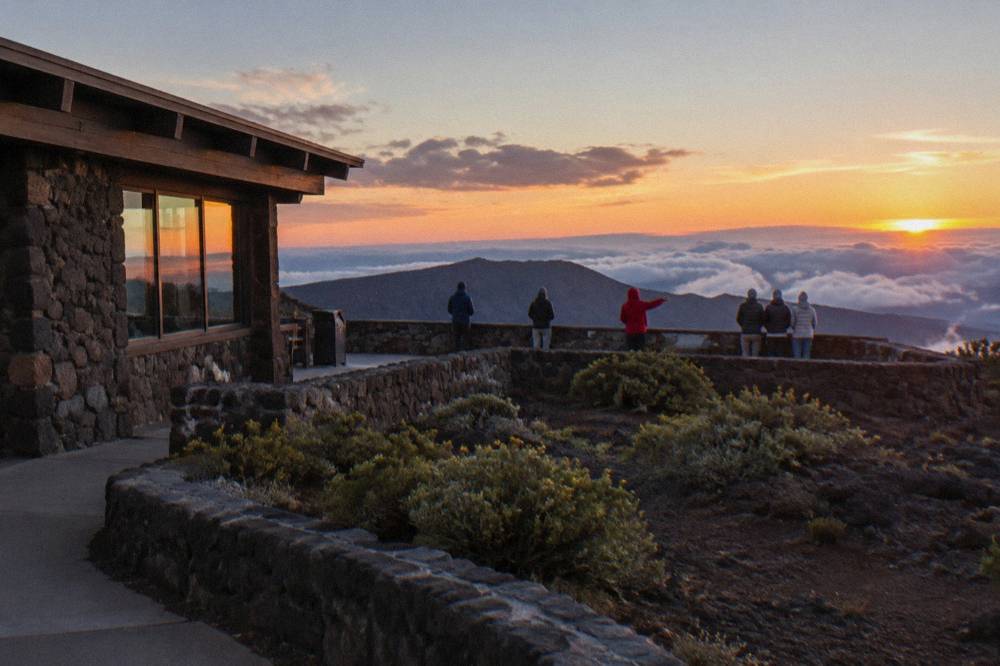
A few distinctions matter when choosing. The Haleakala Sunset and Astronomy Tour is the only listing whose focus is the night sky itself: it spends about 4 hours at 10,000 ft, per its own listing, with up to 8 travellers and no hotel pickup. The Twilight Sunset with Dinner is a coach product, up to 24 travellers, with pickup from specific Maui hotels and a meal included; its listing notes about 1.5 hours inside the park. The two private options trade price for exclusivity, and the MauiHoppin sunset is the budget end of the group format, with the operator paying park entry per its listing.
The related tour on this page, the Haleakala Sunset and Astronomy Tour, is the one to look at first if the stars, not the sunset, are the point of your trip. Its listing describes about 4 hours at 10,000 ft, the longest sustained summit time of any tour on the roster, in a group capped at 8. It lists free cancellation, so read the booking page for the cutoff.
For a broader look at the whole sunset category, including how sunset compares with sunrise, see the sunset and stargazing tours hub, and the honest take in is sunset on Haleakala worth it.
When Is The Best Time To Stargaze At Haleakala?
Plan around three things: the time sunset actually happens, the moon, and the season. Sunset at Haleakala ranges from about 5:45 p.m. in mid December to about 7:09 p.m. in mid July, which sets your arrival time. A new-moon window gives the darkest sky. And the rainy season, November through March per the park's FAQ, brings more cloud risk than the drier summer months.
The clock times below are computed for the 15th of each month, HST, at the summit's latitude, and they set the schedule for any stargazing plan: tours typically stage their summit time around and after these hours.
| Month | Sunset on the 15th | What it means for stargazing |
|---|---|---|
| January | 18:04 | Dark by 6:30 p.m.; cold, rainy-season risk |
| February | 18:23 | Dark by 7:00 p.m.; cloud risk still elevated |
| March | 18:35 | Days lengthening; rainy season tail |
| April | 18:43 | Drier trend begins |
| May | 18:54 | Drier month; comfortable planning window |
| June | 19:06 | Latest sunset; dry, per park rainfall records |
| July | 19:09 | Latest sunset of the year; dry season |
| August | 18:56 | Dry; warm evenings by summit standards |
| September | 18:29 | Dark earlier; a practical shoulder month |
| October | 18:02 | Dark by 6:30 p.m.; a popular stargazing month |
| November | 17:45 | Early dark; rainy season returns |
| December | 17:47 | Earliest practical dark; cold and wet risk |
The moon matters as much as the clouds. Around the new moon, the sky over the crater is as dark as it gets on Maui, and the Milky Way is at its most visible to the naked eye. Around the full moon, the same summit is bright enough to read by, and faint objects wash out. The park's stargazing page does not publish a moon calendar, so check a standard lunar calendar when you pick your date, and if the choice is free, aim for the few nights on either side of a new moon.
One structural point worth knowing: no reservation applies after 7:00 a.m., so a stargazing evening never competes with the sunrise reservation system that trips up so many dawn visitors. If you are weighing the two, the sunrise versus sunset comparison breaks down the trade, and the deep dive on timing is in what is the best time to stargaze at Haleakala.
How Should You Dress And Prepare For A Night At 10,000 Feet?
Dress for freezing temperatures regardless of the month. The park's weather page puts summit temperatures between below freezing and highs of 50 to 65 F year-round, states the summit is about 30 F cooler than the coast, and warns that wind chill and damp make it feel colder. Bring layers, a warm hat, gloves, closed shoes, something waterproof, and snacks and water, since there is no gas or food inside the park.
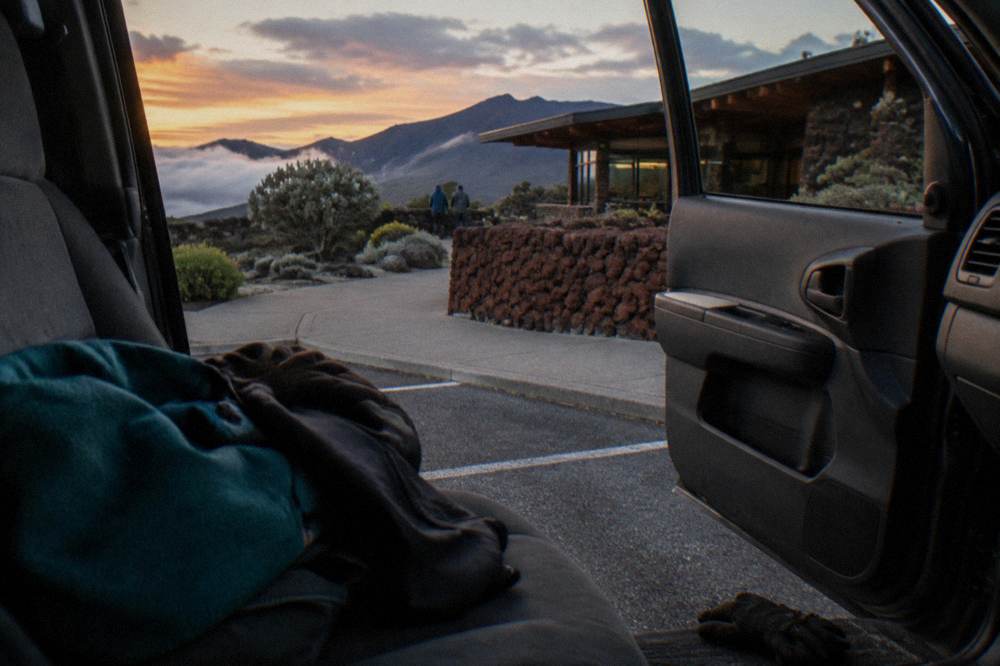
The park's own preparation list is blunt. Its summit district page tells visitors to dress warmly, notes there are no lights and no guard rails on the road after dark, and states that emergency help is at least an hour away. The stargazing page adds two practical items most first-timers skip: something to sit on, since you will stand or sit outside for hours, and a red light rather than a white one, since white light destroys the night vision of everyone around you.
Altitude is the second preparation issue. The hiking page warns that lower oxygen makes exertion harder at this elevation and lists altitude sickness symptoms: nausea, headache, dizziness and shortness of breath. A stargazing evening is far gentler than a crater hike, but pregnant visitors and people with heart or respiratory conditions are advised to consult a doctor before summit trips. There is no cell service in the crater, so do not count on calling for advice from the top.
| Condition | Official figure | What to do about it |
|---|---|---|
| Summit temperature vs coast | About 30 F cooler | Pack winter layers even from a hot beach afternoon |
| Year-round summit range | Below freezing to 50 to 65 F | Base layer, insulating layer, windproof shell |
| Before-dawn and after-dusk conditions | Regularly wet, windy and below freezing | Waterproof outer layer, hat and gloves |
| Food and gas in the park | None | Eat before, carry snacks and water |
| Emergency response time | At least one hour | Go with a guide or a fully prepared vehicle |
| Altitude sickness symptoms | Nausea, headache, dizziness, shortness of breath | Descend if symptoms worsen; consult a doctor if at risk |
If you want the full packing breakdown for a cold summit outing, the guide on Haleakala summit weather covers the month-by-month numbers, and the practical clothing advice in how to dress for Haleakala sunrise applies to sunset hours almost unchanged: the cold after dusk is the same cold.
Can You Stargaze At Haleakala Without A Tour?
Yes, and many people do. Sunset and night viewing need no reservation, the park is open 24 hours, and a private vehicle pays $30 for 3 days of entry to both districts. You drive the summit road yourself, pick any of the overlooks, and stay as long as you like. The trade-offs are the unlit mountain drive, the cold with no warm vehicle to retreat to, and no guide to explain what you are looking at.
The self-driven version is genuinely good, and this site's own budget guide covers it in detail: see free things to do at Haleakala for the no-cost ways to spend an evening at the top. The entrance fee still applies outside fee-free days, and the park's fees page notes that fee-free days, which apply to US citizens and residents only, never waive the sunrise reservation, though that restriction is irrelevant after 7:00 a.m. anyway.
What a tour adds is exactly what the last sections described: the drive, the warmth between viewing windows, the interpretation and, on the dinner tours, a meal. The small-group format suits travelers who want some structure without a coach full of people. The Maui: Haleakala Sunset Tour with Snacks and Photos, from $222 per person, 4.4 from 32 reviews, runs about 5 hours in a small group with the operator paying park entry per its listing, and it lists free cancellation with the cutoff on the booking page.
The honest framing is this: if you are comfortable driving a steep, dark mountain road and you know the sky well, self-driving saves real money. If either of those is not true, the guided options earn their price. The Haleakala National Park Tours homepage lays out every category side by side if you want to see the full roster before deciding.
How Much Does A Stargazing Tour Cost Compared With Going Alone?
Guided sunset and stargazing tours on this roster run $222 to $314 per person, or $555 per group, against $30 per vehicle for a self-driven visit, valid 3 days. The small-group astronomy tour is from $245 per person, the coach dinner tour from $257, the private dinner tour from $314 and the private sunset from $555. Every figure is the listing's printed price and varies by date and group size.
Here is the cost picture by format, using only printed prices:
| Format | Tour | From (per person) | Extra costs to check |
|---|---|---|---|
| Small-group astronomy | Haleakala Sunset and Astronomy Tour | $245 | No hotel pickup; arrange your own transport to the meeting point |
| Coach with dinner | Haleakala Maui Sunset Twilight Tour with Dinner | $257 | Gratuities typically extra; read the listing |
| Small group with snacks | Maui: Haleakala Sunset Tour with Snacks and Photos | $222 | Park entry paid by operator per the listing |
| Private with dinner | Haleakala's Best Sunset Tour with Dinner | $314 | Pickup from major hotels on request, or meet at Kahului Park & Ride |
| Private sunset | Haleakala Private Sunset Tours | $555 | Hotel or rental pickup on request, private |
| Self-driven | Your own vehicle | $30 per vehicle, 3 days | Snacks, warm gear, and the dark drive are on you |
Two notes on reading those numbers. First, several listings state park admission is included, which matters because the fee is $30 per vehicle or $15 per person on foot or bicycle; the roster rows above mark which tours include it. Second, cancellation is per listing: every tour on this page lists free cancellation, but the cutoff varies, so the booking page is the authority, not this article.
The private dinner option deserves a specific mention. Haleakala's Best Sunset Tour with Dinner, from $314 per person, 4.3 from 29 reviews, runs 6 hours with private transportation, and its listing includes Haleakala Crater admission. It suits a couple or a family who want the summit evening without sharing a coach, and it lists free cancellation with the cutoff on the booking page.
For budget planning across a whole Maui trip, the wider cost breakdown in how much does it cost to go to Haleakala crater covers entrance fees, passes and the self-drive math in detail.
Where Do Stargazing Tours Go And What Will You Actually See?
The sunset and stargazing tours on this roster work the Summit District: the crater overlooks and the area around 10,000 ft, with the small-group astronomy tour spending about 4 hours at 10,000 ft per its listing and the coach dinner tour about 1.5 hours inside the park. You will see sunset over the crater, then, if skies stay clear, stars and the Milky Way. No operator can promise clear skies; weather decides. Since timing matters as much as luck, our month-by-month guide to Haleakala's prime stargazing nights explains how moon phases and summit conditions shape what you'll actually see.
The geography is simple once you see it. The summit road climbs from the entrance gate to Pu'u 'Ula'ula at 10,023 ft, with the Haleakala Visitor Center at 9,740 ft and the Kalahaku and Leleiwi overlooks below that. Sunset tours stage at one or more of these; the same four areas serve sunrise, where the park caps access at 150 vehicles during the reservation window, but at night the crowding thins considerably after the sunset watchers head down.
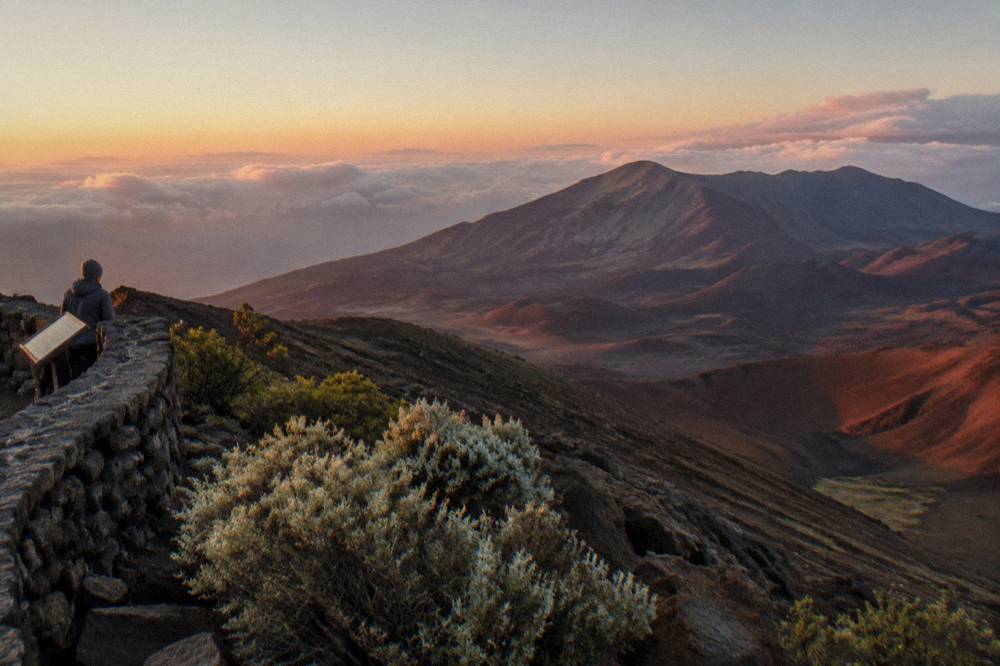
What you see depends on the calendar and the sky. In the hours after sunset, planets appear first, then the brighter stars, then, on a moonless night, the Milky Way's band over the crater rim. The park's stargazing page frames the summit as a dark-sky site and asks visitors to protect that darkness with red lights. Conditions change, and the park can close sections in hazardous weather; the official current conditions page is the check to make before any summit night.
Timing the drive matters as much as the sky. The park's FAQ gives the official drive times: Kahului to the Summit District 45 minutes to 1 hour, Kihei 1 to 1.5 hours, Lahaina 1.5 to 2 hours, plus about 30 minutes from the entrance gate to the summit itself. Tours build those drives into their schedules, which is why the coach dinner tour runs 7 hours for about 1.5 hours in the park.
| Starting point | Drive to Summit District | Plus gate to summit | Realistic door-to-dark time |
|---|---|---|---|
| Kahului | 45 minutes to 1 hour | About 30 minutes | Roughly 1.5 to 2 hours |
| Kihei | 1 to 1.5 hours | About 30 minutes | Roughly 2 to 2.5 hours |
| Lahaina | 1.5 to 2 hours | About 30 minutes | Roughly 2.5 to 3 hours |
The park's own FAQ page is the source for those figures, and the official FAQ also confirms the bicycling note that matters to one adjacent category: cyclists pay the $15 per-person entrance fee, and the park does not recommend riding up in the dark. For the stargazing visitor, the practical reading is that a tour converts two to three hours of dark driving each way into time you can spend looking up.
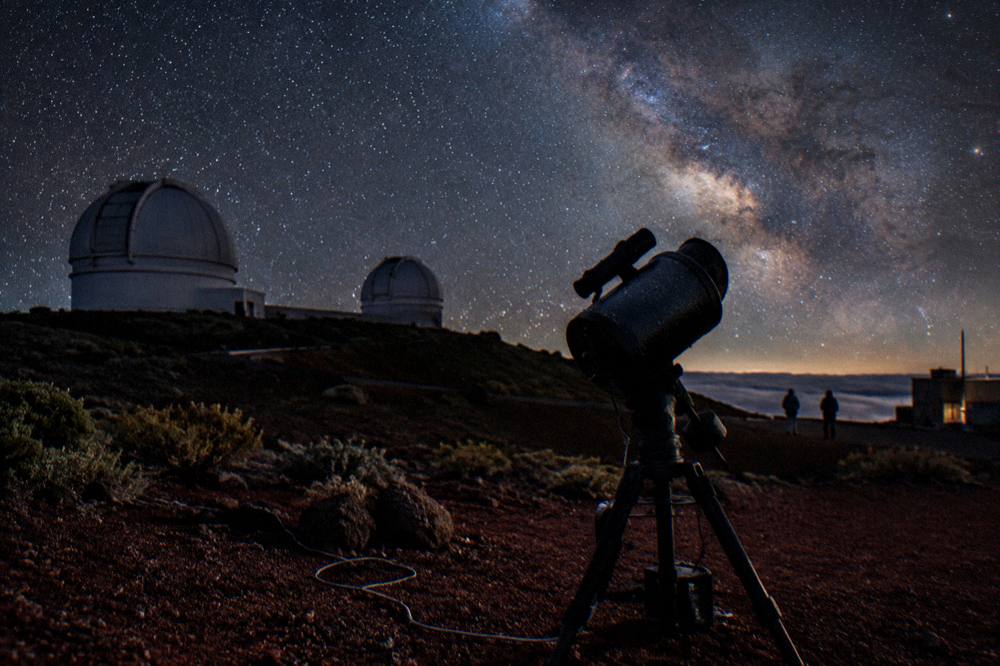
Before choosing, the three formats below cover the same ground in different ways: the small-group astronomy tour for sky-focused travelers, the coach dinner tour for a shared, fed evening, and the private sunset for exclusivity.
Common Questions About Haleakala Stargazing Tours
Do You Need A Reservation To Stargaze At Haleakala?
No. The $1.00 per vehicle sunrise reservation applies only to vehicles entering the Summit District between 3:00 a.m. and 7:00 a.m. Sunset and evening visitors pay the standard entrance fee, $30 per private vehicle valid 3 days, with no reservation of any kind.
What Is The Best Month For Stargazing At Haleakala?
The drier months, roughly May through September, carry the lowest cloud risk per the park's rainfall records, and any night near a new moon gives the darkest sky. Sunset runs from about 5:45 p.m. in mid December to about 7:09 p.m. in mid July, which sets your schedule more than the season does.
How Cold Is The Summit At Night?
The park states the summit is about 30 F cooler than the coast, with year-round temperatures from below freezing to highs of 50 to 65 F, and wind chill making it feel colder. After dusk it is regularly wet, windy and below freezing. Dress in winter layers regardless of the beach weather you left behind.
Which Stargazing Tour Is Right For Me?
If the night sky is the priority, the small-group Haleakala Sunset and Astronomy Tour, 5 from 57 reviews, from $245 per person, spends about 4 hours at 10,000 ft with up to 8 travellers. If you want dinner and hotel pickup, the Twilight Sunset with Dinner coach tour, 4.4 from 263 reviews, from $257 per person, covers both. For exclusivity, the private sunset tours run from $314 per person and $555 per group.
Can You See The Milky Way From Haleakala?
On a clear, moonless night, yes, the Milky Way is visible to the naked eye from the summit area, which is why the park runs a dedicated stargazing page. Weather decides on any given night, and no tour or operator can promise a clear sky, so plan around the moon and the forecast rather than a guarantee.
Do Stargazing Tours Include Park Admission?
It varies by listing. The coach dinner tour and the private sunset tours state admission is included on their listings; the small-group sunset with snacks states entry is paid by the operator; the astronomy tour lists its summit time without an admission line. Check the specific listing before booking, since each one states its own inclusions.