Can You Go To Haleakala Without A Tour?
Yes, you can visit Haleakala without a tour. Here is what driving yourself costs, how the sunrise reservation works, and when a guided tour is the smarter choice.
Can You Go To Haleakala Without A Tour?
Yes, you can absolutely go to Haleakala without a tour. The park is open 24 hours a day, both districts, and the standard entrance fee of $30 per private vehicle covers three days of access. The only extra hurdle for independent travelers is the $1.00 per vehicle sunrise reservation, required for vehicles entering the Summit District between 3:00 a.m. and 7:00 a.m. If you're wondering why that sunrise reservation sells out so fast, our guide to why Haleakala sunrise tickets are so hard to get explains what's going on and what to do when they're gone.
That single sentence contains both the appeal and the catch of going alone. Haleakala is one of the most accessible national park summit experiences anywhere: a paved road climbs from the entrance at Kula to the 10,023 ft Pu'u 'Ula'ula (Red Hill) summit, about 30 minutes and 11 miles from the gate, with no trailhead permits, no lotteries for daytime visits, and no guide requirement of any kind. You pay at the entrance station, you drive up, you look into a crater that the park's own pages describe as otherworldly. Millions have done exactly that.
The catch is the 3:00 a.m. to 7:00 a.m. window. Sunrise at the summit is so popular that the National Park Service limits it to about 150 vehicles across the four sunrise viewing areas, and the reservation that grants access is sold only through recreation.gov. Inventory releases at 7:00 a.m. Hawaii Standard Time, up to 60 days ahead, with a portion held back for release two days out. The park's own FAQ states the releases often sell out within fifteen minutes. That is the part of going alone that catches people off guard, and it is the single biggest reason travelers end up comparing self-drive against options like the nine-hour guided sunrise tour with breakfast, which we cover further down.
Everything else about an independent visit is ordinary trip planning: an entrance fee, a winding paved road, warm clothes, and an alarm set for an hour you would rather not think about. Going alone skips the tour price, but park entrance and a sunrise booking are still on you, what the reservation demands, what the drive is like, and where a tour genuinely earns its price.
What Does Driving Yourself To Haleakala Cost?
Going alone costs $30 per private vehicle for three days of entry covering both districts, or $15 per person if you arrive on foot or by bicycle, and $25 for a motorcycle. Add $1.00 for the sunrise reservation if you enter between 3:00 a.m. and 7:00 a.m. That makes a self-drive sunrise potentially the cheapest premium viewpoint in the national park system.
The park's fees page prints the full schedule, and a few details matter to independent travelers. The vehicle pass covers everyone in the car, not per person, and it is valid for three days across both the Summit District and Kipahulu, the coastal section 12 miles past Hana. If you are doing the Road to Hana and the summit on the same trip, one pass covers both. The park takes credit and debit only, no cash, at the entrance stations.
| Item | Cost | What it covers |
|---|---|---|
| Private vehicle | $30 | 3 days, both districts, everyone in the car |
| Motorcycle | $25 | 3 days, both districts |
| Per person (16 and over, on foot or bicycle) | $15 | 3 days, both districts |
| Haleakala annual pass | $55 | One year, this park |
| Hawai'i Tri-Park annual pass | $55 | Haleakala, Hawai'i Volcanoes, Pu'uhonua o Honaunau |
| Sunrise reservation | $1.00 per vehicle | Entry 3:00 a.m. to 7:00 a.m., Summit District |
Two footnotes to that table. First, the sunrise reservation is non-refundable for weather, which stings when the summit is socked in with cloud, as it sometimes is. Second, the 2026 fee-free days apply to US citizens and residents only, and even on those days the $1.00 sunrise reservation is still required. There is no way around it for a private vehicle.
Set against that, the tours on this site's roster run from $145 per person for the four-hour daytime Mountain Riders bike option up to $1,990 per group for a private open-air jeep day. A family of four in a rental car pays $31 total for sunrise access. A family of four on the Sunrise Coach with Local Breakfast, from $254 per person, pays over a thousand dollars but gets driven, fed, and guided through the dark. Both are legitimate choices, and the gap between them is what this article is really about.
The trade is not only money, of course. For travelers who want the self-drive savings but still want some structure, the middle ground is the Classic Vehicle Sunrise, No Pickup option from Bike Maui and Haleakala EcoTours, from $287 per person, which handles the summit transport and breakfast while you meet it at the Kahului Park & Ride. It is a coach ride rather than a private car, but it removes the reservation scramble and the pre-dawn driving in one move.
For readers whose real question is "do I want to drive at all," the honest answer is that a guided sunrise tour like the Maui: Haleakala National Park Sunrise Tour by Skyline Hawaii, from $236 per person with a 4.7 rating from 678 reviews, is buying the drive, not the view. The view is the same crater. The purchase is someone else steering on a dark mountain road at 4 a.m. while you sleep in the seat behind them.
How Hard Is The Sunrise Reservation To Get If You Drive?
The sunrise reservation costs $1.00 per vehicle, is sold only on recreation.gov, and inventory often sells out within fifteen minutes of the 7:00 a.m. HST release, up to 60 days ahead, with a portion released two days out. You need your timing set before the release, photo ID and the confirmation at the gate, and there is no phone or in-person alternative.
This is the part of going alone that behaves like a concert ticket, and the park does not soften it. The official sunrise reservation FAQ sets out the mechanics: one reservation per customer per three-day period, valid only for the day booked, not refunded or exchanged for weather, and checked against photo ID at the entrance station. About 150 vehicles can access the four sunrise viewing areas, which are the Pu'u 'Ula'ula summit at 10,023 ft, Haleakala Visitor Center at 9,740 ft, Kalahaku Overlook at 9,324 ft, and Leleiwi Overlook at 8,840 ft.
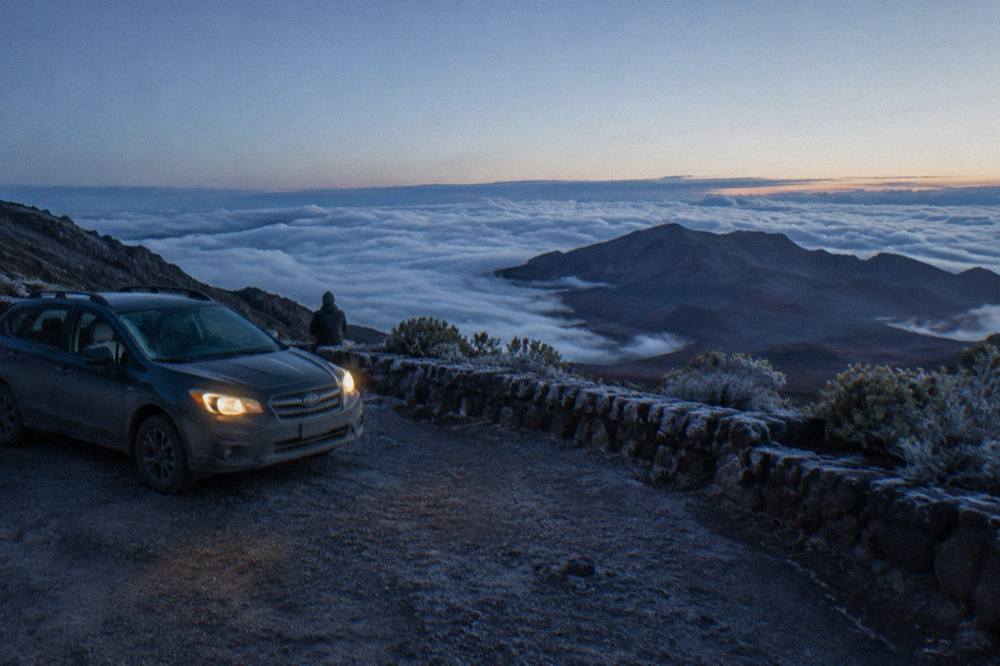
The practical playbook for independent travelers: mark the release date 60 days before your visit, be logged in to recreation.gov before 6:55 a.m. HST, and have your payment details saved. If that window is missed, watch the two-day-ahead release, which serves last-minute trips but moves just as fast. This site covers the mechanics in detail in the sunrise reservations guide, and the companion story on why it is so hard to get sunrise tickets digs into why the system exists.
Here is where the tour question gets its sharpest edge. The reservation requirement applies to non-commercial vehicles parking in the four highest lots during the sunrise window. Tours run by authorized commercial operators run under their own park authorization, and the NPS sunrise page itself points travelers toward authorized sunrise tours. No listing on this site's roster states that the $1.00 reservation is included with the tour, and we do not claim it is; what the tours remove is the need for you to win the recreation.gov scramble and the 3:30 a.m. drive yourself. If the reservation is the part of the independent plan that worries you, that is the honest reason to lean toward a guided option.
If you miss both releases and still want sunrise, there is one legal self-drive workaround: arrive after 7:00 a.m. without a reservation. Sunrise itself is typically around 6:00 to 7:00 a.m. depending on the month, so a 7:01 a.m. entry usually means missing first light at the top of the crater, though the morning color and the views remain spectacular and the lots begin to empty. Some travelers deliberately choose a post-7 a.m. arrival for exactly that reason, trading the horizon moment for a calm one.
What Is The Drive To The Summit Actually Like?
Driving yourself takes about 45 minutes to 1 hour from Kahului to the Summit District entrance, then about 30 minutes more up 11 paved miles to the summit. The road is fully paved but has no streetlights and no guard rails in places, and before dawn it is regularly wet, windy and below freezing at the top.
The park's FAQ page prints the official drive times, and they shape every independent sunrise plan. From Kihei the entrance is 1 to 1.5 hours away, from Lahaina 1.5 to 2 hours, and you still have the climb from the gate to the summit after that. Working backward from a roughly 6:00 a.m. sunrise means leaving West Side hotels around 3:30 a.m. That is not a hardship exactly, but it is a decision, and it is the moment many travelers reconsider the coach option.
| Start point | To Summit District entrance | Add for gate-to-summit climb | Realistic sunrise departure |
|---|---|---|---|
| Kahului | 45 minutes to 1 hour | about 30 minutes | roughly 4:00 to 4:15 a.m. |
| Kihei | 1 to 1.5 hours | about 30 minutes | roughly 3:45 a.m. |
| Lahaina | 1.5 to 2 hours | about 30 minutes | roughly 3:30 a.m. |
Conditions deserve more respect than the brochure version of this drive gives them. The summit sits at 10,023 ft and runs about 30 F cooler than the coast, commonly below freezing before dawn, with wind chill on top. There is no gas, no food and no EV charging anywhere in the park, emergency help is at least an hour away, and cell service disappears in the crater. The road itself is a well-maintained state highway that rental cars handle fine in the daytime; it is the dark, the fatigue and the altitude that define the experience, and the park explicitly warns that parking lots close when full. The full index of guides sits on Haleakala National Park Tours.
One more self-drive fact worth knowing: a cyclist may enter before 7:00 a.m. without a sunrise reservation, though the park does not recommend riding up in the dark, a 10-mile climb of several thousand feet on a road with no bike lane. For most readers this is trivia, but it explains why the downhill bike options exist as they do.
What Can You Do At Haleakala Without A Tour?
A self-drive visit covers everything the park offers: sunrise from one of four overlooks, daytime hikes including the Sliding Sands first overlook at 0.5 mile round trip, the 0.54 mile Hosmer Grove loop, sunset viewing with no reservation, and summit stargazing, all on the same $30 vehicle pass. Trails, overlooks and dark skies require no guide and no extra booking.
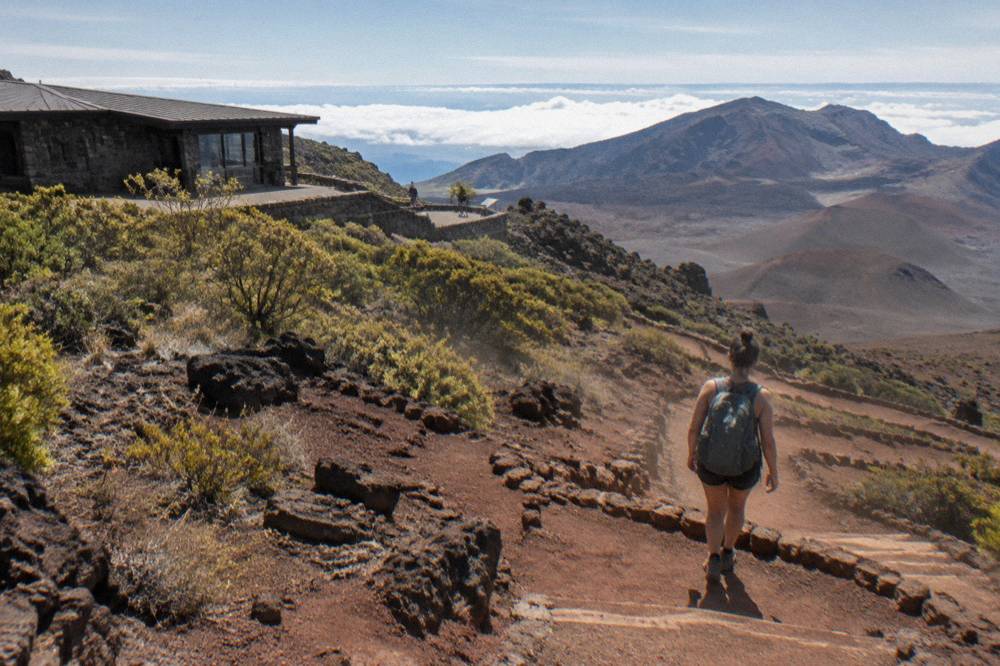
The crater hikes are the underrated half of an independent day. The Keonehe'ehe'e (Sliding Sands) trailhead sits in the Haleakala Visitor Center lot, and the first overlook is a modest 0.5 mile round trip with 50 ft of elevation change, which puts a genuine inside-the-crater view within reach of almost anyone. The full 11-mile crossing to Halemau'u is a different animal, strenuous at altitude, and the park advises planning about twice the time to hike out as to hike in. Hosmer Grove, near the summit-district campground, is a short self-guided nature loop through planted forest and native shrubland, and it is free with entry like everything else.
Sunset is the independent traveler's consolation prize and, for many, the better show. No reservation is needed after 7:00 a.m., and one guest review on the Twilight Sunset with Dinner listing argues the point bluntly: "Amazing experience and totally worth it. Glad we did the tour bus and didn't drive ourselves. It got really busy and it's a long drive! Sunset is 1000xs better than sunrise, too!" Whether sunset beats sunrise is a matter of taste, but the logistics are unquestionably easier, and this site compares them head to head in the sunrise versus sunset guide.
Stargazing is the other free-at-point-of-entry experience. The summit's dark skies are among the best in Hawaii, the park asks visitors to use red lights rather than white, and no program booking is needed to look up. Travelers who want the sky explained, and a telescope pointed at it, are the natural audience for the Small-Group Sunset Astronomy option from Amazing Maui Stars, from $245 per person, capped at eight travelers and rated 5 from 57 reviews. It is a specialist purchase: about four hours at 10,000 ft with an astronomy guide, for people who already know the sunset half of the evening is not enough.
For a deeper look at what is on the mountain, including what costs nothing at all, see the free things to do at Haleakala guide. The short version: trails, overlooks, sunset and stars are all included with entry, and the only things money buys on this mountain are transport, expertise and breakfast.
When Does A Tour Make More Sense Than Going Alone?
A tour earns its price in four situations: when the sunrise reservation is gone or the release timing is impossible, when your hotel is far from the mountain and the 3:30 a.m. drive is a safety question, when you want a guide who can explain the crater, and when you would rather sleep on the way up than steer in the dark. Cost per view, going alone always wins.
The first situation is the most common. If your dates are fixed, a wedding or a short island stop, and the 60-day and 2-day releases have both passed you by, a guided sunrise tour is the reliable path to a summit sunrise, because authorized commercial operators run under their own park authorization rather than the 150-vehicle lottery. The roster's sunrise options span from $236 to $287 per person, with the nine-hour Skyline Hawaii tour, from $236, at the value end of that range for a full vehicle-based morning with hotel or condo pickup and breakfast included.
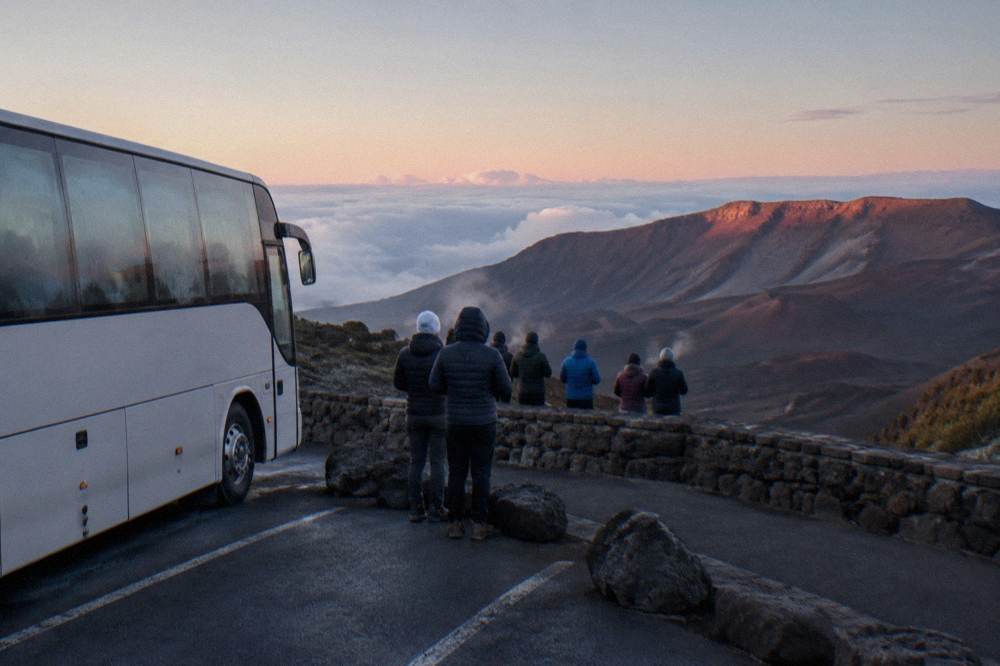
The second situation is fatigue, and it is not a small one. A traveler staying in Lahaina faces roughly two hours to the entrance before the climb, which means a 3:30 a.m. departure on a winding road with no streetlights, then a full day ahead. Reviews on the coach listings make the case in guests' own words. One five-star review of the Sunrise Coach with Local Breakfast reads: "Such a great experience. We went with our 2 kids aged 11 and 8. They loved it too! We were picked up at our resort. Everyone slept most of the way up there until we got close." That sleeping-on-the-way-up line is the product.
The third and fourth situations are about depth. A guide turns a crater view into a geology and culture lesson, and breakfast turns a 4 a.m. departure into something closer to a normal morning. Families and hikers often split the difference: drive themselves one day, then book the Crater Hike with Meal from Hike Maui, from $208 per person with a 4.8 rating from 74 reviews, for a guided Sliding Sands-area walk they could not safely self-navigate at altitude without local knowledge. Cycling travelers take a different fork entirely, and the question of whether that is worth it is covered in is biking down Haleakala worth it; the self-guided sunrise bike option from Bike Maui, from $273 per person with a 4.7 rating from 777 reviews, includes van transport to the summit for sunrise before the ride down from about 6,500 ft at the park boundary. Note the ride itself starts outside the park, on the crater road below the boundary, not inside it.
The honest summary: going alone is cheaper, freer and, outside the sunrise window, effortless. A tour is better exactly when the friction of going alone, the reservation, the dark drive, the altitude, lands on you rather than on someone who does it weekly. Neither answer is wrong, and the trio below spans both instincts, a full guided sunrise, a meet-it-halfway coach, and a guided crater hike.
Common Questions About Visiting Haleakala Without A Tour
Can You Go To Haleakala Without A Tour?
Yes. The park is open 24 hours to independent visitors, entry is $30 per private vehicle for three days covering both districts, and no guide is required for any trail, overlook or viewpoint. The only additional step for a self-drive sunrise is the $1.00 per vehicle reservation, required for the Summit District between 3:00 a.m. and 7:00 a.m.
Is It Cheaper To Visit Haleakala Without A Tour?
Almost always. A vehicle pass costs $30 total for everyone in the car, plus $1.00 for the sunrise reservation, while guided tours on this site's roster start at $146 per person for an express bike option and run from $236 per person for vehicle sunrise tours. What you give up is transport, a guide and breakfast, not access.
Do You Need A Reservation For Haleakala If You Are Not Going For Sunrise?
No. The reservation applies only to vehicles entering the Summit District between 3:00 a.m. and 7:00 a.m. Arriving after 7:00 a.m., or for sunset or stargazing, requires only the standard entrance fee or pass. The park notes lots close when full, so mid-morning arrivals at popular overlooks can still face full lots.
Can You Drive Yourself To The Haleakala Summit?
Yes, the road is paved all the way to the 10,023 ft summit, about 30 minutes and 11 miles from the entrance station. There is no gas, food or cell service in the crater, the summit runs about 30 F cooler than the coast, and before dawn it is often below freezing, so the park advises warm clothing and a full tank before you start up.
Do Tour Buses Need The Sunrise Reservation Too?
The reservation applies to non-commercial vehicles parking in the four highest lots during the sunrise window. Tours run by NPS-authorized commercial operators operate under their own park authorization. No listing on this site states that the $1.00 reservation is included with a tour, so treat the tour price as covering transport and guiding rather than a ticket on your behalf.
What Time Do You Leave For Sunrise If You Drive Yourself?
Roughly 3:30 a.m. from Lahaina, 3:45 a.m. from Kihei and around 4:00 to 4:15 a.m. from Kahului, working back from the entrance drive times plus about 30 minutes from gate to summit. Sunrise times shift through the year, so check the month table in this site's sunrise time guide before setting the alarm.