Haleakala Sunrise Reservations: What They Cost And How Tours Handle Them
Every vehicle entering the Haleakala Summit District between 3:00 a.m. and 7:00 a.m. needs a $1 sunrise reservation from recreation.gov, and the tickets often sell out within fifteen minutes. Here is exactly how the system works, what it costs, and what your options are when the tickets are gone.
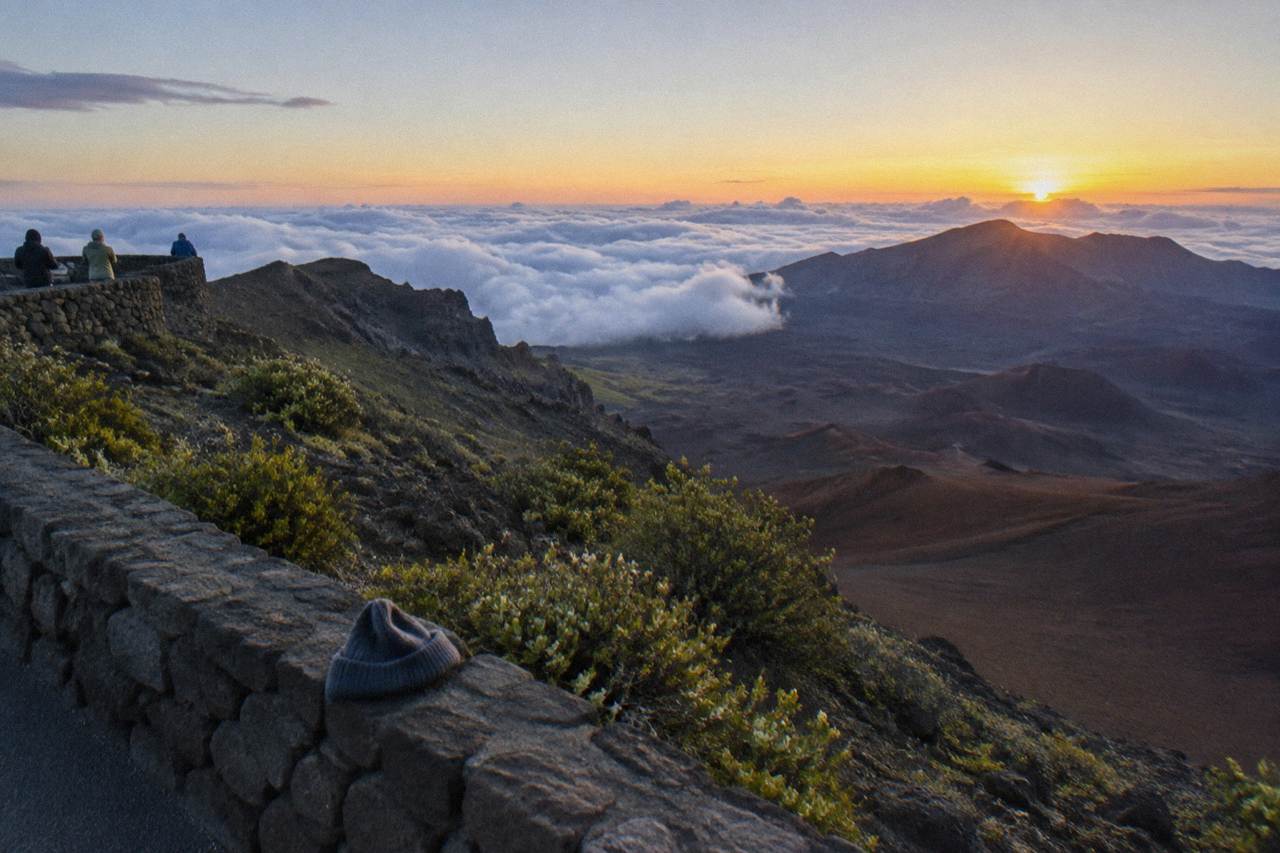
The single most common reason travelers give up on seeing sunrise from the Haleakala summit is not the 3:00 a.m. wakeup or the freezing temperatures. It is a one-dollar ticket. The National Park Service limits how many vehicles can enter the Summit District before 7:00 a.m., and the reservation that controls those spots is released on recreation.gov in a window the park itself says often sells out within fifteen minutes. This guide lays out the official rules, the exact costs, the release schedule, and the practical fallbacks, including how authorized commercial tours fit into a system that otherwise puts every driver in the same queue.
What Is The Haleakala Sunrise Reservation?
The sunrise reservation is a separate $1.00 per vehicle ticket, bought only on recreation.gov, that every non-commercial vehicle must hold to enter the Haleakala Summit District between 3:00 a.m. and 7:00 a.m. It sits on top of the standard entrance fee, it is valid only for the day reserved, and it is not refunded or exchanged if clouds cover the sunrise. The rule applies every day of the year, with no exceptions for fee-free days or annual passes. The park states it plainly on its sunrise reservations FAQ page: no reservation means no entry before 7:00 a.m.
The system exists because the summit road was simply too popular. Before the reservation requirement, pre-dawn traffic jammed the switchbacks of Haleakala Highway and overflowed the upper parking lots, so the park capped sunrise access at roughly 150 vehicles across four viewing areas. That capacity figure comes from the park's own FAQ. Everyone else waits below or arrives after 7:00 a.m., when the gate opens to general traffic and the summit lots fill on a first-come basis for the rest of the day.
Two details catch travelers off guard. First, the reservation is per vehicle, not per person, so a family of five in one rental car needs exactly one ticket, while two couples in two cars need two. Second, the reservation holder must present photo ID and the confirmation at the entrance station, which means the ticket needs to be in the name of someone actually in the car. A ticket bought in a friend's name back home does not work.
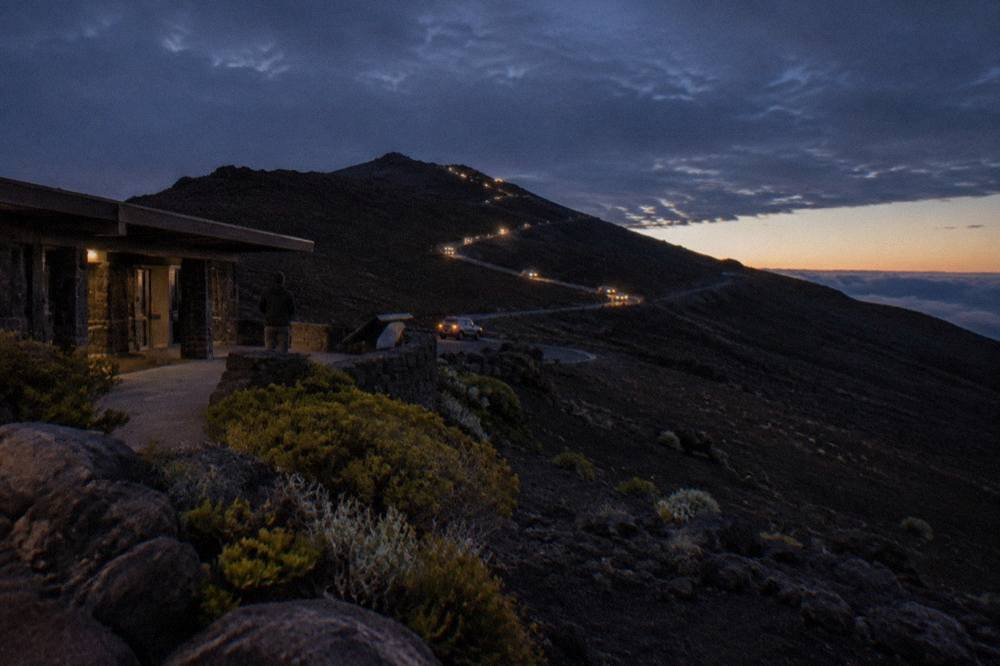
The window matters as much as the ticket. Entry between 3:00 a.m. and 7:00 a.m. is what the reservation controls; if you arrive at 7:15 a.m. without one, you simply pay the entrance fee and drive up like any daytime visitor. That is why the cutoff, not the sunrise time itself, is the number to plan around. Our companion page on the best Haleakala sunrise tours covers what the guided options look like once you know which side of that cutoff you will be on.
How Much Does A Sunrise Reservation Cost?
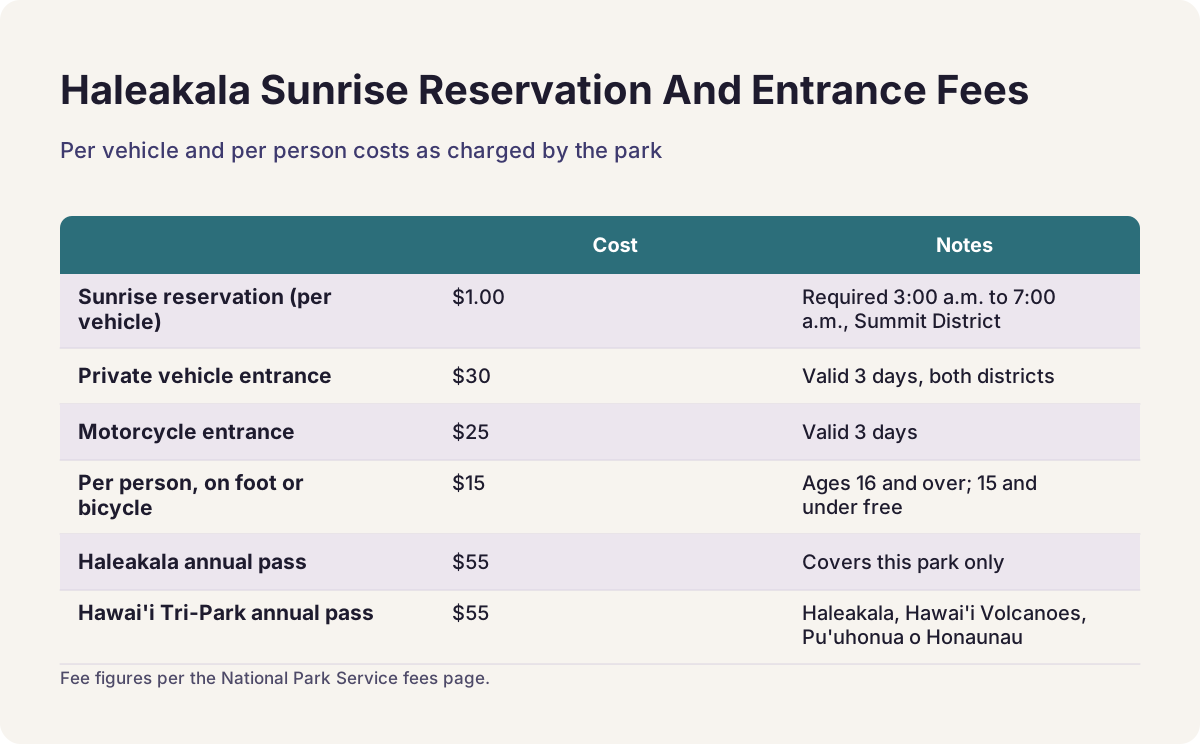
The reservation itself costs $1.00 per vehicle, non-refundable, paid on recreation.gov at the time of booking. It does not replace the entrance fee: a private vehicle still pays $30, valid for three days and both districts, a motorcycle pays $25, and a person entering on foot or by bicycle pays $15. The two charges are separate transactions on separate systems. The reservation is also not sold by phone or in person at the park; the entrance station staff cannot sell you one, no matter how politely you ask at 3:30 a.m.
Here is the full fee picture as the park prints it, so you can budget the whole morning rather than just the headline dollar.
| Item | Cost | Notes |
|---|---|---|
| Sunrise reservation (per vehicle) | $1.00 | Required 3:00 a.m. to 7:00 a.m., Summit District, non-commercial vehicles |
| Private vehicle entrance | $30 | Valid 3 days, both districts |
| Motorcycle entrance | $25 | Valid 3 days |
| Per person, on foot or bicycle | $15 | Ages 16 and over; 15 and under free |
| Haleakala annual pass | $55 | Covers this park only |
| Hawai'i Tri-Park annual pass | $55 | Haleakala, Hawai'i Volcanoes, Pu'uhonua o Honaunau |
The park's fees page carries the current details, including America the Beautiful pass coverage and the fee-free day list. One trap worth flagging early: fee-free days do not waive the sunrise reservation, and starting in 2026 those free days apply to US citizens and residents only. International visitors pay the standard entrance fee even on a listed free day, and the $1 reservation still applies to everyone driving up before 7:00 a.m. Our deeper breakdown of Haleakala entrance fees and passes covers the pass options if you are doing multiple Hawaii parks on one trip.
Note what the $1 does not buy: weather. The park states the reservation is not refunded or exchanged for conditions, and the summit sits above the clouds only when the trade-wind inversion cooperates. Planning around the money is easy; planning around the sky is a separate problem, and the Haleakala summit weather guide handles that one.
If the ticket scramble sounds like the wrong way to spend a vacation morning, the guided route exists for exactly this reason. Authorized commercial tours operate under their own park authorization, and the roster's sunrise options include the nine-hour Skyline Hawaii sunrise tour with breakfast from $236 per person, hotel or condo pickup included, and the Polynesian Adventure Tours coach version from $254 per person with a local breakfast. For travelers who would rather ride down after the sun comes up, the self-guided sunrise bike tour from Bike Maui and Haleakala EcoTours, from $273 per person, van-rides you to the summit for sunrise and then hands you a bike at the park boundary.
When Do Sunrise Tickets Go On Sale?
Tickets are released on recreation.gov up to 60 days in advance at 7:00 a.m. HST, with a second batch released 2 days ahead of each date, also at 7:00 a.m. HST. The park states the main release often sells out within fifteen minutes, there is no waitlist, and one customer may hold only one sunrise reservation per three-day period. So the practical calendar is: set an alarm for 6:50 a.m. Hawaii time two months out, and if that fails, try again 48 hours before your target morning.
The 60-day release is the main event. Inventory for a given sunrise date appears at 7:00 a.m. HST sixty days earlier, and demand concentrates immediately because everyone planning a Maui trip is watching the same calendar. The two-day release is the park's deliberate second chance: a portion of inventory is held back and released 48 hours ahead, which favors travelers already on island who can commit at short notice. Both windows are online-only, and recreation.gov accounts can be created in advance, which shaves precious minutes off checkout.
A few tactics that consistently matter:
- Create the recreation.gov account and save your payment card before release day; checkout speed decides the fifteen-minute race.
- 7:00 a.m. HST is 10:00 a.m. Pacific, 1:00 p.m. Eastern, so mainland travelers can grab tickets without a pre-dawn alarm, just a lunch-break one.
- The one-per-three-days limit means a group cannot stack tickets across several mornings under one account; coordinate separate bookers instead.
- If your dates are flexible, shoulder-season mornings face less competition than peak holiday weeks.
The math of the sell-out is unforgiving. Roughly 150 vehicles fit across the four sunrise viewing areas, and Maui receives far more sunrise-bound rental cars than that on any given morning in high season. When the 60-day and 2-day releases are both exhausted, the only pre-7:00 a.m. options left are an authorized commercial tour, or waiting for the gate to open at 7:00 a.m. and accepting a later, brighter summit.
Which Parking Lots Does The Reservation Cover?
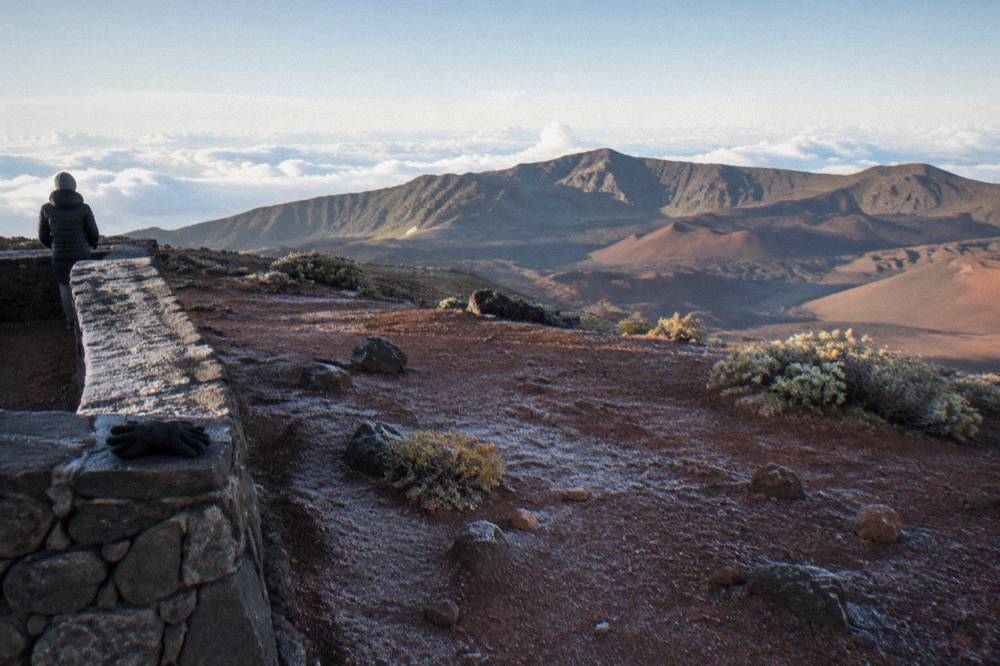
The reservation applies to non-commercial vehicles parking in the four highest-elevation lots: Pu'u 'Ula'ula (Red Hill) at 10,023 ft, Haleakala Visitor Center at 9,740 ft, Kalahaku Overlook at 9,324 ft, and Leleiwi Overlook at 8,840 ft. Together they hold about 150 vehicles. Lower lots along the crater road are outside the reservation rule, which is why the 7:00 a.m. gate opening matters so much. The reservation holder must be in the vehicle with photo ID and the confirmation at the entrance station.
| Viewing area | Elevation | Character |
|---|---|---|
| Pu'u 'Ula'ula (Red Hill) summit | 10,023 ft | The highest viewpoint; the classic sunrise silhouette |
| Haleakala Visitor Center | 9,740 ft | Ranger presence, restrooms, Sliding Sands trailhead |
| Kalahaku Overlook | 9,324 ft | Overlook pullout below the visitor center |
| Leleiwi Overlook | 8,840 ft | A roughly 10 minute hike from its parking lot |
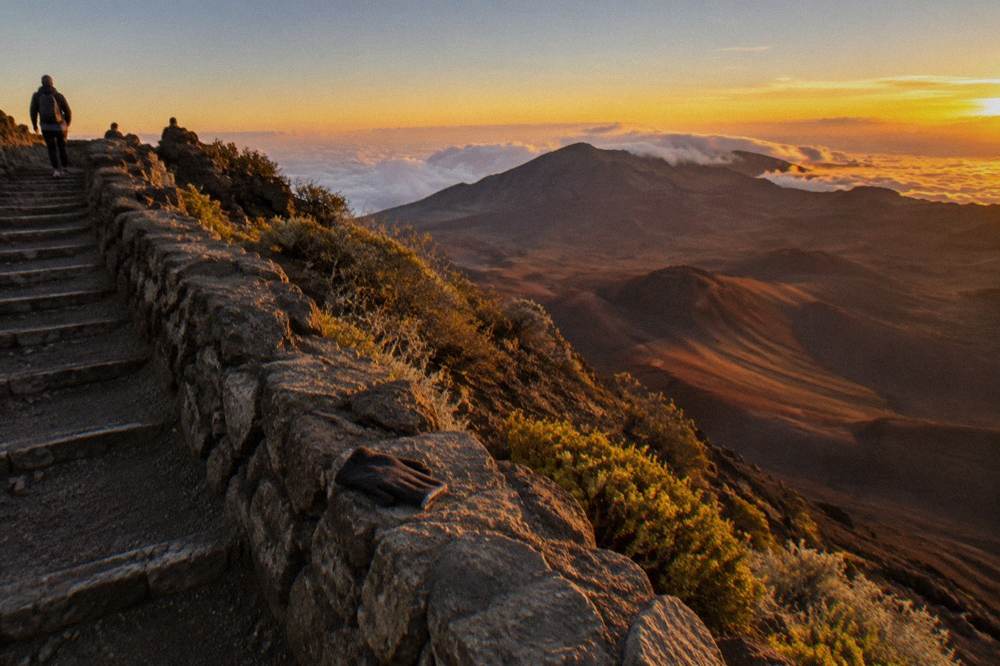
Your reservation does not assign a specific lot; it admits the vehicle into the district during the window, and the lots fill from the top down as drivers choose. Arriving at 4:00 a.m. versus 5:30 a.m. can decide whether you stand at the true summit or watch from a lower pullout. All four are legitimately above the cloud deck on a clear morning, and the differences between them are about angle and crowd density rather than a make-or-break view. The Haleakala visitor center and viewpoints guide walks each one in detail for travelers deciding where to aim.
One nuance from the park's bicycling rules: a cyclist may pedal up and enter before 7:00 a.m. without a sunrise reservation, though the park does not recommend riding up in the dark, and the descent is where hypothermia is common. That is a narrow exception, not a strategy, and it does not extend to cars dropping cyclists at the top.
Do Tour Companies Need The Sunrise Reservation?
No. The reservation rule is written for non-commercial vehicles parking in the four highest lots during the 3:00 a.m. to 7:00 a.m. window, and authorized commercial tours operate under their own park authorization. The NPS lists four authorized road-based tour companies: Haleakala Ecotours, Valley Isle Excursions, Skyline Eco-Adventures, and Polynesian Adventure Tours. This is the official framing, straight from the park's road-based concessions page, and it is the reason a sold-out ticket window does not close the summit to you.
Be precise about what that means. A tour does not "skip the line" or hold a ticket on your behalf; the reservation system and the commercial authorization are two different frameworks, and the park's own text keeps them separate. What you get as a passenger is a seat in a vehicle whose operator holds park authorization to drive the summit road and park in the upper lots during sunrise hours, plus a driver who has made the dark climb many times on a road with no streetlights and no guard rails in stretches.
The roster reflects this structure. The Majestic Haleakala Sunrise Tour from Valley Isle Excursions, from $264 per person, runs a small coach of up to 22 travelers with South and West Side Maui hotel pickup, breakfast included, and a 4.8 rating from 705 reviews. One guest review on the listing captures the tone: "Jeff was a super knowledgeable tour guide. Everything was super tight. From the pickup time. To the timing of breakfast and the drop off. Very well run. And of course the experience is one I'll never forget. Dress warmer than you think. It's freezing on top of the mountain!"
The guided bike route works the same way for the summit portion. The guided sunrise bike tour from Bike Maui and Haleakala EcoTours, from $318 per person with a 4.6 rating from 290 reviews, drives riders to the summit by van for sunrise, then runs a guided ride down the slopes starting below the park boundary. A verbatim guest review sums it up: "This was the highlight of our trip! I know it's super early in the morning, but the day is well worth it. Our guide was fantastic and made sure we were safe. The views are spectacular and the ride is very easy."
For travelers weighing the two paths honestly: driving yourself costs $31 total in fees versus a tour's per-person price, but the self-drive version requires winning a fifteen-minute online race, an unfamiliar mountain road in the dark, and a parking hunt in the pre-dawn crush. A tour converts all of that into a seat, a breakfast, and a guide. Whether that trade is worth it is a personal call; the numbers for both sides are laid out in is the Haleakala sunrise tour worth it.
What Happens If You Miss The 7 A.M. Cutoff?
Arriving without a reservation after 7:00 a.m. is completely fine: you pay the entrance fee and drive up like any daytime visitor, and the reservation rule simply no longer applies. What you trade away is the sunrise itself, since the sun clears the horizon between roughly 5:44 a.m. and 7:04 a.m. depending on the month, and by 7:30 a.m. the show is over. The summit remains spectacular in full daylight, and the crowds thin dramatically once the sunrise traffic leaves.
The monthly clock times, computed for the 15th of each month in HST, show how much the target moves across the year:
| Month | Sunrise (15th, HST) | Month | Sunrise (15th, HST) |
|---|---|---|---|
| January | 7:04 a.m. | July | 5:52 a.m. |
| February | 6:56 a.m. | August | 6:04 a.m. |
| March | 6:35 a.m. | September | 6:12 a.m. |
| April | 6:07 a.m. | October | 6:20 a.m. |
| May | 5:48 a.m. | November | 6:35 a.m. |
| June | 5:44 a.m. | December | 6:53 a.m. |
A winter visitor has a genuine advantage here: a January 15th sunrise at 7:04 a.m. means the 7:00 a.m. reservation cutoff lands before the sun even appears, so the last reservation holders see the full show, and a 6:45 a.m. arrival without a ticket still gets turned away. In June the sun rises at 5:44 a.m., which means anyone entering at the tail of the window has already missed the horizon moment. The Haleakala sunrise time guide unpacks the seasonal pattern month by month.
The other fallback is sunset, and it needs no reservation at all. The park states plainly that there is no reservation system for sunset viewing; you pay the entrance fee, drive up in the afternoon, and stay as the light turns. The trade is a different crowd profile and a much more comfortable hour. The sunset twilight tour with dinner from Polynesian Adventure Tours, from $257 per person with a 4.4 rating from 263 reviews, covers the driving and adds a meal; one guest review argues the case: "Sunset is 1000xs better than sunrise, too!" Our head-to-head in Haleakala sunrise versus sunset weighs both honestly.
What Are The Rules Most People Get Wrong?
The mistakes that cost travelers a sunrise are consistent: buying the ticket in the wrong name, assuming the entrance fee covers the reservation, expecting a refund when clouds roll in, arriving at the last minute expecting to sail through, and forgetting that fee-free days do not waive the $1 ticket. Each of these is stated in the park's own FAQ, and each of them strands someone at the entrance station most weeks. Here is the quick reference.
| Misunderstanding | The actual rule |
|---|---|
| "The $30 entrance fee includes sunrise" | No; the $1 reservation is a separate purchase on recreation.gov |
| "I can buy a ticket at the gate" | No phone or in-person sales; online only |
| "My spouse can use my ticket" | The reservation holder must be in the vehicle with photo ID |
| "It's a fee-free day, no ticket needed" | Fee-free days do not waive the sunrise reservation |
| "Clouds ruined it, I'll get a refund" | Not refunded or exchanged for weather |
| "I'll grab one for three mornings" | One sunrise reservation per customer per three-day period |
The photo ID requirement deserves its own sentence because it catches ride-shares and split groups: if the person who booked the ticket is not in the car at the entrance station, the vehicle does not go up before 7:00 a.m. Plan the booking around who will actually be holding the wheel at 3:30 a.m., not around whose credit card was closest.
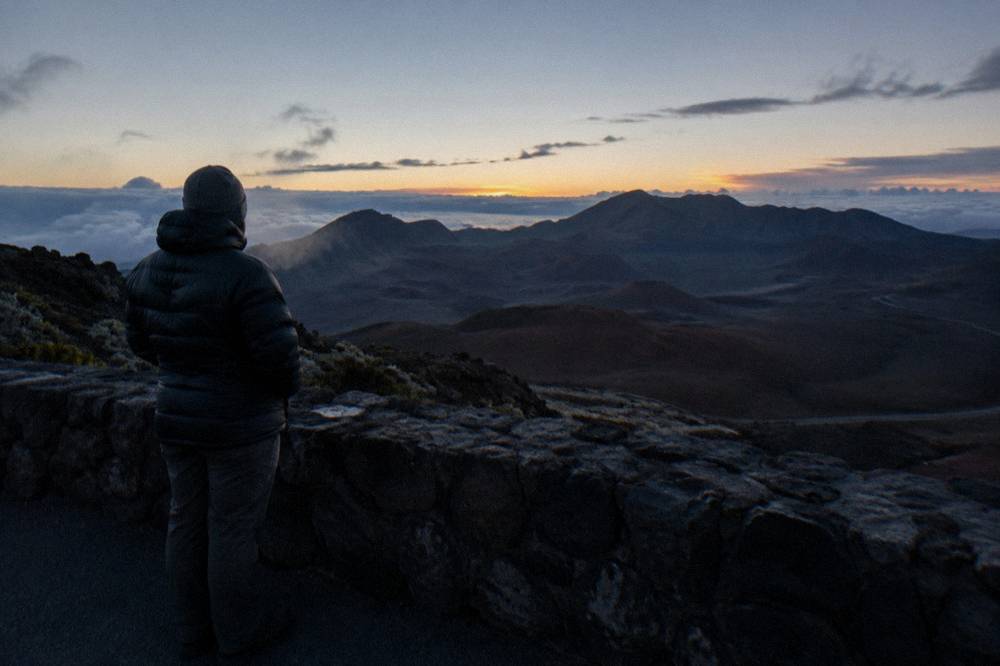
Weather is the other quiet rule. The summit sits at 10,023 ft, roughly 30 F cooler than the coast, and often below freezing before dawn; the park warns of wind chill, rapid changes, and a rainy season from November through March. None of that affects your reservation's validity, and none of it is refundable. Conditions can also close the road entirely; the park's own guidance is that it does not close except in extreme, hazardous weather, and the current conditions page is the place to check the day before. If a closure or a forecast of total cloud cover has you rethinking the whole morning, free things to do at Haleakala lists what the park offers outside the 3 to 7 a.m. window.
Can You Get Into Haleakala Without Any Reservation At All?
Yes, outside the 3:00 a.m. to 7:00 a.m. window, no sunrise reservation exists. Any vehicle can enter after 7:00 a.m. by paying the entrance fee, and sunset and stargazing visits need no reservation of any kind, just the standard entrance fee. The reservation is strictly a pre-dawn traffic-management tool for the four upper lots, not a general entry permit. This is why so many itineraries pivot to sunset without any sense of loss.
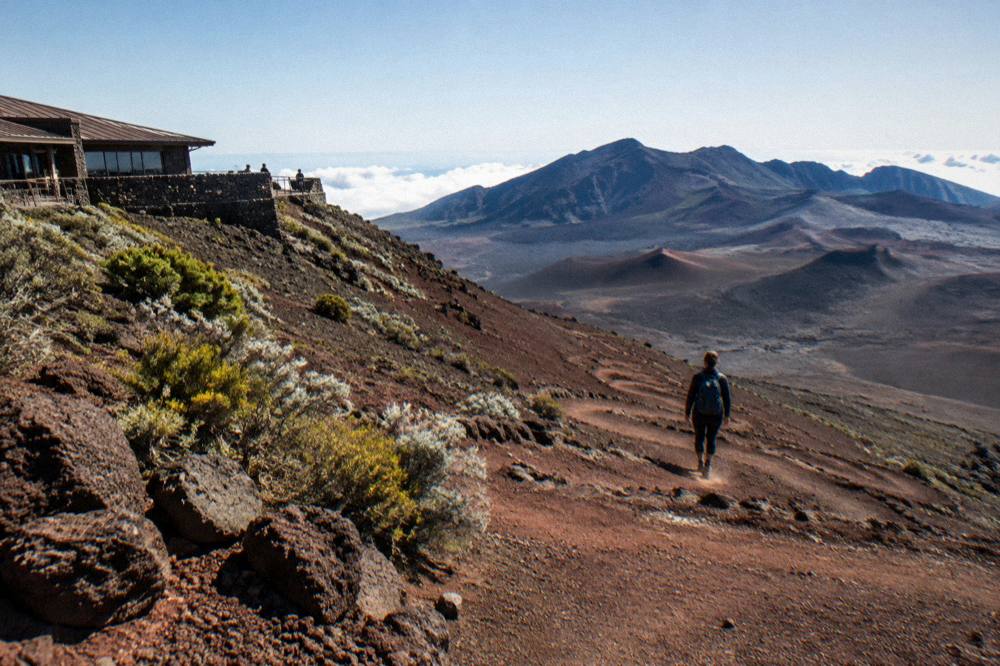
The after-7:00 a.m. summit has real advantages: warmer air as the morning warms from near-freezing toward the 50 to 65 F range, empty viewpoints once the sunrise convoy departs, and hiking access to the crater trails at a civilized hour. The Sliding Sands trail's first overlook is a half mile round trip from the visitor center lot, and the full crater crossing runs 11 miles to Halemau'u, a hike the park describes as taking about twice as long to hike out as in. Travelers who arrive late and hike instead of watching the horizon often report the morning as the better half of the day.
For the stargazing-inclined, the same logic applies in reverse: the park is open 24 hours, no reservation governs evening entry, and the summit's dark sky is the draw. The trade is the same cold and the same dark road, which is why the small-group sunset astronomy tour from Amazing Maui Stars, from $245 per person with a 5 rating from 57 reviews, spends about four hours at 10,000 ft with a group capped at eight. The Haleakala stargazing tours hub covers that whole category.
The bottom line on this whole page: the $1 ticket is cheap, the system is simple, and the scarcity is real. Sixty days out, at 7:00 a.m. Hawaii time, be online with an account ready; two days out, try again; and if both fail, an authorized sunrise tour or a sunset pivot will still put you above the clouds. For the full menu of guided morning options, start with the Haleakala sunrise tours hub, and let Haleakala National Park Tours handle the rest of the comparison shopping.
Common Questions About Haleakala Sunrise Reservations
How much does a Haleakala sunrise reservation cost?
$1.00 per vehicle, non-refundable, paid on recreation.gov. It is separate from the $30 private vehicle entrance fee, which is valid for three days and both districts.
When do Haleakala sunrise tickets go on sale?
Up to 60 days in advance at 7:00 a.m. HST on recreation.gov, with a second release 2 days ahead of each date, also at 7:00 a.m. HST. The park states the main release often sells out within fifteen minutes.
Do tour companies need the sunrise reservation?
No. The rule applies to non-commercial vehicles parking in the four highest lots during the 3:00 a.m. to 7:00 a.m. window. Authorized commercial tours operate under their own park authorization; the NPS lists Haleakala Ecotours, Valley Isle Excursions, Skyline Eco-Adventures, and Polynesian Adventure Tours as authorized road-based operators.
Can I get into Haleakala before 7 a.m. without a reservation?
Not in a vehicle. A cyclist may enter before 7:00 a.m. without a reservation, though the park does not recommend riding up in the dark. Every non-commercial vehicle needs the ticket for the 3:00 a.m. to 7:00 a.m. window.
Does the sunrise reservation get refunded if it's cloudy?
No. The park states the reservation is not refunded or exchanged for weather, and it is not available by phone or in person. The entrance fee and the reservation are separate purchases on separate systems.
Do fee-free days waive the Haleakala sunrise reservation?
No. Fee-free days do not waive the sunrise reservation or the 3 to 7 a.m. access rule, and starting in 2026 those free days apply to US citizens and residents only.