Haleakala Visitor Center And Sunrise Viewpoints: Hours, Elevation And Parking
Four sunrise viewing areas sit between 8,840 and 10,023 feet along the crater road, and the park caps sunrise access at about 150 vehicles. Here is how the viewpoints, the visitor center and the parking math actually work.
Short answer
Haleakala Visitor Center sits at 9,740 feet, just below the 10,023-foot Pu'u 'Ula'ula summit. Four sunrise viewing areas line the road above Leleiwi Overlook, and about 150 vehicles can access them for sunrise, each needing a $1.00 per vehicle reservation on recreation.gov between 3:00 and 7:00 a.m. Sunset needs no reservation at all.
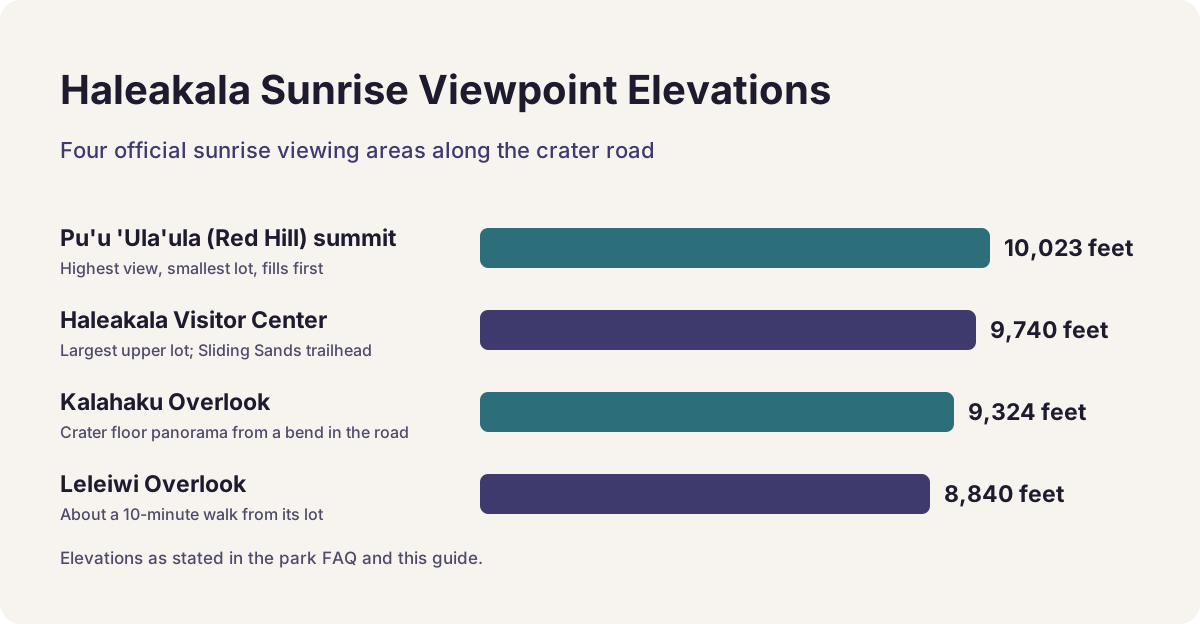
The Haleakala Visitor Center stands at 9,740 feet on the crater rim, and above it stretch four official sunrise viewing areas: Pu'u 'Ula'ula (Red Hill) at 10,023 feet, the visitor center itself at 9,740 feet, Kalahaku Overlook at 9,324 feet and Leleiwi Overlook at 8,840 feet. The park's FAQ states plainly that about 150 vehicles can access those four areas for sunrise. That number, more than any view description, is what shapes a summit morning: it is why the $1.00 per vehicle reservation exists, why lots close when full, and why so many travelers hand the drive to a tour instead. This guide walks the viewpoints from the top down, explains the parking and reservation mechanics, and compares the drive-yourself route against the guided options on this site's roster. For a fuller picture of the mountain itself, the guide to Haleakala's summit and viewpoints covers the elevation zones and every route up.
Where Is The Haleakala Visitor Center And What Does It Sit On?
The Haleakala Visitor Center sits at 9,740 feet on the southwest rim of the crater, roughly 30 minutes and 11 miles of paved road up from the Summit District entrance station on Haleakala Highway in Kula. It is one of two visitor centers in the Summit District; the other, Park Headquarters, sits at 7,000 feet near the entrance gate. The park itself is open 24 hours a day, year round, in both districts.
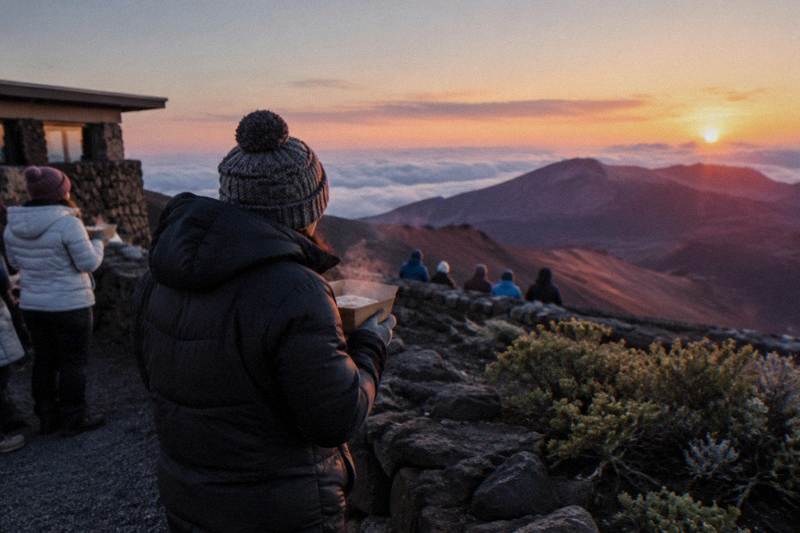
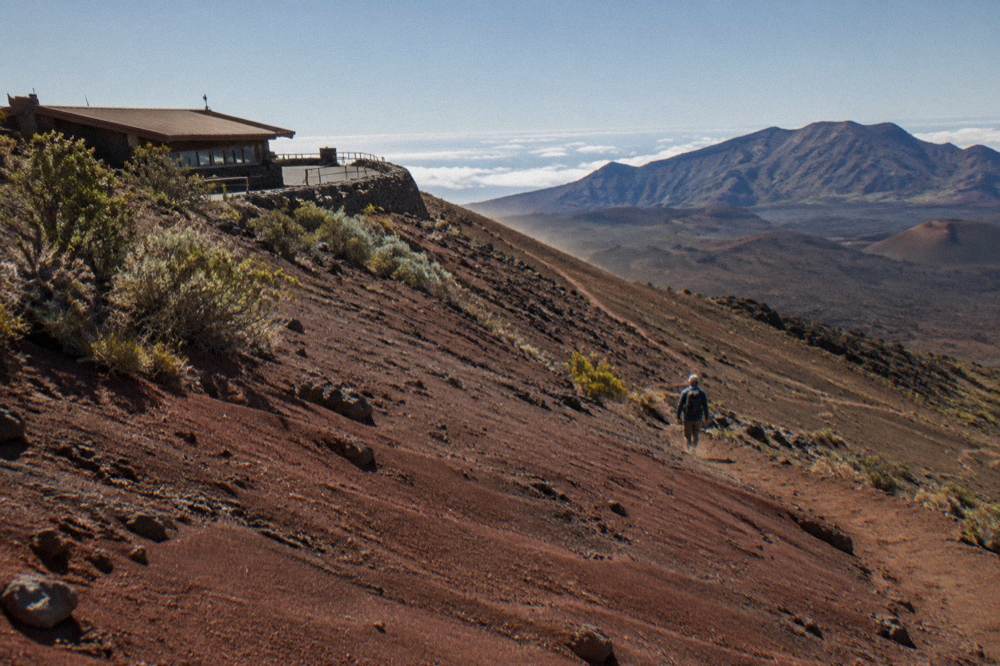
The building is a small traditional structure with a viewing terrace, and nearly everyone who arrives for sunrise gathers on the terrace wall or the rocks beside the parking lot. The Keonehe'ehe'e (Sliding Sands) trailhead, one of the park's signature crater hikes, starts in this same parking lot, which is why the visitor center stop and a first-look crater hike pair naturally on the same morning. Water and restrooms are available 24 hours a day at both Summit District visitor centers, which matters more than it sounds at 4:30 in the morning after a two-hour drive.
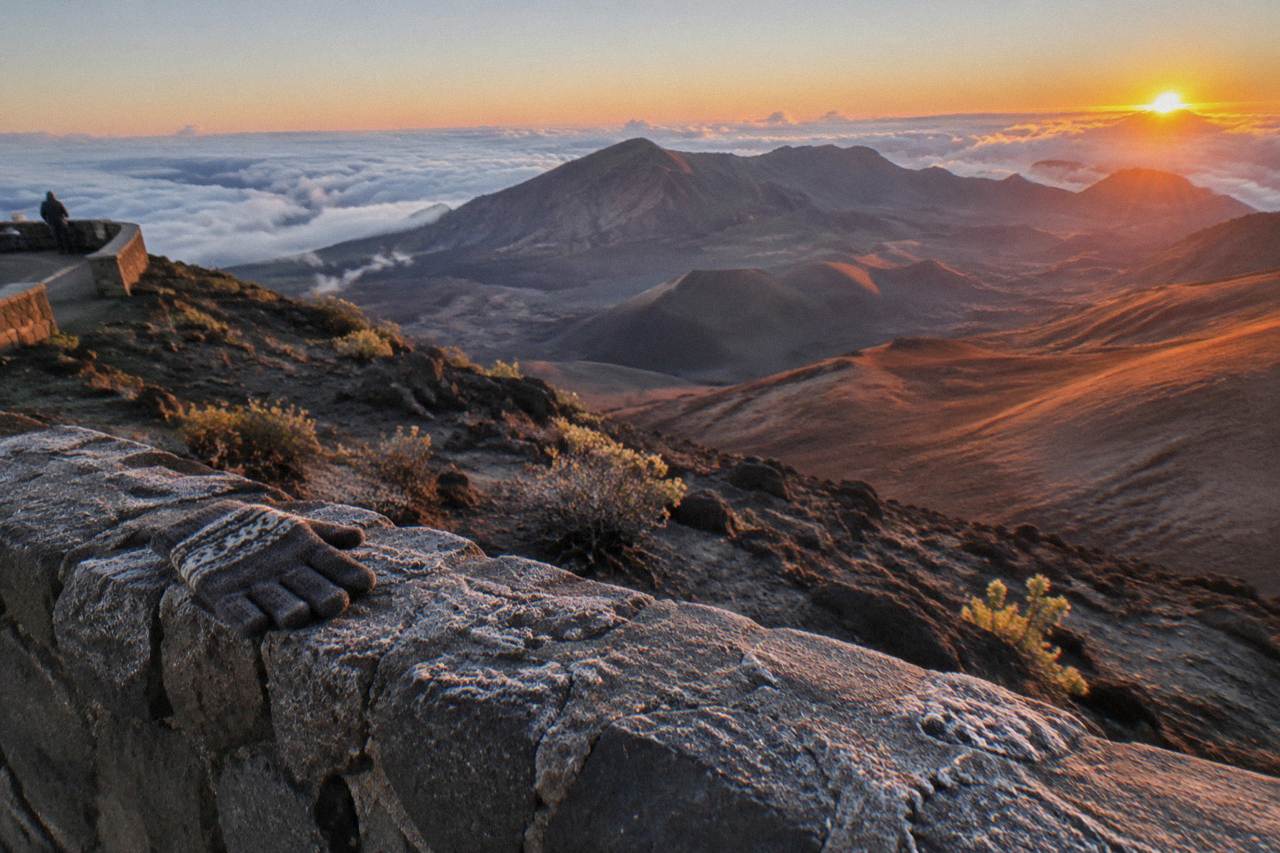
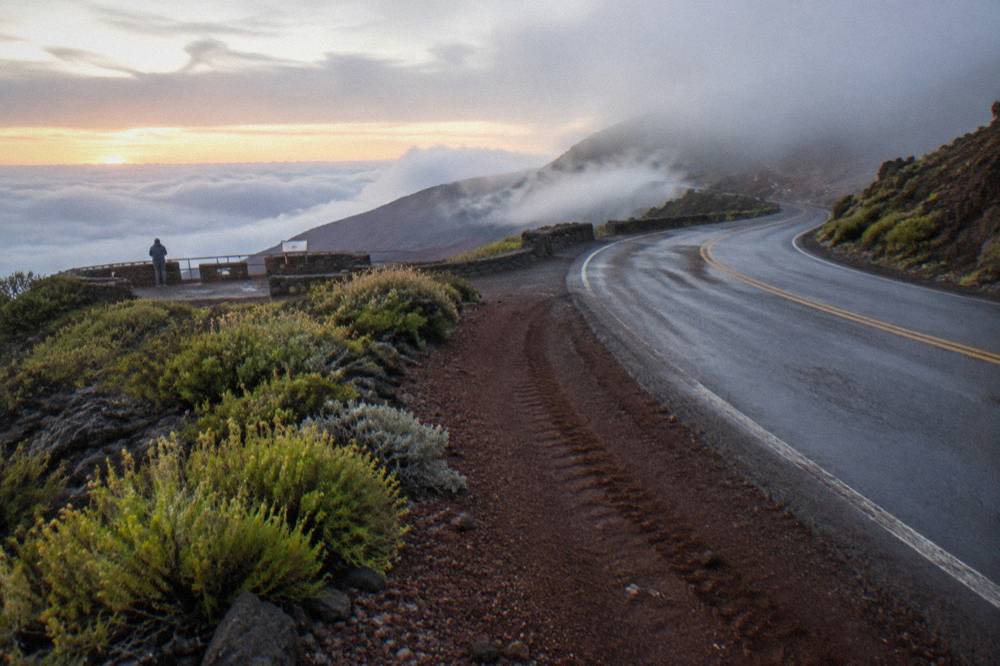
Elevation is the detail people underestimate. The summit runs about 30 F cooler than the coast, and mornings at the top can reach 32 F or below with wind chill on top of that. A traveler leaving a warm Kihei morning can be standing in freezing wind ninety minutes later. The crater floor, for perspective, sits near 7,000 feet, and the four sunrise viewpoints line the road at and above Leleiwi's 8,840 feet. Dress for it; the guide to summit weather and what to wear covers the layering question in detail.
What Are The Four Sunrise Viewpoints And How Do They Compare?
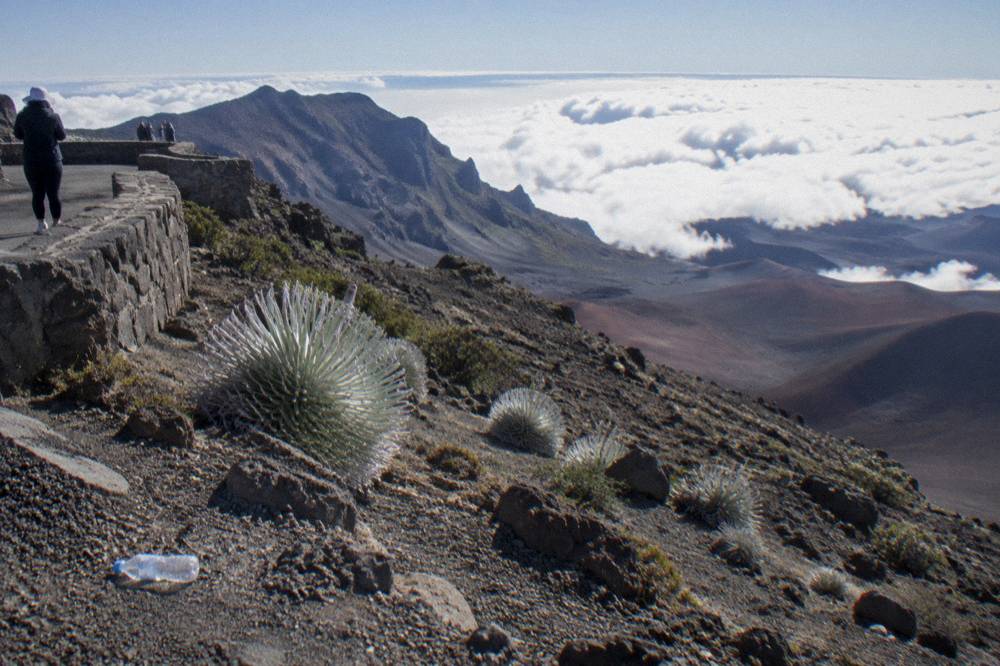
The park's FAQ names four sunrise viewing areas: Pu'u 'Ula'ula (Red Hill) summit at 10,023 feet, Haleakala Visitor Center at 9,740 feet, Kalahaku Overlook at 9,324 feet and Leleiwi Overlook at 8,840 feet, the last a short 10-minute walk from its parking lot. Together they hold the roughly 150 vehicles the park allows for sunrise each morning. All four sit along the same crater road.
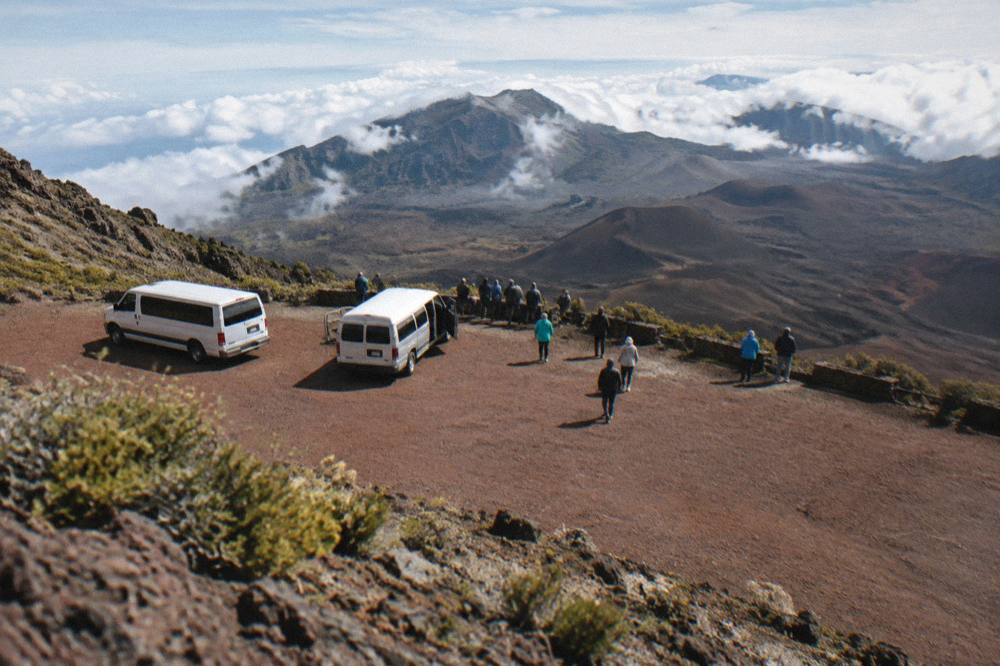
They are not interchangeable, though. The Pu'u 'Ula'ula summit lot is the highest and holds the fewest vehicles, and it fills first; the visitor center lot is the largest of the upper cluster and the one most tours use; Kalahaku looks down onto the crater floor from a bend in the road; Leleiwi is the lowest, the least crowded in feel, and the only one requiring a short walk. The NPS sunrise reservations FAQ is the page that lists all four, and it is worth reading once before you choose where to aim in the dark.
| Viewpoint | Elevation | Access from parking | Character |
|---|---|---|---|
| Pu'u 'Ula'ula (Red Hill) summit | 10,023 ft | Short paved path to the true summit lookout | Highest view, smallest lot, fills first |
| Haleakala Visitor Center | 9,740 ft | Steps from the lot to the terrace | Largest upper lot, tour buses gather here, Sliding Sands trailhead |
| Kalahaku Overlook | 9,324 ft | Roadside overlook | Crater floor panorama from a bend in the road |
| Leleiwi Overlook | 8,840 ft | About a 10-minute walk from its lot | Quietest, lowest, no reservation-day crowd at the rail |
The practical hierarchy is simple. If you want the postcard 10,023-foot view and you are driving yourself, go to the top lot first and drop down only if it is full. If you are on a guided sunrise tour, the vehicle and the guide make that call for you, and the tour vans and coaches cluster at the visitor center terrace. Readers weighing the whole drive-it-or-book-it question usually start at the sunrise tours comparison, which lays out the coach, small-coach and vehicle options side by side.
Those three are the natural anchors for a viewpoints trip. The Sunrise Coach with Local Breakfast from Polynesian Adventure Tours runs 10 hours from $254 per person with hotel pickup, rated 4.7 from 2,471 reviews. The 9-Hour Sunrise with Breakfast from Skyline Hawaii runs from $236 per person, rated 4.7 from 678 reviews. And if the pre-dawn alarm is the deal breaker, the Twilight Sunset with Dinner covers the same crater from the other end of the day, from $257 per person, rated 4.4 from 263 reviews.
How Does The 150-Vehicle Sunrise Limit And The $1 Reservation Work?
Every non-commercial vehicle entering the Summit District between 3:00 and 7:00 a.m. needs a sunrise reservation, $1.00 per vehicle on top of the entrance fee, booked only on recreation.gov. Inventory releases up to 60 days ahead at 7:00 a.m. HST, plus a portion two days ahead, and often sells out within fifteen minutes. About 150 vehicles can access the four viewing areas; after 7:00 a.m., no reservation is needed.
The mechanics matter more than the price. One reservation per customer per three-day period, valid only for the day reserved, photo ID and the confirmation shown at the entrance station, no phone or in-person sales, and no refund for weather. A socked-in summit is not grounds for a refund, which is why the reservation guide on this site spends so much time on the retry pattern. The recreation.gov facility page is the only place to book, and the deeper strategy lives in our Haleakala sunrise reservations guide.
Commercial tours are a different lane. Tours run by NPS-authorized road-based operators, and the park lists four companies: Haleakala Ecotours, Valley Isle Excursions, Skyline Eco-Adventures and Polynesian Adventure Tours, operate under their own park authorization. A traveler who drives themselves needs the recreation.gov reservation; a traveler on an authorized tour does not book one, because the tour vehicle operates under that operator's authorization. No listing on the roster states that the $1 reservation is included with a tour, so treat the two systems as separate and read each tour's own page for what it covers.
The Sunrise Coach with Local Breakfast is the tour most often chosen by exactly the traveler the 150-vehicle cap frustrates: someone who did not land a reservation in the fifteen-minute window, or who simply does not want to drive 11 miles of dark, unlit, unguarded mountain road at 4 a.m. Pickup runs from select Maui hotels, park admission is included per the listing, and breakfast follows the sunrise. The listing shows free cancellation, and the booking page prints the exact cutoff.
How Long Does It Take To Reach The Summit District And Each Viewpoint?
Official NPS drive times to the Summit District entrance are 45 minutes to 1 hour from Kahului, 1 to 1.5 hours from Kihei, and 1.5 to 2 hours from Lahaina. From the entrance gate, it is about 30 minutes and 11 miles of paved road to the summit, passing Park Headquarters at 7,000 feet, Leleiwi and Kalahaku, the visitor center, and finally Pu'u 'Ula'ula.
Two things bend those numbers on a sunrise morning. First, the road has no streetlights and no guard rails, so most drivers travel it slower than the daytime estimate, especially in rain or wind. Second, the entrance station processes each reservation holder individually, and a queue of 150 vehicles does not move instantly. Veteran sunrise drivers leave a cushion of thirty minutes beyond the estimate, and tours build the same cushion into their pickup times, which is why a sunrise coach pickup often falls between 2:00 and 3:30 a.m. depending on where on the island you are staying.
| Starting point | Drive to Summit District entrance | Then to viewpoints | Realistic sunrise departure |
|---|---|---|---|
| Kahului | 45 min to 1 hour | About 30 min to the summit | 3:00 to 3:30 a.m. |
| Kihei | 1 to 1.5 hours | About 30 min | 2:45 to 3:15 a.m. |
| Lahaina | 1.5 to 2 hours | About 30 min | 2:15 to 2:45 a.m. |
| Kula (near entrance) | Minutes | About 30 min | 3:30 to 4:00 a.m. |
The table's departure windows assume a roughly 6:00 to 7:00 a.m. sunrise, which covers most of the year; the sunrise time by month guide has the exact clock times, from about 6:53 in December to about 5:44 in June. In summer the alarm moves earlier still, and that arithmetic is the single most common reason travelers cite for switching from self-drive to a tour, so they can sleep on the coach. One guest review of the Sunrise Coach puts it plainly: "Everyone slept most of the way up there until we got close."
Should You Drive Yourself Or Take A Tour To The Viewpoints?
Drive yourself if you hold a $1 recreation.gov sunrise reservation, want a flexible day, and are comfortable on a dark mountain road; the entrance fee is $30 per private vehicle, valid 3 days for both districts. Take a tour if you missed the reservation window, want to skip the pre-dawn drive, or want park admission, breakfast and a guide bundled; tours from authorized operators run from $236 per person on this site's roster.
The money comparison is closer than people expect. A couple in a rental car pays $30 for the vehicle (3 days, both districts) plus the $1 sunrise reservation, so about $16 per person for the summit morning itself, against roughly $236 to $264 per person for the guided sunrise options. What the tour fee buys is not the view, the view is identical, it is the 2 a.m. logistics: pickup, the drive, the parking decision, admission, breakfast, and a guide who knows which lot to aim for and when. Guests on the Classic Vehicle Sunrise Tour describe the trade in one line: "It was more than worth getting up early."
| Approach | Upfront cost | Handles parking | Handles the dark drive | Breakfast |
|---|---|---|---|---|
| Self-drive with reservation | $30 vehicle (3 days) + $1 reservation | No, lots close when full | No | No |
| Sunrise Coach, Local Breakfast | From $254 per person | Yes, tour vehicle | Yes, hotel pickup | Yes, plus plantation stop |
| 9-Hour Sunrise with Breakfast | From $236 per person | Yes | Yes, hotel or condo pickup | Yes |
| Small-Coach Sunrise Breakfast | From $264 per person | Yes | Yes, South and West Maui hotels | Yes |
| Classic Vehicle Sunrise, No Pickup | From $287 per person | Yes | Partial, meet at Kahului Park & Ride or request pickup | Yes |
The Classic Vehicle Sunrise, run by Bike Maui and Haleakala EcoTours, is the interesting middle row: a vehicle tour with no biking, rated 4.6 from 175 reviews, meeting at the Kahului Park & Ride or by requested pickup, up to 96 travellers in the group. For travelers staying where hotel pickup is thin, it is often the practical guided choice.
What About Sunset At The Same Viewpoints?
Sunset needs no reservation of any kind, and the park states there is no reservation system for sunset viewing. The entrance fee still applies, $30 per vehicle or $15 per person arriving on foot or by bicycle, and the same four overlooks work in reverse light, with the crater catching long shadows instead of first sun. The trade is a later, less crowded, often warmer visit, and a drive back down in the dark.
Sunset solves the reservation problem entirely and softens the cold problem only partly: the summit is still regularly 30 F cooler than the coast, and the park warns that before dawn and after dusk are regularly wet, windy and below freezing. Crowds are thinner than sunrise, and a guest review of the Twilight Sunset with Dinner tour argues the light is better: "Sunset is 1000xs better than sunrise, too!" That is one opinion, not a park statistic, but the sunrise versus sunset comparison works through the trade honestly, and the sunset and stargazing options have their own hub.
For a viewpoints trip, sunset also unlocks the small-group astronomy format. The Small-Group Sunset Astronomy tour from Amazing Maui Stars carries up to 8 travellers, from $245 per person, rated 5 from 57 reviews, and spends about four hours at altitude with telescopes, turning the same overlooks into a night-sky stop. A 5-from-57 review pool is small, print it as it is: five stars from fifty-seven travelers.
Can You Combine The Visitor Center Stop With A Hike Or A Bike Ride?
Yes, easily. The Sliding Sands trailhead is in the Haleakala Visitor Center parking lot itself, and the park lists the first overlook as a 0.5 mile round trip with 50 feet of elevation change, a realistic add-on after sunrise. Bikes are allowed on paved park roads only, never on trails, a cyclist pays the $15 per-person entrance, and the park cautions that hypothermia is common on the descent.
The pairing logic is clean. Watch sunrise at the visitor center terrace, let the crowd drain off over the first hour, then walk the first half mile of Keonehe'ehe'e down into the cinder landscape while the morning light rakes across the crater. The park's own guidance is to treat the descent respectfully: hiking out takes about twice as long as hiking in, and the full 11-mile crossing to Halemau'u is a full-day undertaking that this site covers in the Sliding Sands trail guide. For a structured version, the Crater Hike with Meal from Hike Maui, from $208 per person and rated 4.8 from 74 reviews, hikes the Sliding Sands area with a guide and food, minimum four travelers to run.
Biking is a different animal, and the roster's bike rows state exactly where each ride goes. The Self-Guided Sunrise Bike, 7 Hours from Bike Maui and Haleakala EcoTours runs the van to the summit for sunrise, then a self-guided bike ride down from about 6,500 feet at the park boundary, not inside the park, from $273 per person and rated 4.7 from 777 reviews. It is the roster's largest review pool among bike products, and one guest noted the included outerwear: "Great to have the Helly Hansen clothing offered with this tour so you can pack a little lighter in luggage." The full landscape of ride formats is in the Haleakala bike tours guide.
What Should You Know About Parking, Safety And Conditions At The Top?
Parking lots close when full, the park states there is no gas, food, EV charging or cell service in the crater, and emergency help is at least one hour away. Summit temperatures commonly run 30 to 65 F, altitude sickness symptoms include nausea, headache, dizziness and shortness of breath, and the park advises pregnant visitors and people with heart or respiratory conditions to consult a doctor before hiking at elevation.
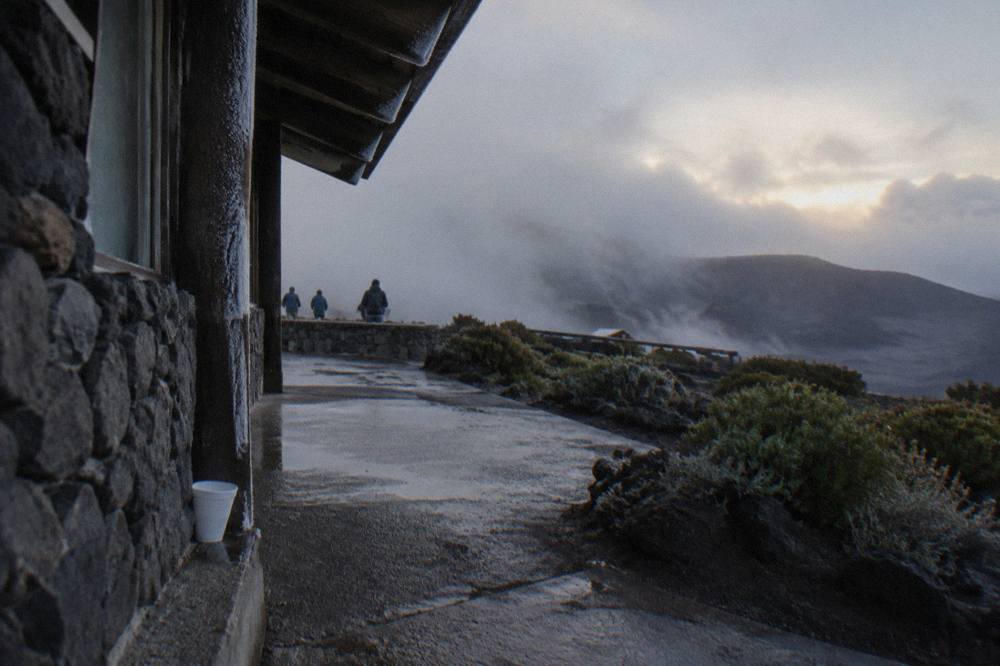
The sunrise logistics fail in predictable ways, and nearly all of them are avoidable. Arriving without a reservation before 7:00 a.m. means no entry, the gate checks ID and confirmation. Arriving late with one means the summit lot may already be closed, in which case drop to the visitor center or Kalahaku rather than circling. Rain and wind are routine, November through March is the rainy season, and the park closes only for extreme hazardous weather; conditions change fast, so check the NPS current conditions page the day before and the morning of. None of the four viewpoints promises a visible sunrise; the mountain decides.
| Situation | What happens | The fix |
|---|---|---|
| No reservation, arrive 3 to 7 a.m. | Entry refused at the gate | Book on recreation.gov 60 days or 2 days out, or take an authorized tour |
| Summit lot full at dawn | Lot closed, no circling | Drop to visitor center lot (9,740 ft) or Kalahaku (9,324 ft) |
| Socked-in clouds at sunrise | No refund on the $1 reservation | Build a spare morning; sunset needs no reservation |
| Early symptoms of altitude sickness | Nausea, headache, dizziness | Descend; the park says symptoms ease with altitude |
| After-dark return drive | No lights, no guard rails | Drive slow, or book a tour that drives you back |
The safety picture is the reason the tour format exists at all. A coach driver runs this road daily, knows the pullouts, and turns the drive home into a nap. That is not a small thing after a 3 a.m. start, and it is the honest argument for the guided product over the $31 self-drive math, an argument laid out tour by tour across Haleakala National Park Tours.
Which Tour Fits Which Kind Of Viewpoint Visitor?
Coach travelers who want the full morning with breakfast and a plantation stop fit the Sunrise Coach, from $254 per person, 4.7 from 2,471 reviews. Budget-conscious sunrise travelers fit the 9-Hour Sunrise with Breakfast, from $236 per person. Travelers who would rather skip the 3 a.m. alarm entirely fit the Twilight Sunset with Dinner, from $257 per person, 4.4 from 263 reviews, which visits the park for about 1.5 hours at golden hour.
The fit question is really an alarm-clock question. Every sunrise product on the roster involves a pickup between roughly 2:00 and 4:00 a.m.; every sunset product involves an afternoon pickup and a return after dark. Within the sunrise family, the differences are group size and meal: up to 72 travellers on the big coach from Polynesian Adventure Tours, up to 22 on the Valley Isle small coach from $264 per person, rated 4.8 from 705 reviews, and a guided vehicle format on the Skyline nine-hour tour. The tours by hotel pickup guide matches each option to where you are staying, which is often the deciding detail.
For travelers whose real interest is the crater rather than the clock, the private and hiking formats deserve a look. The Private Summit Stroll from Holo Holo Maui Tours, from $359 per group and rated 5 from 69 reviews, covers the crater road and Hosmer Grove at your own pace, and the 45-Minute Crater Helicopter from Air Maui, from $368 per person and rated 4.7 from 155 reviews, sees the whole summit geometry from above without touching the parking question at all.
Common Questions About The Haleakala Visitor Center And Viewpoints
Where Is The Haleakala Visitor Center And What Does It Sit On?
The Haleakala Visitor Center sits at 9,740 feet on the crater rim, about 30 minutes and 11 miles of paved road up from the Summit District entrance station. Park Headquarters, the lower visitor center, sits at 7,000 feet near the gate. The park is open 24 hours a day, and water and restrooms are available 24/7 at both Summit District visitor centers.
What Are The Four Sunrise Viewpoints And How Do They Compare?
Pu'u 'Ula'ula (Red Hill) summit at 10,023 feet, Haleakala Visitor Center at 9,740 feet, Kalahaku Overlook at 9,324 feet and Leleiwi Overlook at 8,840 feet. The summit lot is highest and smallest; the visitor center lot is the largest upper lot and hosts most tours; Leleiwi needs about a 10-minute walk. Together the four hold roughly 150 vehicles for sunrise.
How Does The 150-Vehicle Sunrise Limit And The $1 Reservation Work?
Every non-commercial vehicle entering between 3:00 and 7:00 a.m. needs a $1.00 per vehicle reservation from recreation.gov, on top of the entrance fee. Inventory releases 60 days and 2 days ahead at 7:00 a.m. HST and often sells out within fifteen minutes. Authorized commercial tours operate under their own park authorization, and no tour listing states the reservation is included.
Should You Drive Yourself Or Take A Tour To The Viewpoints?
Self-drive costs $30 per vehicle for 3 days plus the $1 reservation, but requires the reservation, the dark drive and the parking gamble. Guided sunrise options run from $236 per person on this site's roster and bundle transport, admission per the listing and breakfast. Tour vehicles park under the operator's own authorization, so you never face the 150-vehicle lottery.
Does Sunset At The Viewpoints Need A Reservation?
No. The park states there is no reservation system for sunset viewing; the entrance fee still applies, $30 per vehicle or $15 per person on foot or by bicycle. The same four overlooks work for sunset, with thinner crowds, though summit temperatures after dusk are still regularly below freezing with wind.
Can You Combine The Visitor Center Stop With A Hike?
Yes. The Sliding Sands trailhead is in the visitor center parking lot, and the first overlook is a 0.5 mile round trip with 50 feet of elevation change, a realistic post-sunrise walk. The park notes hiking out takes about twice as long as hiking in, and altitude sickness is a concern at this elevation, so carry water and go slow.