Haleakala Summit Weather By Month: Temperatures, Cloud And Snow
The summit of Haleakala sits at 10,023 ft, roughly 30 F cooler than the Maui coast, and its weather swings from below freezing before dawn to mild afternoons within a single day. This guide breaks the year down month by month so you know what to pack, when to go and what the forecast means for a sunrise or stargazing trip.
Short answer
Haleakala's summit runs about 30 F cooler than the coast, with year-round highs of 50 to 65 F and pre-dawn temperatures often at or below 32 F. November through March is the rainy season, winter can bring snow and ice, and no month guarantees a clear sunrise. Check the forecast, dress in warm layers, and plan around the park's own weather and safety guidance.
The summit of Haleakala stands 10,023 ft above sea level, high enough that the mountain makes its own weather. The National Park Service states plainly that the summit runs about 30 F cooler than the coast, that temperatures range from below freezing to highs of 50 to 65 F at any time of year, and that wind chill and damp can make it feel colder still. A traveler who leaves Kihei in beach clothes can step out of the car at Pu'u 'Ula'ula into a below-freezing wind. That gap surprises people every single morning, and it is the single biggest reason summit trips go wrong. If you're weighing this summit against Mauna Kea for your trip, our comparison of Hawaii's two famous summit experiences covers how they differ on weather, stargazing and access.
This guide walks through the summit climate month by month, using the park's own published figures plus long-term NOAA station data from just below the summit. It also covers what the forecast actually decides: whether the sunrise shows, whether the stars appear, when snow and ice become a risk, and how to dress so the cold does not ruin the view. Weather can close roads and lots fill early, so treat every figure here as a planning baseline, not a promise. If you want the full picture of what to book for a dawn start, the sunrise tours hub compares every listing on this site.
What Is The Weather Like At The Haleakala Summit?
Summit weather is cold, windy and fast-changing at any hour of the year, with temperatures commonly 30 to 65 F and pre-dawn readings at or below freezing even in summer. The park reports the summit sits about 30 F cooler than the coast, with wind chill pushing the felt temperature lower. Rain, blowing clouds and sudden sunshine can all arrive inside one hour, so no single forecast holds for long.
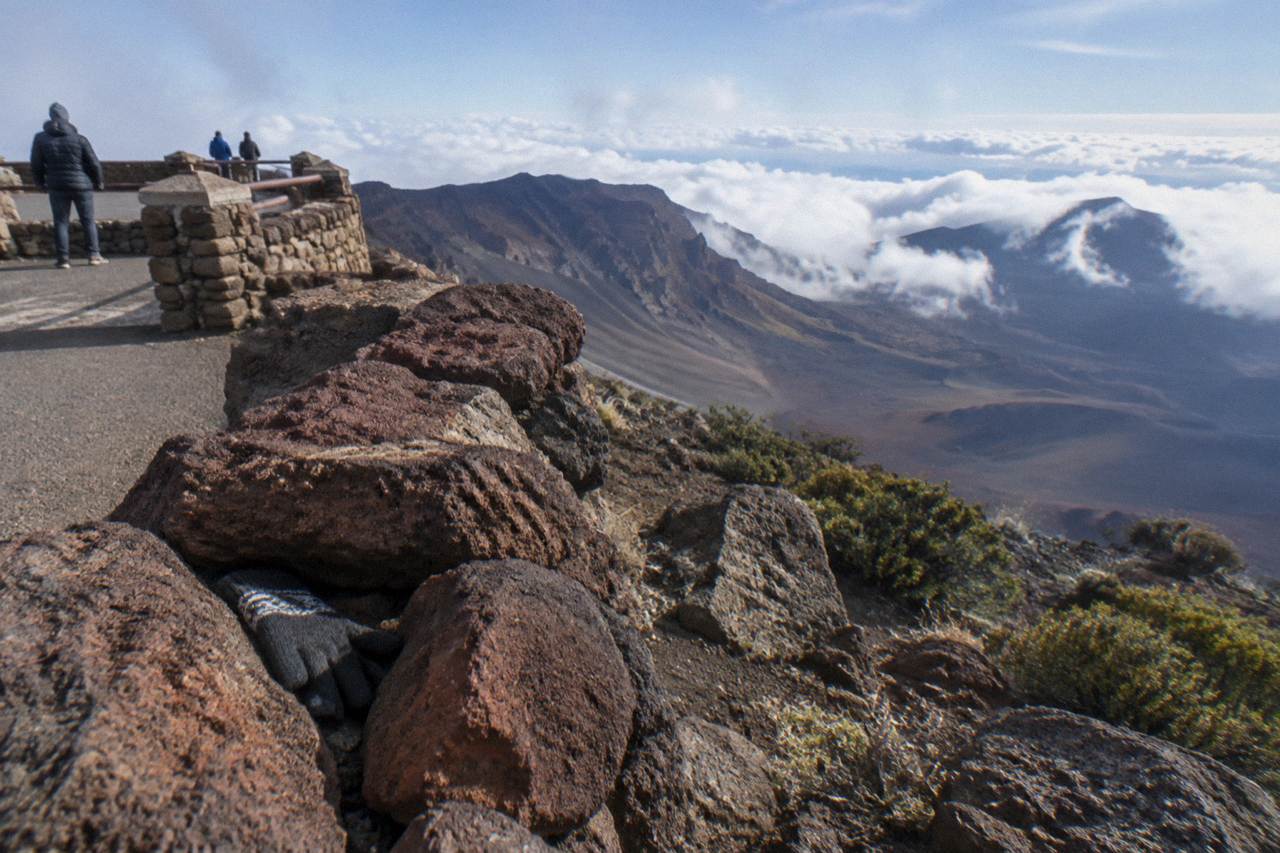
The National Park Service describes the pattern on its weather page: temperature drops about 3 F for every 1,000 ft of elevation, so the climb from Kahului at sea level to the summit is a climb out of one climate and into another. The Summit District begins at 7,000 ft, and the last stretch of crater road rises through cloud that often sits exactly at that level. The famous "above the clouds" sunrise happens because the trade-wind inversion traps moisture below the summit, but that inversion weakens and shifts, and when it does the summit can sit inside the cloud instead of above it.
Two practical facts follow from this. First, the park warns there is no gas, no food and no cell service in the crater, and emergency help is at least an hour away, so a summit trip in marginal weather is not a casual drive. Second, weather can close the park; the park states it does not close except in extreme, hazardous weather, and conditions do change, so check current conditions before you head up. None of that makes the summit a bad bet. It makes it a place where the difference between a miserable morning and a spectacular one is usually preparation, which is the through-line of everything below.
The nine-hour sunrise tour with breakfast run by Skyline Hawaii handles the dark drive and the timing for you, and its listing notes hotel or condo pickup across Maui; having someone else watch the clock and the road while you watch the sky is exactly the kind of help summit weather rewards. Details and live pricing are on the tour page. Once you've picked your morning, the summit guide walks you through the viewpoints and the drive up so you know exactly what awaits at the top.
How Does Summit Weather Change Month By Month?
Long-term station data from just below the summit shows the warmest stretch runs June through September, with average highs in the mid 60s F and monthly rainfall under three inches. Winter, November through March, is the rainy season, with four to over six inches of rain per month, cooler highs and the real possibility of snow and ice at the top. Shoulder months split the difference.
The numbers below come from NOAA 1991-2020 climate normals for the Haleakala RS station at 6,962 ft, roughly 3,000 ft below the summit. Treat them as a baseline for the upper mountain rather than an exact summit reading: the true summit runs colder, and the park's own range for summit temperatures is below freezing to 50 to 65 F year-round. The precipitation column is the honest signal for planning, because rain at the station often means cloud and wind at the summit. Once you've picked your weather window, our guide to Haleakala Summit viewpoints and access covers what to expect from the road up and the overlooks at the top.
| Month | Avg High (F) | Avg Low (F) | Avg Rain (in) | What It Means For A Summit Trip |
|---|---|---|---|---|
| January | 63.1 | 44.7 | 4.5 | Rainy season; coldest dawns, snow and ice possible |
| February | 60.0 | 42.2 | 4.2 | Cool and wet; strong winter storms can sweep the top |
| March | 58.2 | 42.7 | 4.7 | Wettest winter month at the station; crowds thinner |
| April | 61.6 | 44.0 | 3.3 | Transition; mixed but improving skies |
| May | 62.0 | 45.5 | 2.9 | Drying out; one of the more reliable sunrise months |
| June | 65.9 | 48.8 | 0.5 | Driest month on record; excellent odds, busy summit |
| July | 65.7 | 47.7 | 2.2 | Warm afternoons; trade-wind cloud common below |
| August | 67.1 | 49.6 | 2.7 | Warmest month; good stargazing window |
| September | 64.6 | 48.1 | 2.6 | Humidity and tropical systems can reach the summit |
| October | 64.4 | 48.2 | 2.4 | Pleasant and less crowded; skies often stable |
| November | 63.7 | 46.6 | 5.3 | Rainy season returns; dawns colder and less certain |
| December | 61.3 | 45.8 | 6.6 | Wettest month; holiday crowds plus the roughest weather |
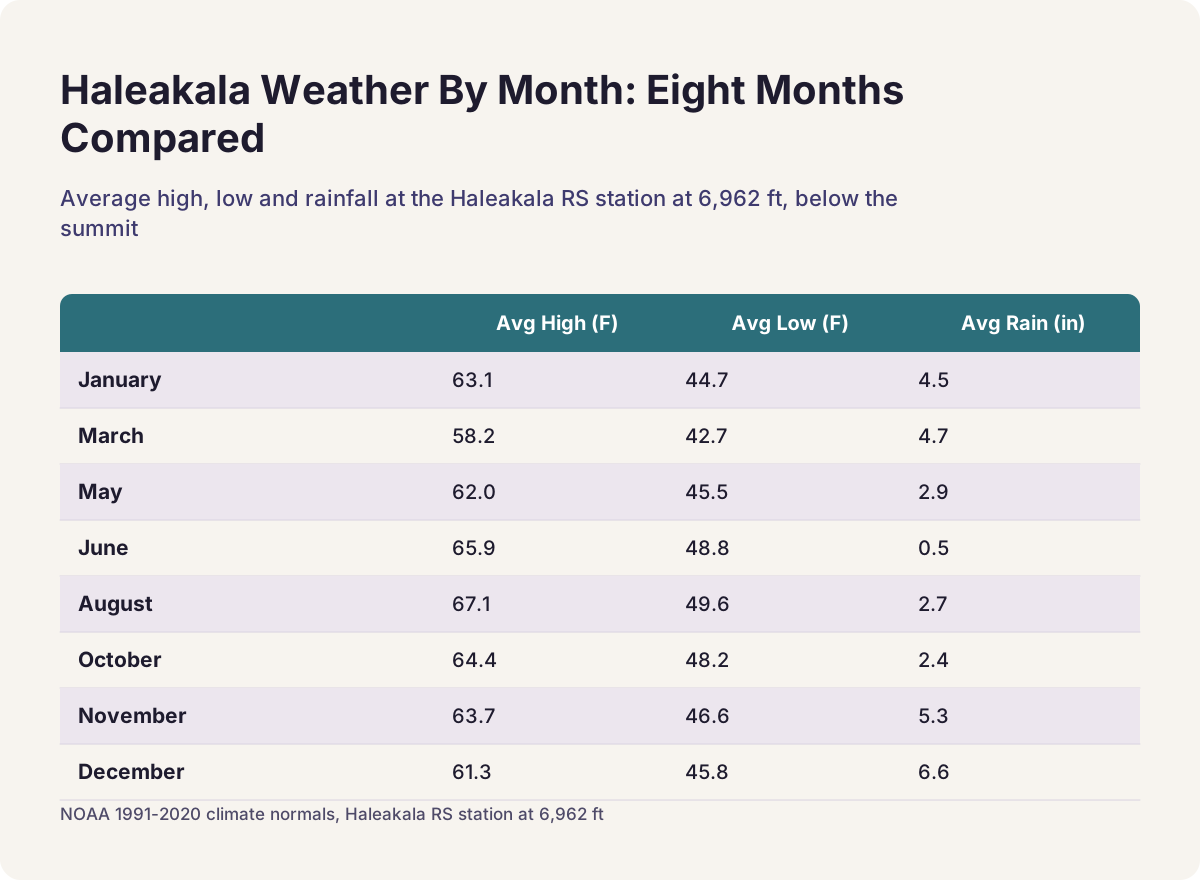
Read the table as risk, not fate. June's half-inch of average rain does not guarantee a clear sunrise, and a December storm can still break into a flawless evening. But if your dates are flexible and the summit is the point of the trip, the June-through-October window gives you the best base odds, and the November-through-March stretch is when you should build a backup plan, or pick a tour with a generous cancellation policy. That is also when a guide's judgment earns its keep.
How Cold Is Sunrise At The Summit?
Pre-dawn summit temperatures commonly sit at or below 32 F, the park states, and wind chill regularly drives the felt temperature even lower, in every month of the year. The same afternoon can reach 50 to 60 F. Anyone heading up for the 3 to 7 a.m. sunrise window should dress for freezing conditions regardless of the season.
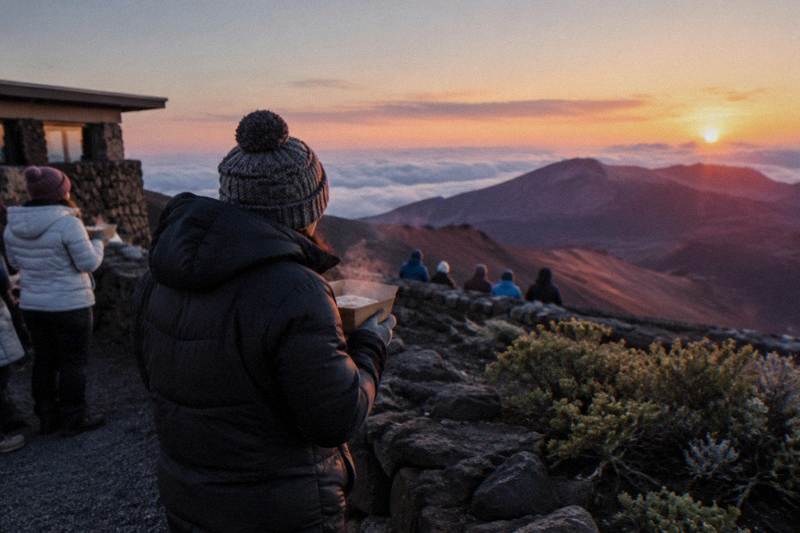
The park's FAQ is blunt about it: summit mornings can reach 32 F (0 C) or below, and before dawn and after dusk are regularly wet, windy and below freezing. Add the wind that funnels across the crater rim and the damp that comes with riding through cloud layers, and the number on the thermometer understates what your body feels standing still for an hour waiting for the sun. This is the part of the trip travelers most consistently underestimate, and a sunrise tour is essentially a cold-weather event held in Hawaii.
The time you actually spend standing in it matters as much as the temperature. You will typically wait at a viewpoint for 45 minutes to an hour before first light, with nothing to block the wind. There are no buildings to retreat into at the viewing areas, and the park notes parking lots close when full, so the warm car is not always parked nearby either. A review from a guest on the guided sunrise bike tour mentions the Helly Hansen clothing offered with that tour so luggage can stay lighter, which tells you how seriously operators take the cold.
Timing also shifts through the year. Sunrise at sea level near the mountain ranges from about 5:44 a.m. in mid-June to 7:04 a.m. in mid-January, and mountain dawn follows the same pattern, which means winter sunrise guests stand in the coldest, darkest hours for longer. The trade-off is that a January 7:00 a.m. sunrise means a far gentler wake-up call than June's.
Does It Snow On Haleakala?
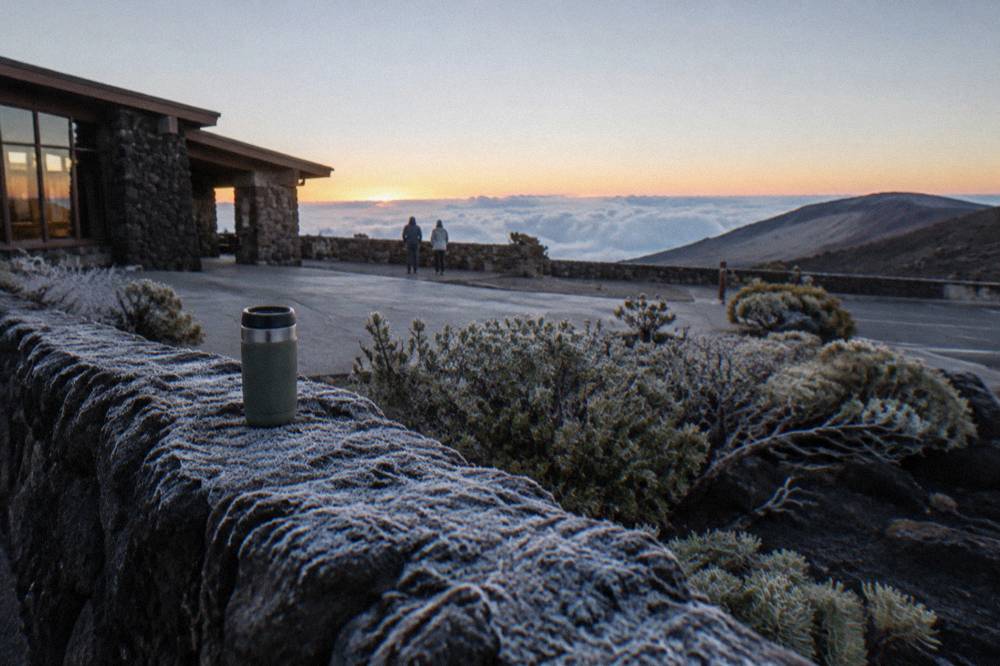
Yes. Snow and ice fall on the upper mountain most winters, typically between December and March, and the park itself notes that snow can make a sunrise visit chilly. Snow at the summit is not an everyday event, but it is a normal feature of the mountain's winter, and icing on the crater road is the more consequential hazard for travelers.
Hawaii snow surprises people who picture the islands as pure tropics, but a 10,023 ft volcano in the middle of the Pacific catches winter storms like any high peak. When a cold upper-level system passes over the state, precipitation that falls as rain at the coast falls as snow near the summit, and the crater rim can briefly turn white. The event rarely lasts long; strong sun and dry air usually erase it within days. The park states it does not close unless weather is extreme and hazardous, but icing is exactly the kind of hazard that can close the crater road temporarily, and conditions can change fast enough that a morning plan made at dinner is invalid by 3 a.m.
The practical takeaway is not to chase snow but to respect ice. If a winter storm has just passed, check the park's conditions page before driving up in the dark, drive slower than the road invites, and know that a tour operator makes those calls for a living. Anyone weighing a winter dawn start against the drive itself can read more in is the drive to Haleakala scary.
Will Clouds Block The Sunrise?
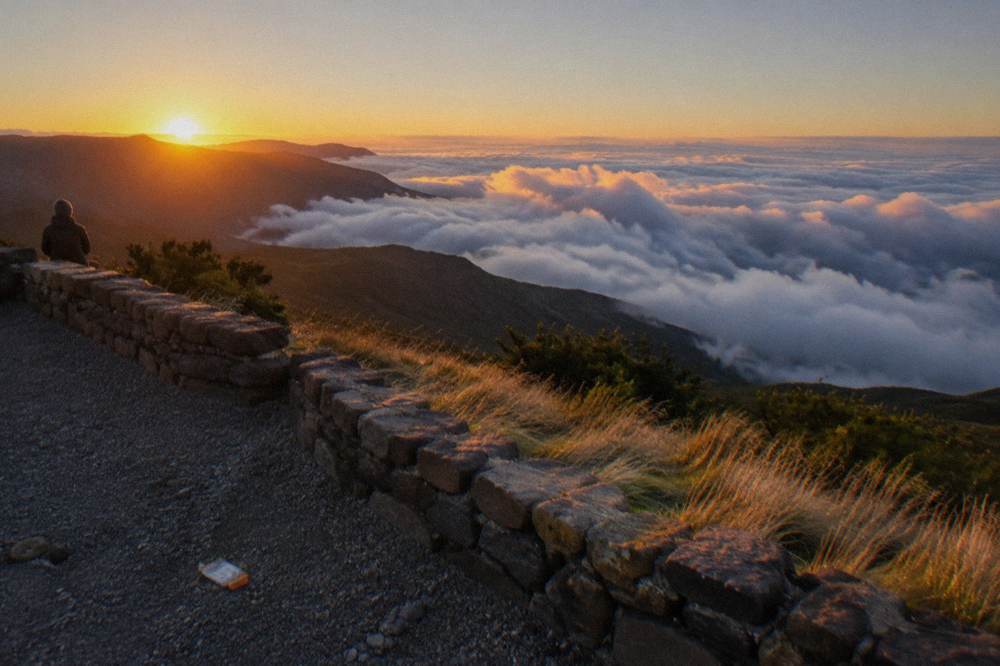
Sometimes, yes, and no operator or reservation can change that. The summit sits above the trade-wind cloud layer much of the time, which is what makes the famous sunrise, but the inversion weakens seasonally and cloud can sit at or above the rim on any given morning. Weather decides; the booking only gets you there.
The trade-wind inversion is the engine of Haleakala's reputation. Moist air rising off the ocean condenses into a cloud layer that typically tops out somewhere below 7,000 ft, leaving the summit in clear, dry air above a white sea. When the inversion is strong, sunrise from 10,023 ft is one of the most reliable spectacles in the national park system. When it weakens, in winter and during Kona-wind episodes that replace the trades, cloud can swallow the summit entirely, and a guest who did everything right sees gray. A review from one rider on the self-guided sunrise bike descent describes exactly this: socked-in clouds at sunrise, and a great morning anyway, because the ride and the guide carried the day.
Cloud risk is seasonal, matching the rain table above. The June-through-October stretch, with station rainfall between half an inch and about 2.7 inches a month, is when the summit most consistently floats above the layer. November through March carries the highest chance of a gray dawn, and also the coldest wait if it is gray. Two mitigation strategies work. First, build flexibility: stay more than one night nearby so a bad forecast has a tomorrow, and prefer listings with free cancellation, reading each booking page for its cutoff. Second, pick a tour whose value survives cloud: a breakfast stop, a crater hike or a downhill ride all still deliver when the horizon refuses to cooperate. The large-coach sunrise with local breakfast from Polynesian Adventure Tours, 4.7 across 2,471 reviews and from $254 per person, includes breakfast and a plantation visit, so a hidden sun does not zero out the morning.
What Is The Best Season For Stargazing Weather?
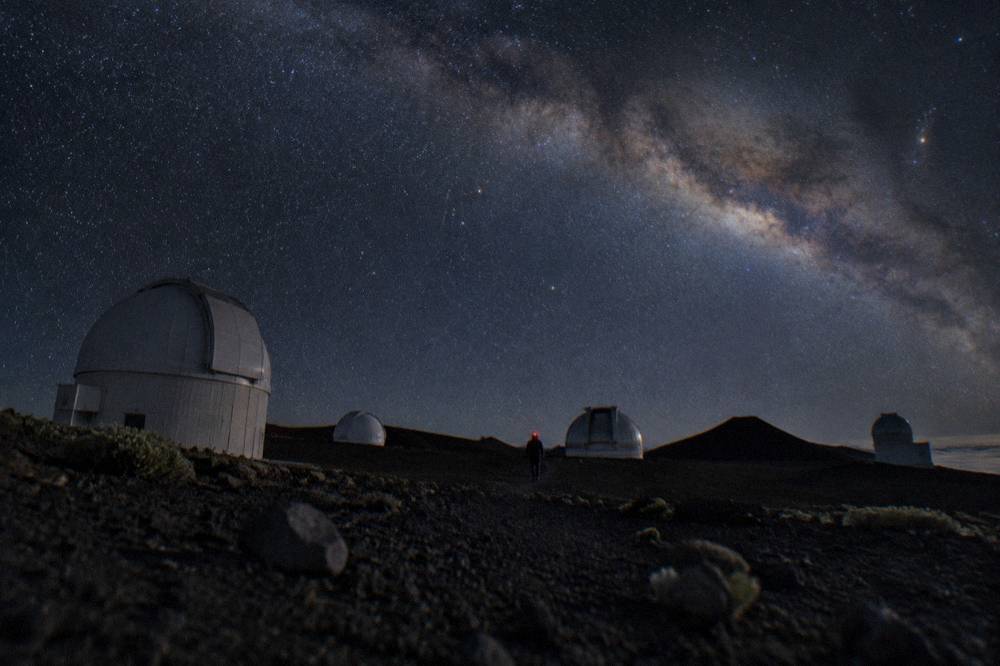
Summer and early fall offer the clearest, most stable summit skies, with June through September combining low rainfall, modest humidity and evening temperatures that are cold but manageable. Winter nights are colder, wetter and more often cloud-covered. Moon phase matters as much as season: a new-moon window beats a cloudless full-moon night for seeing stars.
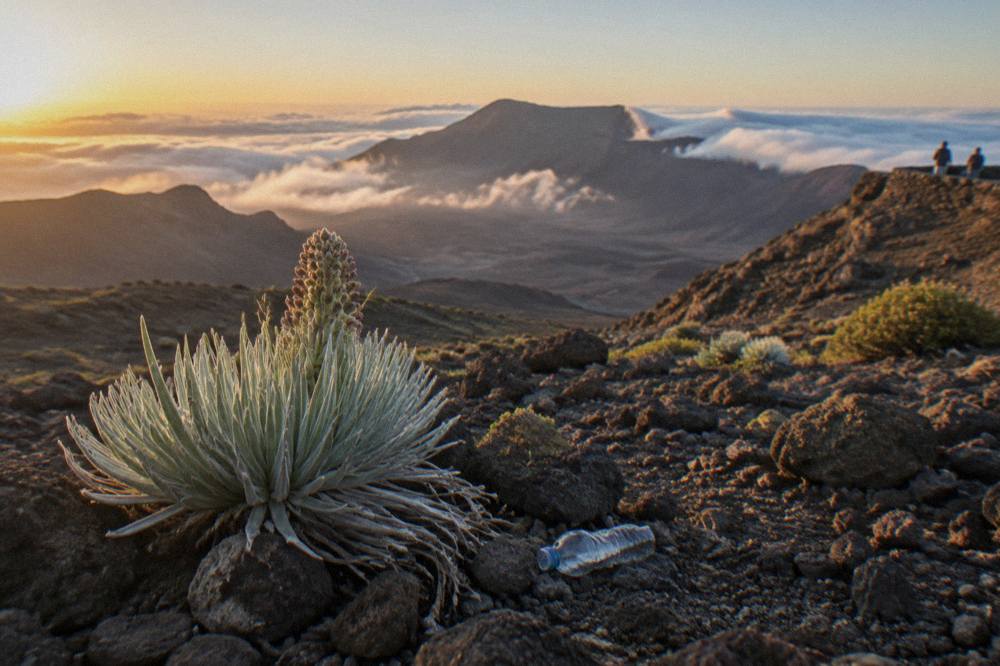
Stargazing from the summit needs three things to line up: clear air, darkness and a moon that is not washing out the sky. The seasonal half is covered by the rain table; the lunar half is a calendar problem. Around each new moon, the sky is at its darkest and the Milky Way, when it is positioned over Hawaii, stands out in a way most visitors have never seen from the ground. The park's stargazing page covers the basics: dress warmly, bring something to sit on, use red light rather than white, and expect no lights or guard rails on the road after dark. Those are not boilerplate warnings at 10,023 ft; after-dark summit conditions are regularly below freezing and windy.
The small-group sunset astronomy tour run by Amazing Maui Stars, 5.0 from 57 reviews and from $245 per person, spends about four hours around 10,000 ft with a maximum of eight travelers, which is the format summit weather rewards: short transit, long viewing, and someone else reading the sky. For travelers deciding whether the dark drive is worth it at all, is stargazing at Haleakala worth it works through the trade-offs, and the stargazing tours hub lists every option on this site.
How Do Sunrise And Sunset Times Shift Through The Year?
Sea-level sunrise near Haleakala moves from about 5:44 a.m. in mid-June to 7:04 a.m. in mid-January, a swing of well over an hour, and sunset moves from about 5:45 p.m. in mid-November to 7:09 p.m. in mid-July. These times set your wake-up call, your drive deadline and how long you stand in the cold.
The table below gives sea-level times computed for the 15th of each month, local standard time. Summit viewing times are effectively the same; the mountain's height changes what you see, not when the sun appears, and from the summit you can see the horizon slightly sooner at dawn and slightly later at dusk than at the shore.
| Month (15th) | Sunrise | Sunset | Daylight Planning Note |
|---|---|---|---|
| January | 7:04 a.m. | 6:04 p.m. | Latest sunrise; a gentler alarm but the coldest wait |
| February | 6:56 a.m. | 6:23 p.m. | Days lengthening quickly through the month |
| March | 6:35 a.m. | 6:35 p.m. | Near the equinox split |
| April | 6:07 a.m. | 6:43 p.m. | Earlier starts, drying skies |
| May | 5:48 a.m. | 6:54 p.m. | Reliable month, early wake-up |
| June | 5:44 a.m. | 7:06 p.m. | Earliest sunrise, longest days |
| July | 5:52 a.m. | 7:09 p.m. | Latest sunset of the year |
| August | 6:04 a.m. | 6:56 p.m. | Excellent sunset-plus-stars evenings |
| September | 6:12 a.m. | 6:29 p.m. | Sky darkens early enough for a full night |
| October | 6:20 a.m. | 6:02 p.m. | Comfortable times, thinner crowds |
| November | 6:35 a.m. | 5:45 p.m. | Earliest sunset; rainy season begins |
| December | 6:53 a.m. | 5:47 p.m. | Short days, holiday crowds, winter weather |
For sunrise planners the January times are quietly a gift: a 7:04 a.m. sunrise means leaving Kahului around 5:15 a.m. rather than 3:45 a.m., a real difference with children in the group. For sunset and stargazing planners, July and August push dusk past 6:50 p.m., which pairs neatly with a dinner tour and lets darkness arrive without an exhausting schedule. The seven-hour sunset twilight tour with dinner from Polynesian Adventure Tours, from $257 per person with a 4.4 rating from 263 reviews, is built around exactly that pairing, and one guest review on the listing notes sunset being "1000xs better than sunrise" for their group; your mileage, and your weather, will vary.
What Should You Wear For Summit Weather In Each Season?
Dress in insulating layers with a windproof shell, long pants, closed shoes, a hat and gloves in every month, because summit mornings sit at or below freezing year-round. Summer lets you lighten the base layers; winter demands full winter gear including serious wind protection and warm socks. There is no month in which beach clothing is enough at dawn or after dark.
The park's own guidance treats the summit like a cold high-altitude destination, and so should your suitcase. The reliable formula is three layers: a moisture-wicking base, a fleece or insulated mid-layer, and a wind-and-water shell, because wind chill is the variable most likely to hurt. Gloves and a hat do disproportionate work for their size. If you would not stand still for an hour in a freezer in what you are wearing, you are not dressed for a Haleakala sunrise.
| Season | Typical Pre-Dawn Summit Feel | Clothing That Works | Extra Items |
|---|---|---|---|
| Summer (Jun-Aug) | Around freezing, wind chill lower | Base layer, fleece, windbreaker, long pants | Beanie, gloves, warm socks |
| Fall (Sep-Oct) | At or below freezing, damp wind common | Base layer, insulated mid, rain shell | Beanies, gloves, hot drink in a thermos |
| Winter (Nov-Mar) | At or below 32 F, wind and ice risk | Full winter kit, heavy insulation, waterproof shell | Hand warmers, boots with grip, blanket |
| Spring (Apr-May) | Cold and gusty mornings | Base layer, fleece, windproof layer | Gloves, hat, spare layer in the car |
Altitude deserves a line of its own. At 10,023 ft there is measurably less oxygen, and the park's hiking guidance lists nausea, headache, dizziness and shortness of breath as altitude sickness symptoms to watch for, advising pregnant visitors and anyone with heart or respiratory conditions to consult a doctor. Move slowly, drink water, and take symptoms seriously: descending is the cure. More on that in is altitude sickness common at Haleakala.
How Should Weather Shape Your Haleakala Plans?
Match your activity to the season's strengths: June through October for sunrise odds and mild afternoons, summer and fall evenings for stars, and winter trips booked with flexibility and cancellation cover. Whichever you choose, check the forecast the day before, recheck park conditions, and let a professional handle the dark, icy or wind-driven drive when the outlook is marginal.
A weather-aware plan looks like this. Pick your window from the month table, book a listing whose format survives a gray sky, confirm the cancellation cutoff on the booking page, then watch the National Weather Service forecast for the summit zone starting two days out. On the morning itself, the park's conditions page is the word on road status. If the forecast is bad and your listing's cutoff has not passed, move the booking; if it has, go anyway, because cloud-belt sunrises at Haleakala still beat sleep more often than not, and operators do not cancel for gray.
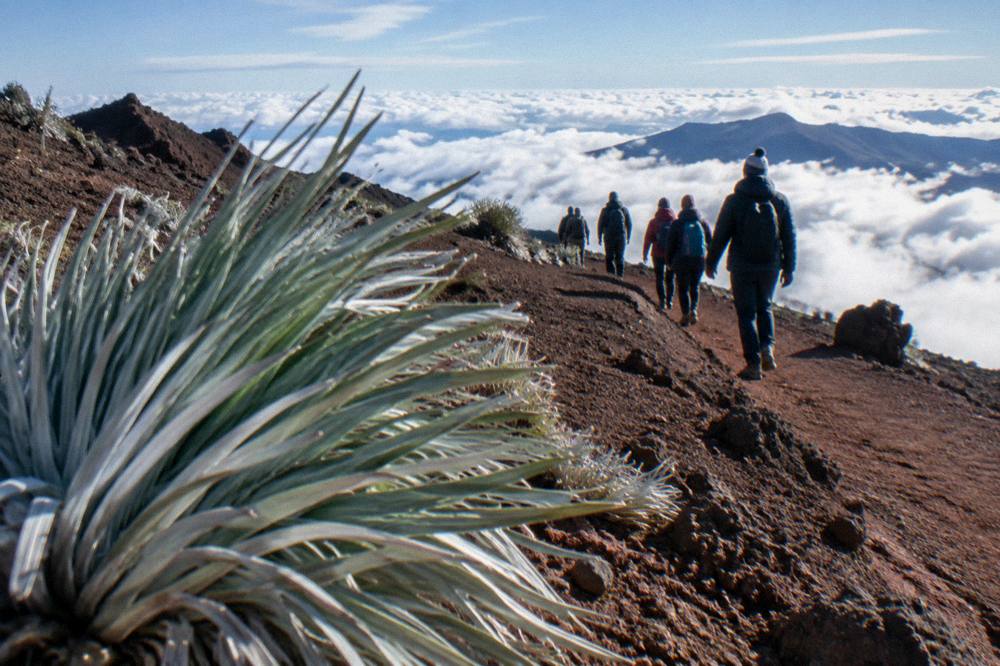
The crater hiking experience from Hike Maui, 4.8 from 74 reviews and from $208 per person, is a format that leans on guides reading conditions in real time, with a small group and a meal included, and its listing covers the Sliding Sands area where the crater floor drops away below the rim. If hiking the crater is on your list, the Haleakala hiking tours hub compares the walking options, and how to dress for Haleakala sunrise turns the clothing table above into a packing list. Since the summit chills fast once the sun climbs, the drive down and the rest of your day depend on when that first light actually happens, so the month by month breakdown of Haleakala sunrise times tells you what time to leave based on the season and where you're staying.
One planning point that belongs to this site: readers comparing guided versus independent mornings should remember that tours run by NPS-authorized road-based operators operate under their own park authorization, while a traveler who drives themselves for sunrise needs the $1.00 per-vehicle recreation.gov reservation for the 3 to 7 a.m. window, released 60 days and again 2 days ahead at 7:00 a.m. HST and often gone within fifteen minutes. The reservation never guarantees the sky; it only guarantees the parking space you watch the sky from. Our Haleakala National Park Tours comparison pages exist so you can weigh those trade-offs with the real numbers in front of you.
Common Questions About Haleakala Summit Weather
How much colder is the Haleakala summit than the coast?
About 30 F cooler on average. The park states temperature falls roughly 3 F per 1,000 ft, and the summit stands 10,023 ft above sea level. A mild, warm afternoon in Kihei commonly corresponds to a cold afternoon in the 40s or 50s F at the top, and a pre-dawn summit reading at or below 32 F is normal in any month.
What is the coldest month at Haleakala's summit?
Winter overall, December through February, brings the coldest dawns and the highest chance of ice. Station normals show February with the lowest average high near the summit, about 60 F, and January and December pre-dawn temperatures at or below freezing, with wind chill making it feel colder still.
Does it snow on Haleakala?
Yes, most winters. Snow and icing occur on the upper mountain, typically between December and March, when winter storms pass over the state. Snow rarely lingers long, but ice on the crater road is the real hazard, and extreme winter weather can close the park or the summit road temporarily. Check the park's conditions page on the day.
What is the best month for a clear Haleakala sunrise?
June through October offers the best base odds, anchored by June's half-inch of average monthly rainfall at the station just below the summit. No month guarantees a clear dawn, though: the summit can sit inside the cloud layer on any morning, and the booking only gets you up the mountain.
How should I dress for the summit if it is warm at my hotel?
Dress for freezing weather regardless of the coast. Wear a wicking base layer, an insulating mid-layer and a windproof shell, with long pants, closed shoes, a hat and gloves. You will typically stand outside at a viewpoint for 45 minutes to an hour in wind, and there is no shelter at the sunrise viewing areas.
Can bad weather cancel a Haleakala tour?
Yes. Weather and operators decide, and tours do not run or deliver views when conditions are unsafe or the summit is closed. Every listing on this site states free cancellation per the listing, so read the booking page for the exact cutoff before you rely on it, and rebook rather than gamble when a storm is forecast.