Kipahulu District And Pipiwai Trail: Visiting With A Hana Tour
The Kipahulu District sits 12 miles past Hana at the end of a long coastal drive, and its Pipiwai Trail climbs through bamboo to a 400-foot waterfall. Here is what the park's own pages say, and how a guided Hana day fits in.
Short answer
The Kipahulu District entrance is at Mile Marker 42 on the Hana Highway, 12 miles past Hana. The Pipiwai Trail runs 4 miles round trip with 800 feet of gain to the Waimoku Falls viewing area. The Pools of Ohe'o are closed to entry and swimming, viewable from the Kuloa Point Trail. Your $30 vehicle entrance fee covers both districts for 3 days.
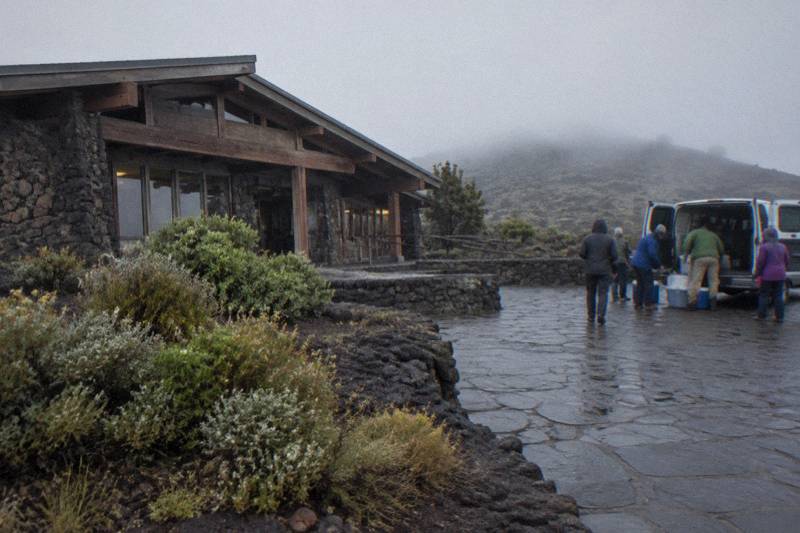
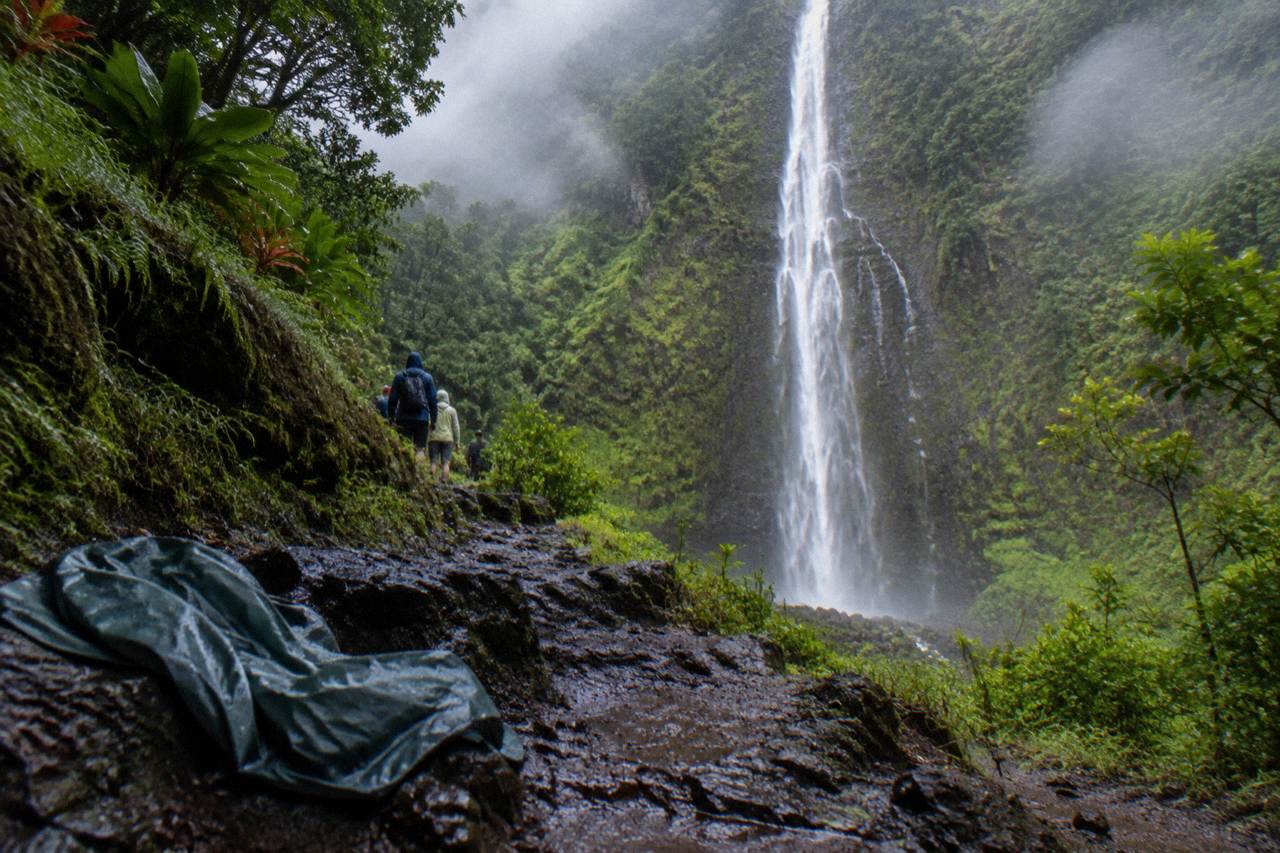
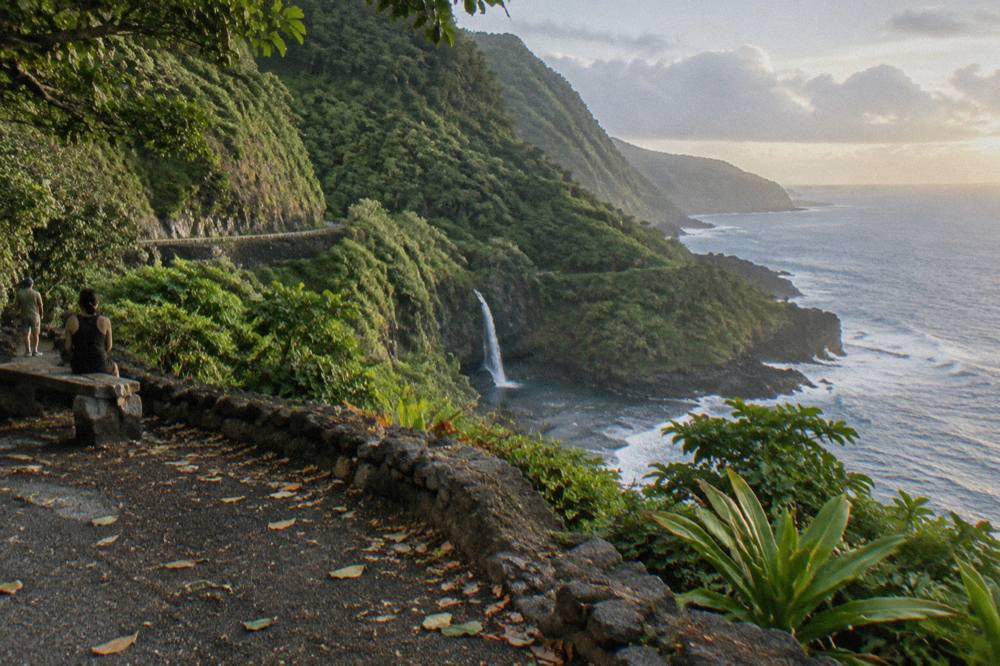
Most people picture the summit when they hear Haleakala, but the park has a second, wetter face on the far side of the island. The Kipahulu District sits at the end of the Hana Highway, 12 miles past the town of Hana at Mile Marker 42, and it gets 187 inches of rain a year against the summit's freeze-thaw chill. Daytime temperatures there run 70 to 80 F, a different world from the 10,023 ft Pu'u 'Ula'ula summit. The district's anchor hike is the Pipiwai Trail, 4 miles round trip with 800 feet of gain, ending at a viewing area for the 400-foot Waimoku Falls.
Reaching Kipahulu is the real planning problem. The park's FAQ page puts the drive from Kahului at 2.5 to 3 hours each way, without stops, on a winding two-lane road with one-lane bridges. That is why many Kipahulu searchers end up comparing a self-drive day against a guided Hana tour, and why this guide covers both: the trail itself, the closed pools, the fees, and the three listed tours that fold the district into a bigger Maui day. For the latest on which sections of the pools you can actually visit right now, our guide to what's open and closed at the Seven Sacred Pools has the details.
How Do You Get To The Kipahulu District?
You reach Kipahulu by driving the Hana Highway past Hana for 12 miles to the park's entrance station at Mile Marker 42. Official drive times from the NPS FAQ page run 2.5 to 3 hours from Kahului, 2.5 to 3 hours from Kihei, and 3 to 4 hours from Lahaina, each way and without stops. There is no gas or food inside the park, and emergency help is at least one hour away.
Those official figures deserve emphasis because the Hana Highway is not a road you average speed on. Between Kahului and Hana you cross dozens of blind curves and one-lane bridges, and the final 12 miles past Hana narrow further as the coast opens up. First-time visitors routinely budget a full day for the round trip and treat any stop, a waterfall pullout, a banana bread stand, the Wailua overlook, as something that adds time rather than fills it.
| Starting point | Drive time to Kipahulu (NPS FAQ) | Practical note |
|---|---|---|
| Kahului | 2.5 to 3 hours each way | Nearest airport and car rentals; fuel up in Paia |
| Kihei | 2.5 to 3 hours each way | South Maui adds little once you join the highway |
| Lahaina | 3 to 4 hours each way | West Maui adds the pali stretch before Kahului |
The entrance fee is the same one that covers the summit: $30 per private vehicle, valid 3 days, both districts. That structure matters here. If you drove up for sunrise on Monday, your receipt already covers a Wednesday Kipahulu visit, so keep it in the glovebox. Cyclists and walkers pay $15 per person, and the park takes credit and debit only, no cash. For everything on fees and passes, the Haleakala entrance fee and passes guide breaks down each option, including the $55 annual passes.
Two honest warnings from the park's own pages. Kipahulu is remote enough that rangers state emergency help is at least one hour away, and there is no gas or food for sale inside either district. Cell service disappears along stretches of the road. Fill the tank in Paia or Hana, carry water, and check the park's current conditions page the morning you go, because weather can close sections of road and trail without much notice.
What Is The Pipiwai Trail Like?
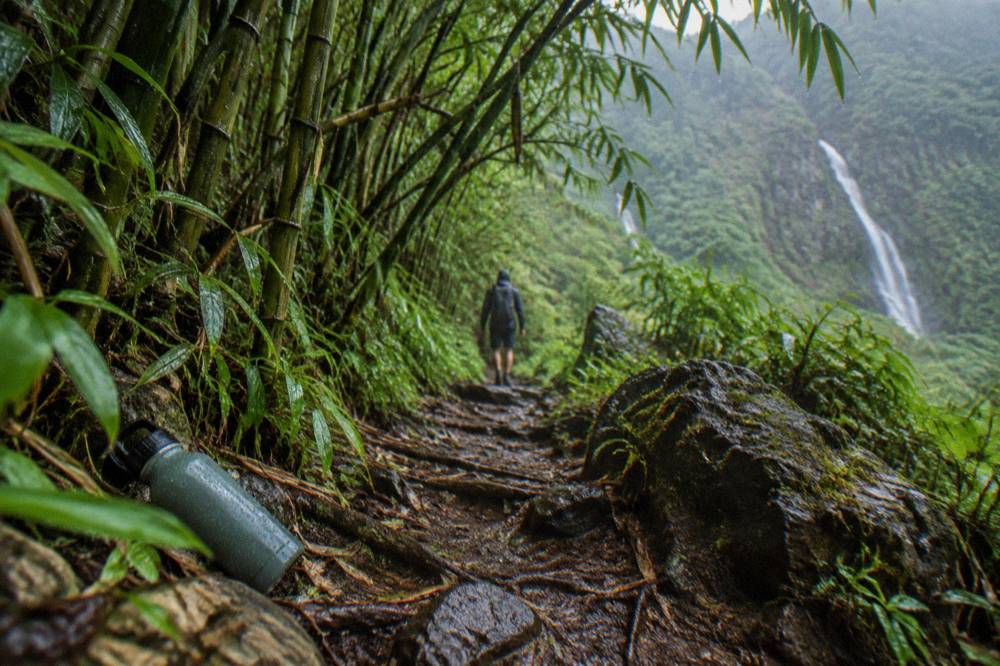
The Pipiwai Trail is a 4-mile round trip through rainforest and bamboo to the Waimoku Falls viewing area, climbing 800 feet along the way. The park rates it moderately strenuous. The Makahiku Overlook appears at about 0.5 miles, the bamboo forest about 1 mile in, and the 400-foot falls at the far end. You view Waimoku from a rocky terminus, you do not reach its base.
The trail begins near the Kipahulu Visitor Center and climbs steadily on rock-and-root tread that turns slick when it rains, and in Kipahulu it rains often. Those 187 annual inches keep the forest loud with birds and the path muddy in patches, so closed-toe shoes with grip beat sandals in every season. The middle section is the part people remember: a dense bamboo grove where the stalks knock and creak in the wind, a sound that carries over the stream.
| Landmark | Distance from trailhead | Note |
|---|---|---|
| Makahiku Overlook | About 0.5 miles | First view over the gorge; a good turnaround for short days |
| Bamboo forest | About 1 mile in | The trail's signature section |
| Stream crossings | Between bamboo and falls | Rocks are slippery; use care after rain |
| Waimoku Falls viewing area | 2 miles one way | 400-foot falls seen from a rocky terminus |
| Total | 4 miles round trip, 800 ft gain | Moderately strenuous per the NPS |
Time budgeting is the usual mistake. Between the drive, the trail, and the Kuloa Point walk, a Kipahulu day is a full day, and hikers who start the trail in late afternoon end up rushing the road home in the dark. If your legs want a different volcano walk, the Sliding Sands Trail guide covers the summit-side hike, where a 0.5-mile first overlook delivers crater views for a fraction of the effort.
For visitors who want a guided crater walk rather than a self-guided one, the Haleakala Crater Hiking Experience by Hike Maui, from $208 per person with a meal, 4.8 from 74 reviews, runs a 7-hour small-group hike in the Sliding Sands area with a 4-traveler minimum, an entirely different proposition from a rainforest falls walk but the natural pairing if you are staying on Maui long enough to see both districts on foot.
Can You Swim In The Pools Of Ohe'o?
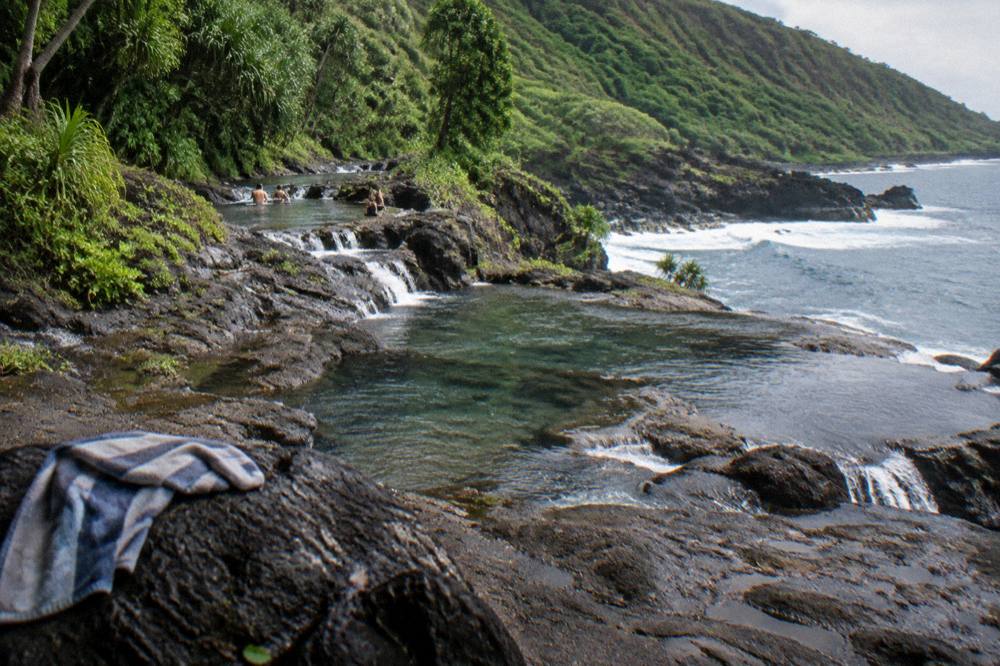
No. The Pools of Ohe'o are closed to entry and swimming, and the park states this as a standing safety rule rather than a temporary closure. Flash flooding, slippery rocks and rockfalls drive the ban. You can view the pools from the Kuloa Point Trail, a short walk from the Kipahulu Visitor Center area.
This is the single most common Kipahulu question, and the honest answer disappoints a lot of travelers who remember the pools from old guidebooks and the "Seven Sacred Pools" nickname. The park's Kipahulu page and its conditions page both state the pools are not accessible for entry or swimming, and that they can be viewed safely from the Kuloa Point Trail. That viewpoint is real and worth the walk: you look down the terraced stream toward the ocean rather than standing in it.
The full story of the pools, the name, and what you can still do there is in the Seven Sacred Pools guide. The short version for planning: build your Kipahulu visit around the Pipiwai Trail and the Kuloa Point view, not around a swim, and you will not leave feeling shortchanged.
Since the pools and the falls are view-only, the question becomes what kind of day delivers them best. For many travelers the answer is a tour that handles the Hana Highway, and that is where the combo listings earn their price.
Should You Drive Yourself Or Book A Hana Tour?
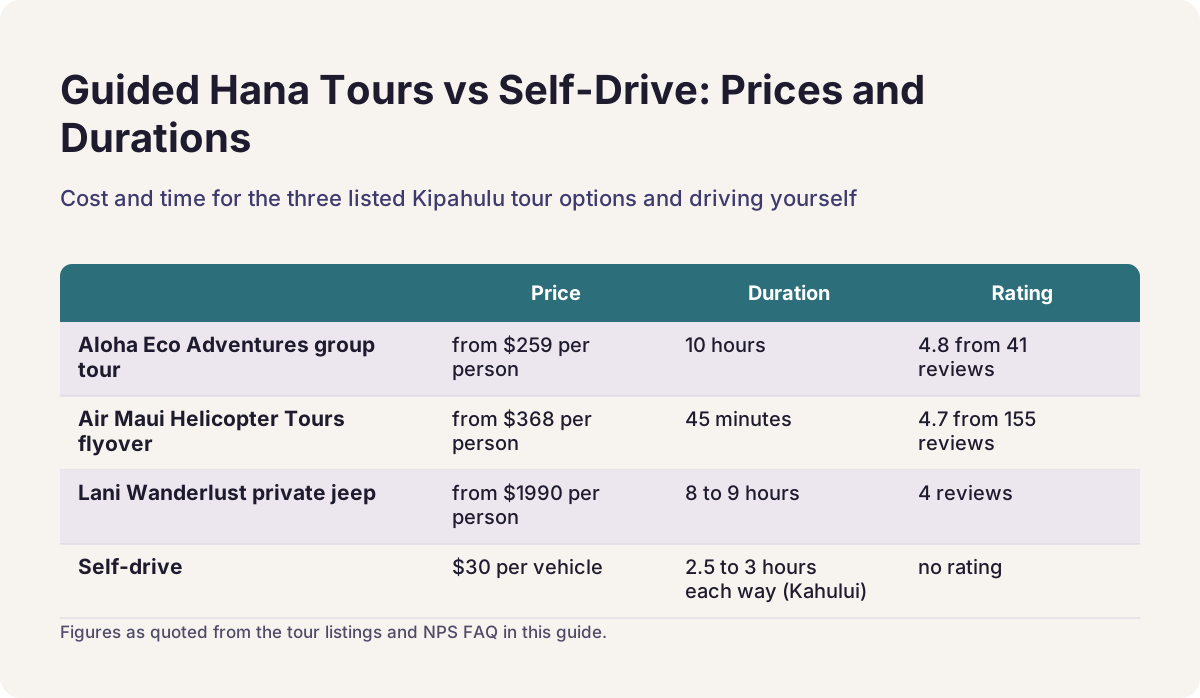
A guided tour trades the 3-to-4-hour drive, the parking hunt, and the route-finding for a fixed itinerary and a guide who knows the pullouts. The listed combo options start at from $259 per person for a 10-hour small-group day, from $368 per person for a 45-minute crater flyover, and from $1990 per group for a private open-air jeep day. Self-drive costs $30 per vehicle plus fuel and food.
The arithmetic is personal. A couple in a rental car spends less on a self-drive day than any tour, but they also spend the whole day watching the road instead of the coastline. Passengers on a guided Hana and Haleakala day get to look out the window, and the operator handles the timing decisions that stress first-timers: when to leave, which falls to stop at, where the trailhead actually is.
| Listing | Operator | Price | Duration | Rating | What it covers |
|---|---|---|---|---|---|
| Road to Hana Halfway and Haleakala National Park | Aloha Eco Adventures | from $259 per person | 10 hours | 4.8 from 41 reviews | Halfway to Hana plus about 2 hours in the park, hotel pickup offered |
| Hana Rainforest and Haleakala Crater Helicopter Tour | Air Maui Helicopter Tours | from $368 per person | 45 minutes | 4.7 from 155 reviews | Flyover of Hana rainforest and the crater, no landing |
| Road to Hana and Haleakala Sunset Open-Air Jeep Private Tour | Lani Wanderlust | from $1990 per group | 8 to 9 hours | 4 reviews, too few for a star claim | Private open-air jeep, Hana and a Haleakala Crater stop at sunset |
The small-group combo is the listing this site features for Kipahulu readers, and it fits the day neatly: Road to Hana Halfway and Haleakala National Park by Aloha Eco Adventures runs 10 hours from Central, South and West Side hotel pickup, 4.8 from 41 reviews, from $259 per person. Note the honest limit in its own row: the itinerary reaches halfway to Hana plus about 2 hours at Haleakala National Park, so read the listing carefully if seeing the full Pipiwai Trail on foot is your priority, and Check availability to see what the current route includes.
The helicopter is the other lens on the same terrain. The Hana Rainforest and Haleakala Crater Helicopter Tour, from $368 per person, 45 minutes, doors on, flies you over the Hana rainforest and the crater in a fraction of a road day. One guest review on the listing sums up the tradeoff: the flight passed quickly, the views were plentiful, and the island looked far bigger than expected. A flyover does not put you on the Pipiwai Trail, but it shows the scale of the valleys the trail threads through.
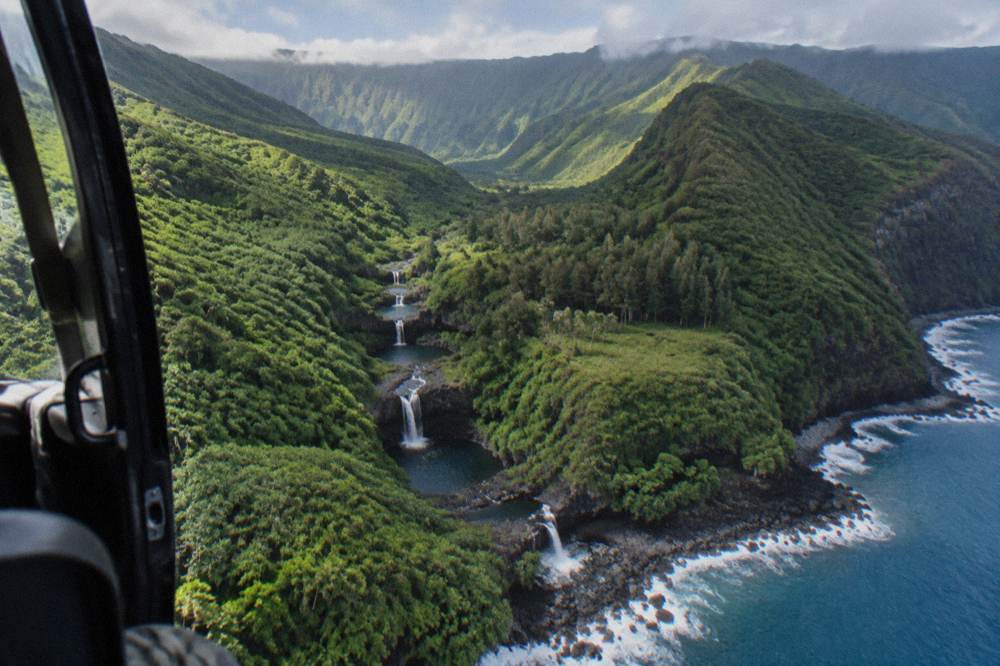
If you want the deeper comparison before spending, the Road to Hana versus Haleakala guide works through whether the two big Maui drives can share a single day, which is a fair question when each eats most of one. This site, Haleakala National Park Tours, keeps a full roster across both districts if a Kipahulu day turns out not to fit your week.
How Long Does The Pipiwai Trail Take And How Hard Is It?
Most hikers need 2.5 to 4 hours for the 4-mile round trip, at Kipahulu's pace rather than a mainland one: humidity, roots, and 800 feet of gain slow everyone down. The park calls it moderately strenuous. Bring at least a liter of water per person, start by mid-morning, and treat the Makahiku Overlook at 0.5 miles as the honest turnaround if the day is running late.
The trail's difficulty is honest but conditional. On a dry morning it is a steady, manageable climb on natural tread, and families with school-age kids regularly complete it. After rain, the rock steps and stream crossings turn slick, and the park's rain count means "after rain" describes much of the year. There is no treated water along the trail and no food sales anywhere in the district, so carry what you need.
Altitude is not the issue here the way it is on the summit side. Kipahulu sits near sea level, so the advice in the Haleakala summit weather guide about freezing predawn temperatures does not transfer; the Kipahulu version of weather planning is rain, heat, and flash-flood awareness near the stream. The park's hiking page prints the trail's official distances and elevation, and its Kipahulu page covers district basics including the pools closure.
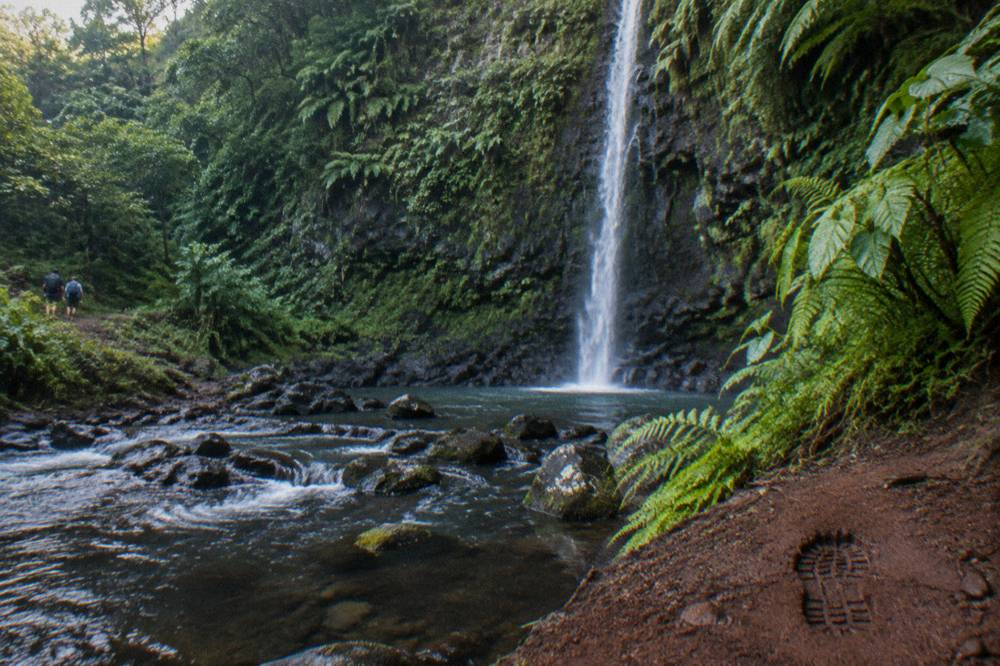
Timing around the drive matters more than timing around the hike itself. A Kahului departure at 7 a.m. puts you at the trailhead near 10 a.m., leaves a relaxed midday hike, and gets you back on the road before dark. Depart after 10 a.m. and you are choosing between a rushed trail and a night drive on the highway, which the park's no-streetlights, no-guard-rail warnings apply to even on the coast side.
Visitors who prefer their volcano hiking with a guide and a meal have summit-side options too. The Private Haleakala Summit & Stroll from Kahului, from $359 per group, 5 hours, 5 from 69 reviews, is a private crater-and-crater-road walk, and the Haleakala Crater Hiking Experience covered above remains the small-group alternative. Neither touches Kipahulu, but both solve the same problem, seeing the park without owning the logistics.
What Should You Bring To Kipahulu?
Pack for rain, heat, and remoteness: water, food, cash-free payment for the entrance fee, gripped closed-toe shoes, rain layers, sun protection, and a full fuel tank from Paia or Hana. There is no gas, no food, and no charging in the park, emergency help is an hour away, and cell service drops on the road, so treat Kipahulu as self-sufficient hiking.
The Kipahulu packing list is the inverse of the summit one. Where a sunrise summit day demands winter layers against below-freezing wind chills, a Kipahulu day demands rain readiness and hydration against 70 to 80 F afternoons in humidity that follows 187 annual inches of rain. A light rain shell lives in the pack year-round. Insect repellent earns its place near the stream, and a dry bag or zip lock keeps phones dry at the crossings.
| Item | Why it matters at Kipahulu |
|---|---|
| Water, 1 liter or more per person | No treated water or sales in the district |
| Food and snacks | No food vendors inside the park |
| Closed-toe shoes with grip | Slick roots, rocks, and stream crossings |
| Rain shell | Rain falls year-round in a 187-inch climate |
| Credit or debit card | The park takes no cash for entrance |
| Printed or offline reservation and receipt | Cell service drops on the Hana Highway |
| Trash bag | Pack out everything; no bins on trail |
One planning note that saves real money: your entrance receipt is valid 3 days across both districts, so pairing a Kipahulu day with a summit sunrise or sunset inside the same window costs $30 total per vehicle, not $60. Sunset needs no reservation of any kind; only the 3 to 7 a.m. summit window carries the $1 per vehicle recreation.gov requirement, and that rule never applies to the Kipahulu side. The sunrise reservations guide covers that system in full if you are building a two-district week.
Can You See Kipahulu And The Summit In One Trip?
Yes, across two or three days, with the 3-day entrance window doing the heavy lifting: one predawn summit day for sunrise or a sunset-and-stars evening, plus a full Kipahulu day on either side. Trying to combine both districts in a single day fails on geography alone, since Kipahulu sits 12 miles past Hana and the summit road starts from Kula, on opposite sides of the island.
The sequencing question comes up constantly because travelers rightly want one entrance fee to cover everything. The workable pattern is a summit morning first, since sunrise reservations release on recreation.gov up to 60 days ahead at 7:00 a.m. HST and often sell out within fifteen minutes, then the Kipahulu drive on day two or three inside the same receipt window. Flip the order if you would rather end the trip on the falls.
For travelers with only one Maui day to spend, the honest answer is that Kipahulu wins on water and green, the summit wins on scale and sky, and no amount of hustle combines them comfortably. That choice gets a full treatment in the Haleakala sunrise versus sunset guide for the summit-side half of the decision.
Tours that fold both faces of the park into one itinerary are the exception. The Best of Maui Tour: Sips, Sites and Bites with Lunch, from $307 per person, 9 hours 30 minutes, 4.3 from 203 reviews, includes Haleakala National Park admission and lunch alongside its other island stops, and one guest review on the listing praises the guide and "the volcano was spectacular, and the trip up to it was amazing." It is a sampler day rather than a hiking day, but it exists precisely for one-day visitors.
Whichever way you build the day, tour or self-drive, the same three listings cover the most ground for Kipahulu-minded travelers, and comparing them side by side beats guessing at itineraries.
Common Questions About The Pipiwai Trail And Kipahulu
How long is the Pipiwai Trail?
Four miles round trip, climbing 800 feet from the trailhead near the Kipahulu Visitor Center to the Waimoku Falls viewing area at 2 miles one way. The park rates it moderately strenuous; most hikers need 2.5 to 4 hours.
Can you swim in the Pools of Ohe'o?
No. The pools are closed to entry and swimming as a standing park rule, driven by flash flooding, slippery rocks and rockfalls. You can view them from the Kuloa Point Trail.
How far is Kipahulu from Hana?
The Kipahulu District entrance station is 12 miles past Hana on the Hana Highway, at Mile Marker 42. Allow well over half an hour for that final stretch alone.
Do you need a reservation for Kipahulu?
No. The $1 per vehicle sunrise reservation applies only to the Summit District between 3 and 7 a.m. Kipahulu requires just the standard entrance fee, $30 per private vehicle valid 3 days across both districts.
Is the Pipiwai Trail hard?
It is moderately strenuous: a steady 800-foot climb on roots, rock steps and occasional slick stream crossings. Fit families complete it regularly; the Makahiku Overlook at 0.5 miles is a fair shorter option.
Is there food or gas at Kipahulu?
No. The park sells neither gas nor food in either district, and emergency help is at least one hour away. Fuel up in Paia or Hana and carry your own water and food.