Sliding Sands Trail: Hiking Into Haleakala Crater
The Keonehe'ehe'e, or Sliding Sands, Trail is the classic way into Haleakala Crater on foot. Here is what the park's own numbers say about distance, altitude, weather and timing before you set out.
Short answer
The Sliding Sands Trail starts at 9,740 ft in the Haleakala Visitor Center parking lot. The first overlook is 0.5 mile round trip with 50 ft of elevation change; the full crater crossing runs about 11 miles one way to the Halemau'u Trailhead at 7,990 ft. Hiking out takes about twice as long as hiking in.
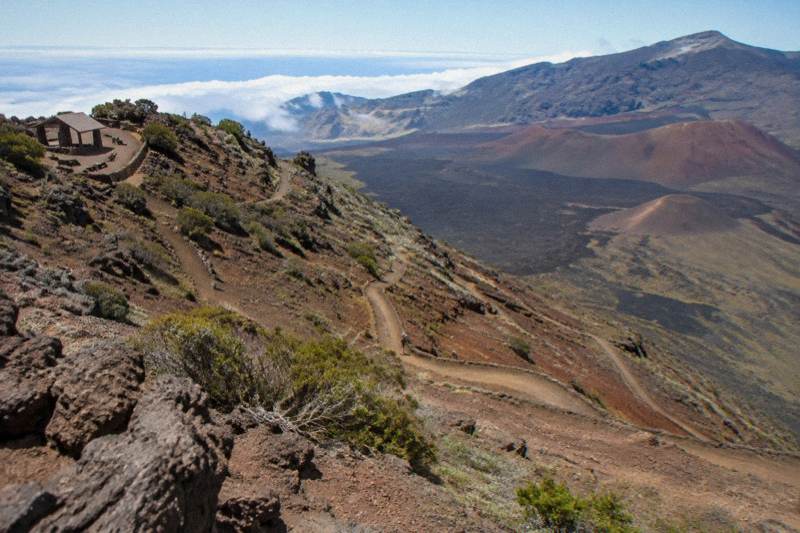
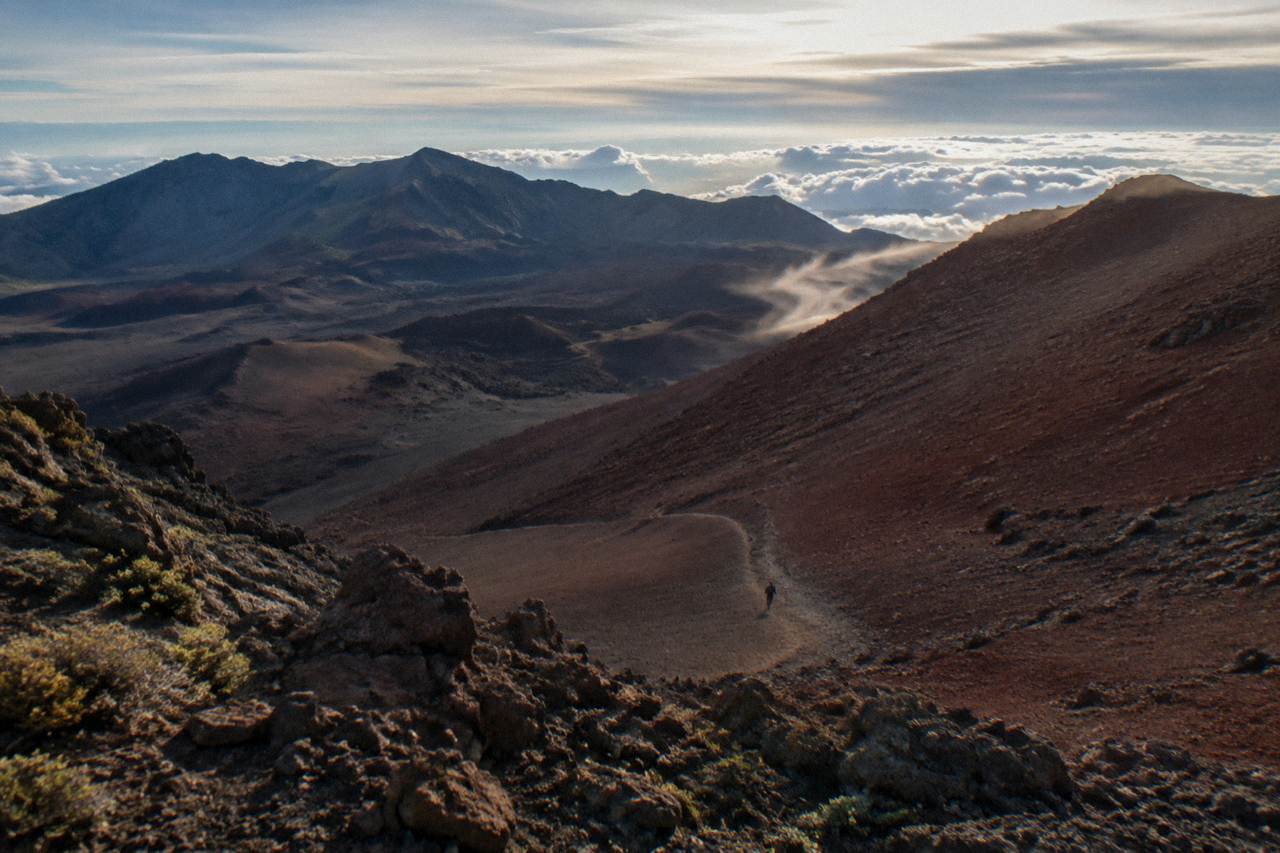
The Sliding Sands Trail, signed at the trailhead as Keonehe'ehe'e, is the most direct footpath from the rim of Haleakala Crater down onto its floor. It begins at 9,740 feet, in the Haleakala Visitor Center parking lot, and drops through bands of red, charcoal and ocher cinder that give the trail its name. The park's own hiking page is unusually specific about what waits below the rim, and those numbers, plus a few hard truths about altitude and turnaround time, are what this guide lays out.
Most people who search for the sliding sands trail are really asking one of three questions: how far should I go, how bad is the altitude, and do I need a guide. Readers sizing up the crater hike are often one step from booking the guided Haleakala Crater Hiking Experience, so this page compares the self-guided options against that small-group hike honestly rather than pretending everyone should go alone. For a wider look at every way into the crater, the Haleakala National Park Tours homepage covers the full roster.
What Is The Sliding Sands Trail?
Keonehe'ehe'e, the Sliding Sands Trail, is the primary descent route from the summit rim of Haleakala into the crater itself, starting in the Haleakala Visitor Center parking lot at 9,740 feet and dropping roughly 2,500 feet to the crater floor about 3.9 miles in. Its name comes from the loose cinder underfoot, which makes the downhill feel easy and the return climb famously slow.
The trail is the park's recommended way to experience the crater on foot, and it is the route most guided crater walks use, including the small-group crater hike whose listing names the Sliding Sands area directly. Unlike the drive-up overlooks, Keonehe'ehe'e puts you inside the wilderness section of the park, where the silence is real: there is no cell service in the crater, no food, no water beyond what you carry, and emergency help is at least an hour away. If that level of remoteness gives you pause, our honest breakdown of how hard Haleakala's trails really are can help you decide how far in to go.
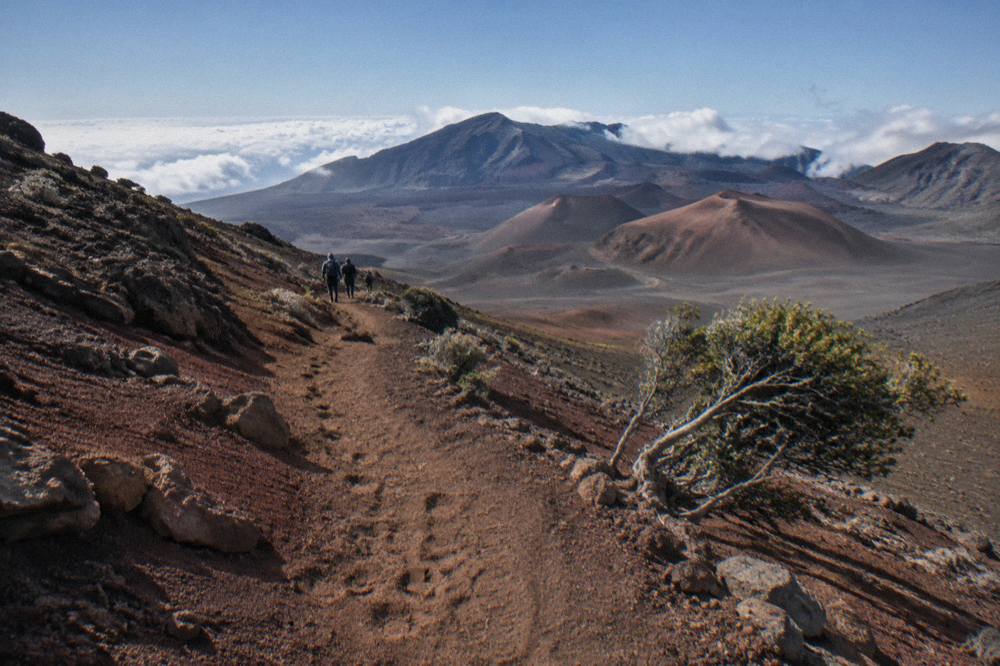
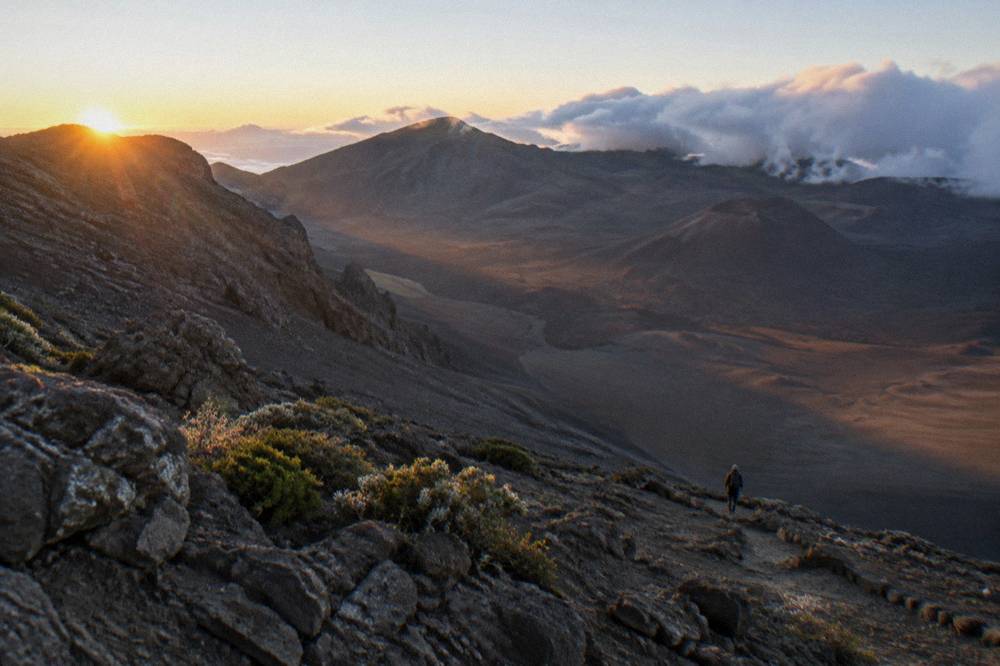
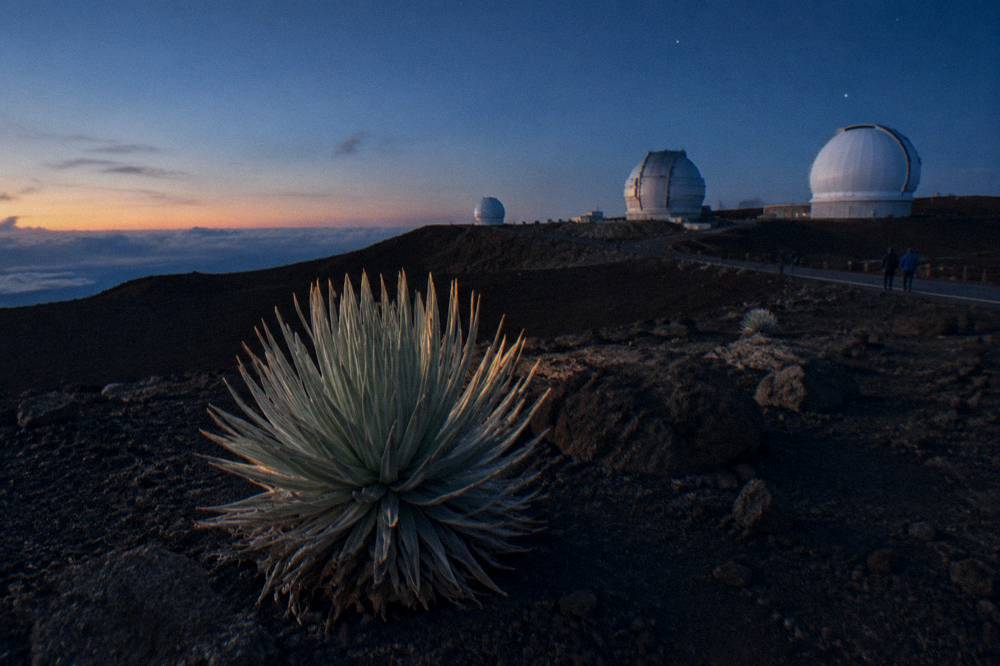
The landscape changes fast. The first half mile crosses cinder slopes streaked with iron oxides, then the trail bends past the first overlook and opens onto views of the younger cinder cones on the crater floor, structures like Pu'u 'O Moa'ula and the smaller cones near Ka Lua o ka Oo. Vegetation shrinks to native shrubs, silversword plants among them, and the scale becomes hard to read: distances that look like a twenty minute stroll can take an hour on sand. That misreading is the single most common reason hikers get in trouble here.
If your plan is broader than one trail, the guide to crater tours and trail options places Keonehe'ehe'e alongside the Halemau'u Trail and the drive-up viewpoints, which helps if your group mixes hikers and non-hikers.
How Far Should You Hike On Keonehe'ehe'e?
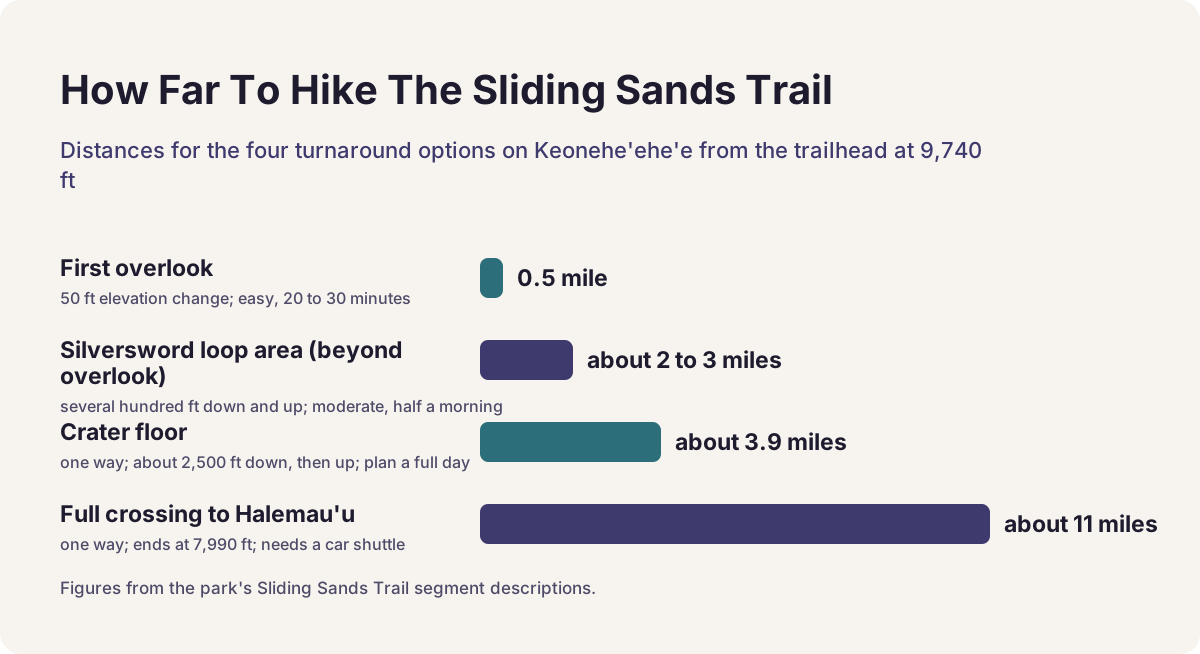
The park breaks the trail into clear segments: the first overlook at 0.5 mile round trip with 50 feet of elevation change, the crater floor at about 3.9 miles one way and 2,500 feet down, and the full crossing of about 11 miles one way to the Halemau'u Trailhead at 7,990 feet. Choose your turnaround before you start, not during the hike.
The first overlook is the right choice for most visitors. It delivers the crater panorama and the sensation of dropping below the rim, in twenty to thirty minutes of walking, without committing you to the climb back. Families with children, anyone feeling the altitude, and travelers on a sunrise-and-hike schedule should treat this as the default.
The floor is a serious half day. At 3.9 miles one way you descend about 2,500 feet, and the park's safety guidance is blunt about the return: hiking out takes about twice as long as hiking in. Sand and cinder slide underfoot on the way up, the air holds noticeably less oxygen at every step, and there is no water and no hiker shuttle inside the crater. If you reach the floor at noon, you are planning a climb of several hours through the hottest, most exposed part of the day.
| Option | Round trip | Elevation change | Realistic effort |
|---|---|---|---|
| First overlook | 0.5 mile | 50 ft | Easy, 20 to 30 minutes |
| Silversword loop area (beyond overlook) | about 2 to 3 miles | several hundred ft down and up | Moderate, half a morning |
| Crater floor | about 3.9 miles one way | about 2,500 ft down, then up | Strenuous, plan a full day |
| Full crossing to Halemau'u | about 11 miles one way | ends at 7,990 ft | Strenuous, needs a car shuttle or a second vehicle |
The full crossing deserves its own warning. The 11 mile route ends at the Halemau'u Trailhead on Crater Road, a different trailhead from where you parked, and the park offers no hiker shuttle. Parties who want the crossing usually leave one car at Halemau'u, start before dawn on Keonehe'ehe'e, or book a private guide with transport. The Private Haleakala Summit & Stroll from Kahului is one private option whose listing covers crater road stops, and the 9-Hour Sunrise with Breakfast gets you to the visitor center lot at first light, which is exactly where this trail begins.
A guided crater walk solves several of these problems at once, which is why many readers end up comparing a self-guided descent against the small-group option before deciding.
The Haleakala Crater Hiking Experience, run by Hike Maui, lists from $208 per person, rated 4.8 from 74 reviews, with a meal included and a four traveller minimum for the hike to run. Its listing names the Sliding Sands area, hotel pickup is not included, so you meet at the Kahului Park & Ride, and free cancellation terms are on the booking page. That is the difference between reading about the trail and walking it with someone who carries the water plan and knows the turnaround points.
How Hard Is The Altitude On This Hike?
The trailhead sits at 9,740 feet and the summit area above it at 10,023 feet, where the park warns that lower oxygen makes trails strenuous regardless of fitness. Altitude sickness symptoms include nausea, headache, dizziness and shortness of breath, and the park advises pregnant visitors and people with heart or respiratory conditions to consult a doctor first.
Flatlander legs do not save you here. The physiological reality is that every step along this trail, from 9,740 feet at the trailhead downward, delivers less oxygen per breath than most hikers train at, and the park states plainly that summit area trails are strenuous because of it. The descending first mile feels fine; it is the ascent, at altitude, in sand, that exposes the difference between a Maui beach walk and a crater hike.
Go down slowly, turn around early, and treat any headache or nausea as a signal to stop descending, not to push on. Symptoms that worsen mean you descend, and if you are already at the bottom of your chosen segment, you rest, eat, drink, and climb out gently. The summit runs about 30 F cooler than the coast and wind chill makes it colder still, so shivering and altitude misery can stack on the same hiker.
Acclimatizing helps more than fitness. Spending an hour at the overlooks, or arriving the evening before and sleeping at elevation on the island's slopes, gives your body a head start. This is one honest advantage of a guided hike: the Haleakala Crater Hiking Experience pacing is set by a guide who watches the group, and its listing includes a meal, which matters when the park has no food for sale anywhere inside the boundary.
When Should You Start The Hike?
Start early, ideally by 7 a.m., because afternoon clouds build fast on the crater, the climb out takes about twice the time of the way down, and summer sun exposure on the cinder slopes is intense. Sunrise starts require the park's $1 per vehicle reservation if you drive yourself, and the park does not recommend riding a bike up in the dark.
The sunrise reservation system deserves a full read if you plan a dawn start; the guide to Haleakala sunrise reservations explains the 3:00 a.m. to 7:00 a.m. window, the 60 day release at 7:00 a.m. HST on recreation.gov, and the two day partial release. Inventory often sells out within fifteen minutes of release. Tours run by authorized commercial operators operate under their own park authorization; a traveler who drives themselves needs the reservation.
Sunrise and sunset times matter for planning your walk, so here are the times computed for the 15th of each month at sea level on Maui; the crater horizon shifts them a few minutes:
| Month | Sunrise | Sunset | Best hiking window |
|---|---|---|---|
| January | 7:04 | 18:04 | 7:30 to 13:00 |
| March | 6:35 | 18:35 | 7:00 to 13:30 |
| May | 5:48 | 18:54 | 6:15 to 13:00 |
| July | 5:52 | 19:09 | 6:15 to 13:30 |
| September | 6:12 | 18:29 | 6:45 to 13:00 |
| December | 6:53 | 17:47 | 7:30 to 12:30 |
A morning start has a second benefit: the crater is at its clearest before the midday clouds pour over the rim, a pattern regulars call the crater breathing. By early afternoon the floor is often under cloud, views gone, temperature dropping. The park's weather page tracks the yearly rhythm, rainy season from November through March, and its guidance on rapid changes is worth ten minutes of reading before any full day attempt.
What Should You Pack For The Crater?
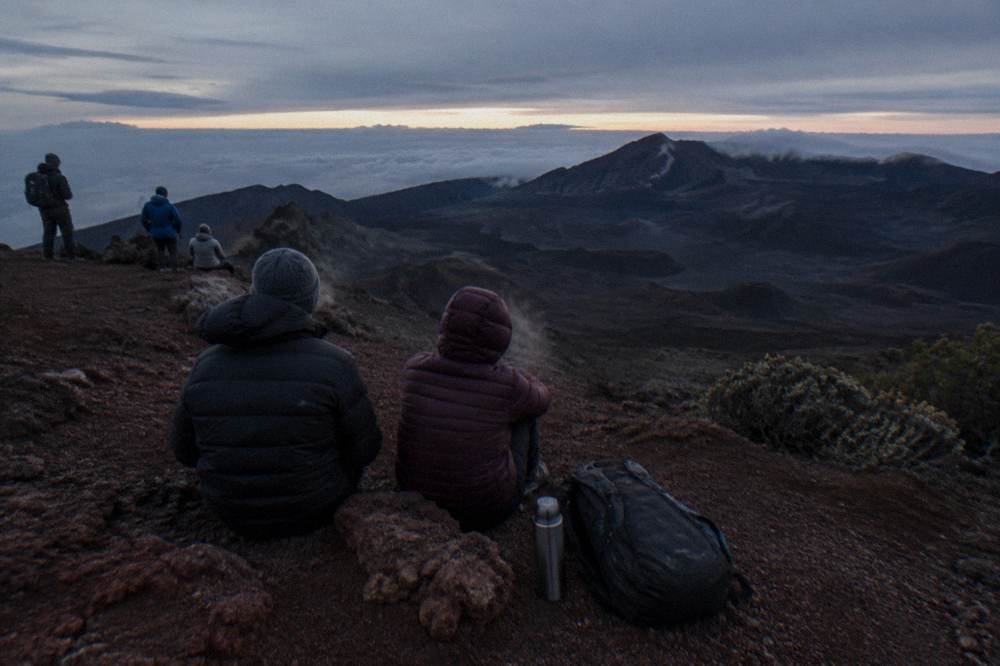
Carry more water and more layers than feel reasonable: the park reports summit temperatures from below freezing to highs of 50 to 65 F year round, wind chill and damp make it colder, and there is no water, no food and no cell service in the crater. Sun protection matters as much as warmth on this high-elevation trail.
The packing list that fails people is the one built for the beach. Both visitor centers have water and restrooms around the clock, but nothing below the rim does, and the park states that emergency help is at least an hour away. Layered clothing, a windproof shell, a hat and gloves for a morning start, sunscreen, and salty food cover the crater's swing from freezing shade to burning sun.
The blog post on how to dress for the Haleakala sunrise covers the clothing math in detail, and its advice transfers directly to a dawn trailhead start. One guest review of the Majestic Haleakala Sunrise Tour listing makes the point in plain words: dress warmer than you think, it is freezing on top of the mountain.
What Does It Cost To Hike Here?
Entry costs $30 per private vehicle, valid 3 days and covering both the Summit and Kipahulu Districts, $25 per motorcycle, or $15 per person on foot or by bicycle for visitors 16 and over. The Haleakala annual pass is $55, and the $1 sunrise vehicle reservation, needed from 3:00 to 7:00 a.m., is separate and on top of the entrance fee.
The 3 day validity matters for hikers: one entrance fee covers a sunrise viewing day, a full crater day, and even the drive to Kipahulu past Hana if your legs recover. The park accepts credit and debit only, no cash, at both entrance stations. Fee-free days exist but apply to US citizens and residents only, and they do not waive the sunrise reservation or early morning access.
| Fee type | Cost | Notes |
|---|---|---|
| Private vehicle | $30 | Valid 3 days, both districts |
| Motorcycle | $25 | Valid 3 days |
| Per person, on foot or bicycle | $15 | Ages 16 and over |
| Haleakala annual pass | $55 | Hawai'i Tri-Park pass also $55 |
| Sunrise vehicle reservation | $1 | 3 to 7 a.m. only, recreation.gov |
The full fee detail, including America the Beautiful pass values, is in the guide to the Haleakala entrance fee and passes. The park's fees page is the authoritative source for current figures.
Should You Hike Sliding Sands Alone Or With A Guide?
Hike alone if you are experienced at altitude, start early, and commit to a modest turnaround like the first overlook; take a guide if you want to reach the crater floor, since a guided group carries the water plan, pacing and route knowledge that a 2,500 foot sandy climb-out at elevation demands. Both are legitimate choices, and honesty about your own conditioning decides it.
The self-guided first overlook walk is one of the best value experiences on Maui: your entrance fee, sturdy shoes, and an hour. Beyond the overlook, the ledger shifts. The guided Haleakala Crater Hiking Experience lists from $208 per person with a meal included and a 4.8 rating from 74 reviews; against that, a solo floor attempt costs you nothing but carries every risk yourself in a place with no cell service and help an hour away.
Readers who prefer wheels or a driver sometimes pair differently. A crater morning can follow a summit sunrise by van on the 9-Hour Sunrise with Breakfast, whose hotel pickup covers the pre-dawn drive. The Twilight Sunset with Dinner, from $257 per person and rated 4.4 from 263 reviews, flips the day and returns you after dark with a meal; one guest review calls sunset a thousand times better than sunrise. And the Self-Guided Sunrise Bike, 7 Hours, from $273 per person and rated 4.7 from 777 reviews, pairs a van ride to the summit for sunrise with a self-guided bike ride down from about 6,500 feet at the park boundary, not inside the park, a completely different way down the mountain.
After-dark options round out the picture: the Small-Group Sunset Astronomy tour from Amazing Maui Stars, from $245 per person and rated 5.0 from 57 reviews, spends about 4 hours around 10,000 feet after the day hikers have gone, and stargazing from the summit needs no reservation. The trade-off for any sunset plan is the drive down in the dark on a road with no streetlights and no guard rails, which is a fair reason many hikers still choose a morning crater walk instead.
What About Altitude Sickness And Emergencies?
The park lists nausea, headache, dizziness and shortness of breath as altitude sickness symptoms on its hiking guidance, advises anyone with heart or respiratory conditions, and pregnant visitors, to talk to a doctor beforehand, and warns that emergency help is at least an hour away with no cell service in the crater. Descend if symptoms worsen.
Prevention is simple and mostly free: hydrate the day before, skip alcohol, ascend gradually, and turn around sooner than you planned. The park's safety page adds the detail every itinerary should absorb, that trails here run from 9,780 feet down to 6,380 feet and that the return always costs double. If a member of your party shows worsening symptoms, the answer is always down, immediately, and not a debate at the overlook.
Weather can close the park outright in extreme conditions, and trail status changes without much notice. Before any hike day, check the park's current conditions page; a crater floor plan that ignores a wet forecast is a rescue plan waiting to happen.
How Does Sliding Sands Compare With Other Haleakala Trails?
Keonehe'ehe'e is the classic descent, but it is not the only crater walk: the Halemau'u Trail reaches a crater viewpoint in 2.2 miles round trip with 400 feet of elevation change, the Hosmer Grove loop is an easy 0.54 mile nature walk, and in the Kipahulu District the Pipiwai Trail runs 4 miles round trip with 800 feet of gain to the Waimoku Falls viewing area.
Halemau'u is the quieter crater trail, entering from the north and climbing gently to a viewpoint rather than plunging in, and it doubles as the exit leg of the full crossing. Hosmer Grove, just inside the park entrance on the summit side, suits non-hiking travel companions and anyone acclimatizing on arrival day. Pipiwai is a different world, a rainforest hike in the Kipahulu District reached by driving 12 miles past Hana, where the Pools of 'Ohe'o are closed to entry and swimming but viewable from the Kuloa Point Trail.
| Trail | District | Round trip | Elevation | Character |
|---|---|---|---|---|
| Keonehe'ehe'e first overlook | Summit | 0.5 mile | 50 ft | Crater panorama, easy |
| Keonehe'ehe'e to floor and back | Summit | 3.9 miles one way | 2,500 ft down, then up | Strenuous sandy descent |
| Halemau'u viewpoint | Summit | 2.2 miles | 400 ft | Moderate, gentler grades |
| Hosmer Grove loop | Summit | 0.54 mile | 50 ft | Easy nature loop |
| Pipiwai to Waimoku Falls | Kipahulu | 4 miles | 800 ft gain | Rainforest, moderate |
For depth on the other routes, the Haleakala hiking tours guide and the guide to hiking the crater both break down timing and fitness needs trail by trail. Difficulty questions get a straight answer in is Haleakala a difficult hike, which separates the overlook strolls from the floor crossings.
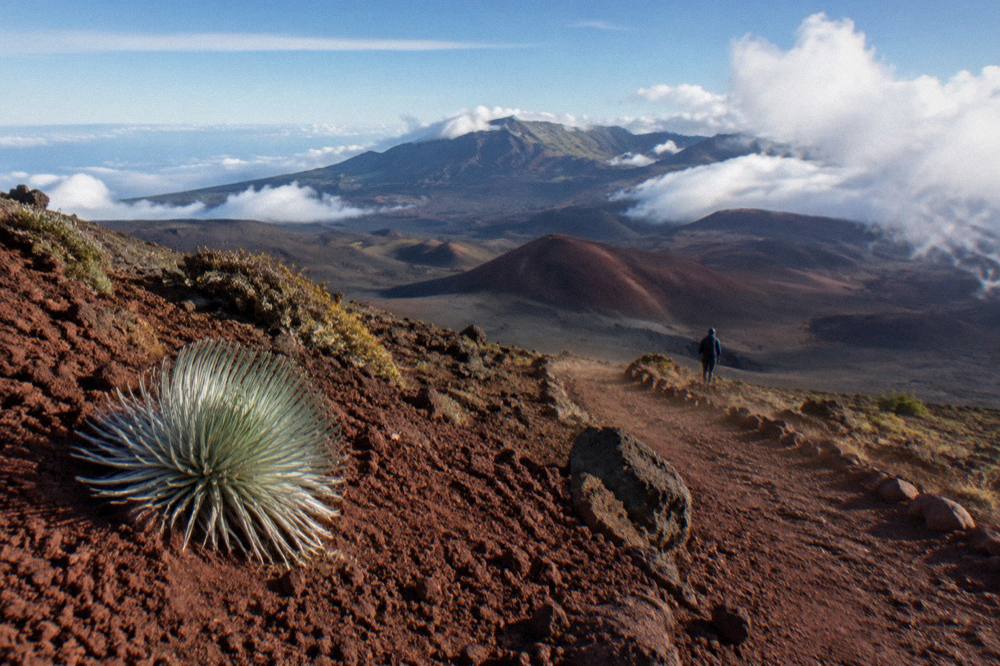
The honest summary: Sliding Sands is the trail people picture when they picture Haleakala, and the first overlook gives that picture to almost anyone. The floor and the crossing are earned, and the park's double-time-out rule is the arithmetic that decides whether your day is a memory or an ordeal. Whether you walk it alone at dawn or join a guided group with breakfast and a plan, the crater does not care how you arrived, only that you respected the sand on the way back up. Before you commit to a turn-around point, our guide to how long the Haleakala crater takes to hike walks through the timing for every option, from the overlook to the full crossing.
Common Questions About The Sliding Sands Trail
How long is the Sliding Sands Trail?
The first overlook is 0.5 mile round trip. The crater floor is about 3.9 miles one way, and the full crossing runs about 11 miles one way to the Halemau'u Trailhead at 7,990 feet. The park offers no shuttle between trailheads.
How hard is the Sliding Sands Trail?
The first overlook is easy. Anything to the crater floor is strenuous: about 2,500 feet of sandy descent, thin air at high elevation, and a climb out that takes about twice as long as the way down, per the park's own safety guidance.
Where does the Sliding Sands Trail start?
The trailhead is in the Haleakala Visitor Center parking lot at 9,740 feet on Crater Road, about 30 minutes up from the entrance station. Parking lots close when full, so early arrival helps in peak season.
Do I need a reservation to hike Sliding Sands?
You need the $1 per vehicle sunrise reservation only if you drive yourself in between 3:00 and 7:00 a.m. Any arrival after 7 a.m. needs just the entrance fee. Authorized commercial tours operate under their own park authorization.
Is there water on the trail?
No. There is no water, food or cell service in the crater, and emergency help is at least an hour away. Water and restrooms are available 24/7 at both visitor centers, so fill up before you leave the trailhead lot.
Can kids hike the Sliding Sands Trail?
The first overlook works for most children with steady footing and warm layers. Longer segments demand honest judgment about sandy descents, altitude and the climb out; families unsure of the floor route often choose a guided hike instead.