Seven Sacred Pools Maui: What Is Open And What Is Closed
The pools the brochures call the Seven Sacred Pools still cascade at Kipahulu, but entering or swimming in them is prohibited. This guide covers what the closure means, what remains open, and how to plan the long drive past Hana.
Short answer
The Pools of Oheo at Haleakala National Park's Kipahulu District are closed to entry and swimming as a standing safety rule, but you can view them from the Kuloa Point Trail. Entrance costs $30 per vehicle for 3 days, covers both districts, and the Pipiwai Trail to Waimoku Falls remains open. The district sits 12 miles past Hana, about 2.5 to 3 hours from Kahului.
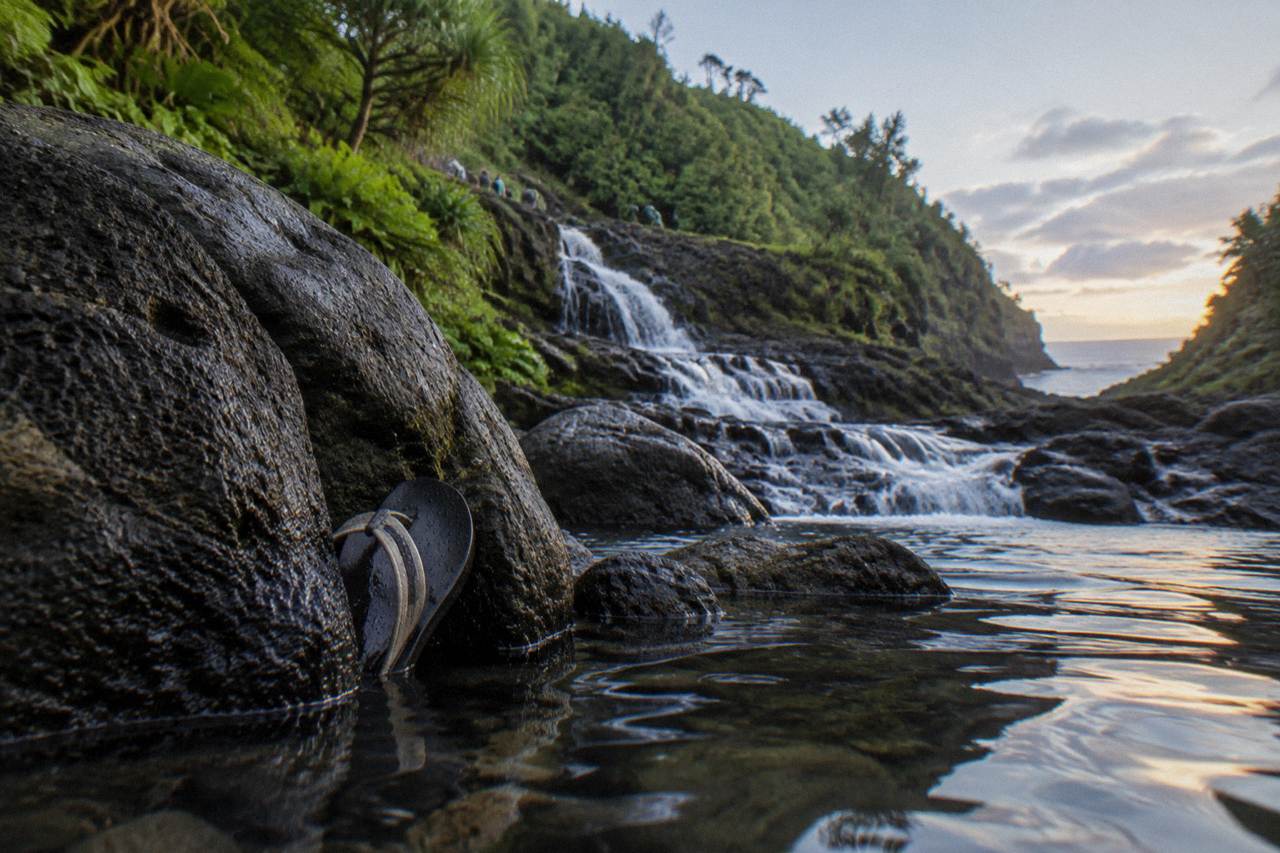
The name on the maps is Oheo Gulch. The name in every Maui brochure is the Seven Sacred Pools, a chain of terraced freshwater pools spilling down lava rock toward the Pacific, and it is one of the most photographed sights on the island's eastern end. The pools are real, the setting is dramatic, and the waterfalls above them are as tall as advertised. What the brochures rarely mention up front is that you cannot get in the water, and you cannot walk out onto the rocks.
The National Park Service states plainly that the Pools of Oheo are not accessible for entry or swimming, because flash floods, slippery rock and rockfall make the gulch genuinely dangerous, and the rule is enforced rather than advisory. Everything else about the Kipahulu District of Haleakala National Park remains open, including the trail that gives you the best safe view of the pools and one of the best rainforest hikes in Hawaii. This guide lays out what is closed, what is open, what it costs, and how the Road to Hana tour options on this site reach the district, so you can plan the day with the real picture rather than the postcard one.
Are The Seven Sacred Pools Open For Swimming?
No. The Pools of Oheo are closed to entry and swimming under a standing National Park Service safety closure, and that closure applies every day rather than being a temporary alert. Flash flooding, slick rock and rockfall in the gulch are the stated reasons. Visitors can still see the pools on foot from the Kuloa Point Trail, a short walk from the Kipahulu Visitor Center area that leads to safe viewing spots above and beside the lower pools.
The park's own Kipahulu page and its current conditions page both carry the closure as a standing statement, not a dated notice. That matters for planning: this is not a repair closure that might lift before your trip, and no tour, guide or local shortcut changes it. The rocks at the base of the pools look inviting, and in older guidebooks and vintage photos people swam here, which is part of why the question comes up so often. The park closed entry after weighing the injury risk, and the closure has held.
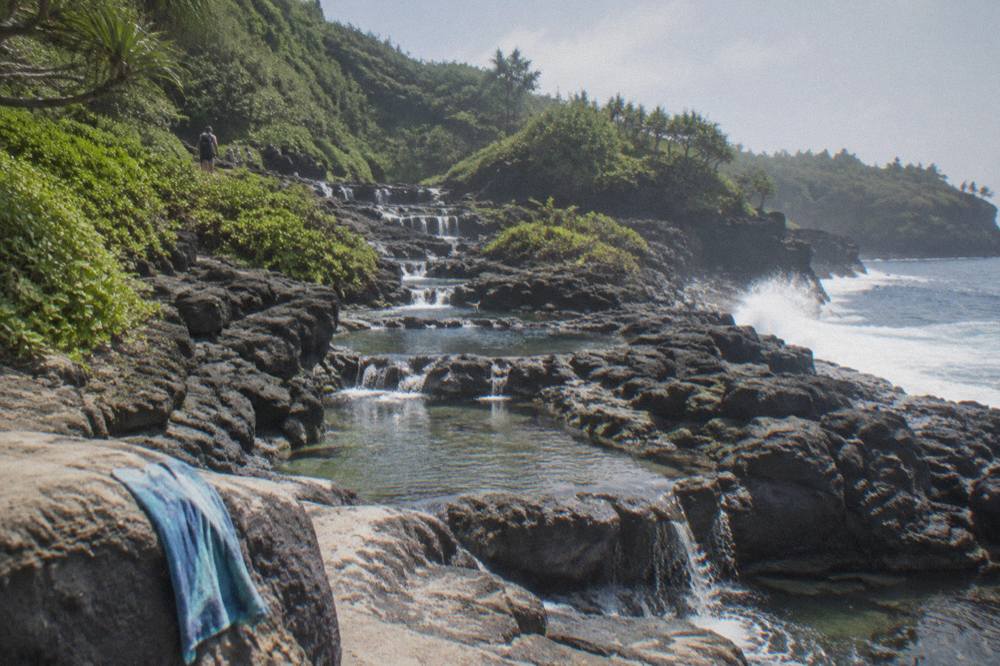
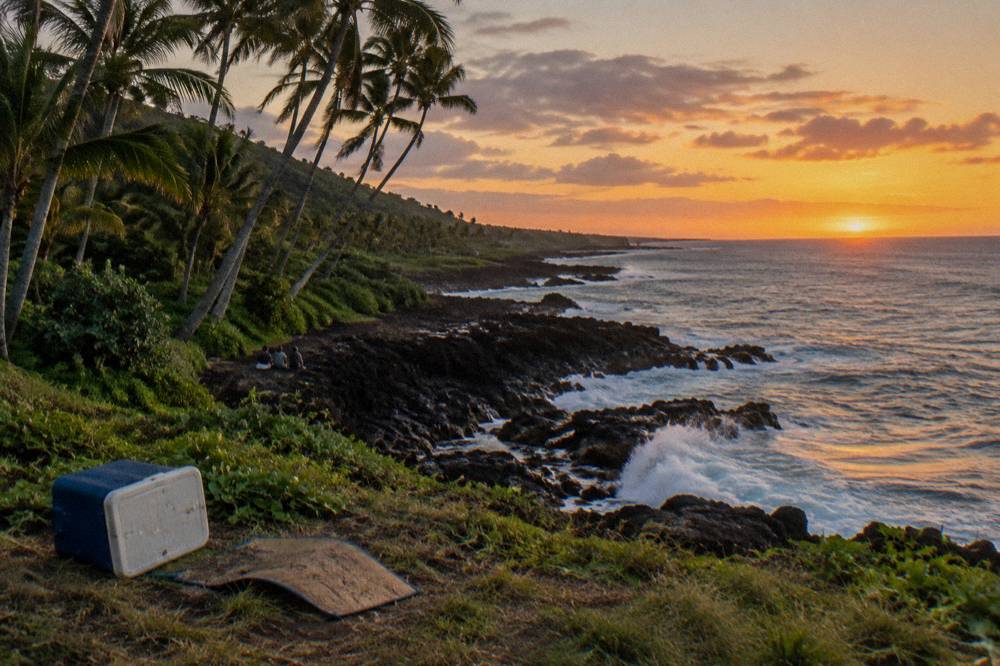
What you get instead is a viewing experience, and honestly a good one. From the Kuloa Point Trail you look down over the terraced pools as they step toward the ocean, often with waves breaking beyond the black rock. The trail is short, largely level and passes through the same coastal vegetation. Treat the pools as a landscape to see, photograph and walk past, not a swimming hole, and the visit lands well. The wider Kipahulu question, including the Pipiwai Trail and the camping, is covered in our Pipiwai Trail and Kipahulu guide.
What Can You Still See And Do At Kipahulu?
Two trails, a coastal viewpoint and a visitor center remain fully open: the Kuloa Point Trail for pool and ocean views, and the Pipiwai Trail, a 4 mile round trip with 800 ft of elevation gain to the viewing area for the 400 foot Waimoku Falls. Camping at the Kipahulu campground is also available on a rolling 30 day reservation window. The district's rainforest, bamboo forest and coastline are all accessible on foot.
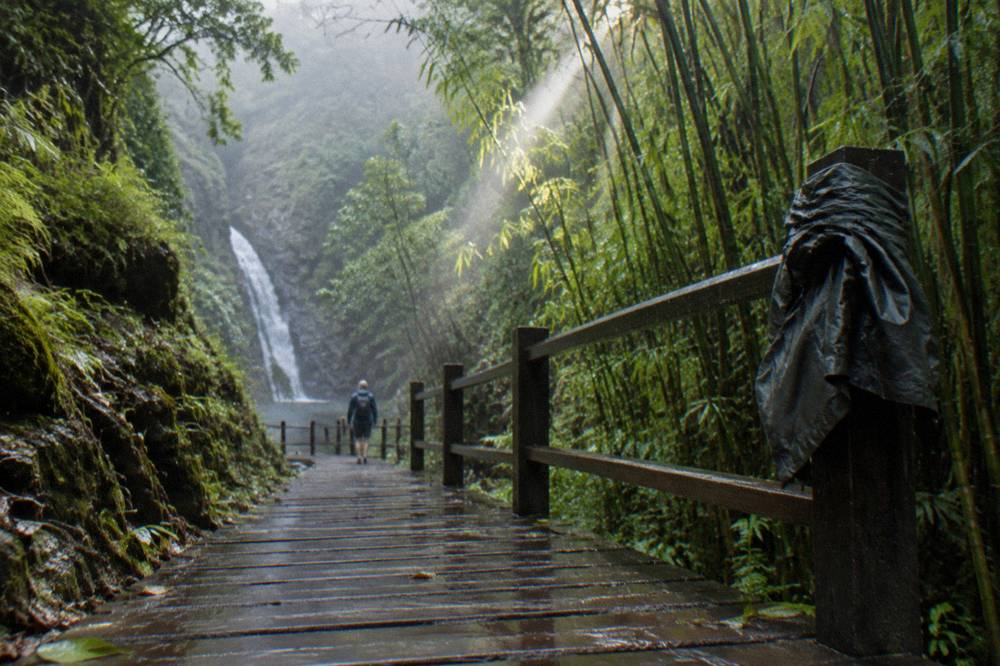
Kuloa Point is the pool-viewing walk, and it doubles as a fine short coastal loop in its own right. Pipiwai is the reason many visitors end up rating Kipahulu above the summit district. The trail climbs beside a stream through a native and introduced rainforest, reaches the Makahiku Overlook about half a mile in, then enters a dense bamboo grove that creaks audibly in the wind before finishing at the base of the Waimoku Falls viewing area. Kipahulu averages 187 inches of rain a year, so the forest is lush year round and the falls run reliably, with daytime temperatures typically 70 to 80 F.
| What | Status | Notes |
|---|---|---|
| Pools of Oheo entry and swimming | Closed | Standing safety closure, flash flood and rockfall risk |
| Viewing the pools | Open | From the Kuloa Point Trail only |
| Kuloa Point Trail | Open | Short walk from the visitor center area |
| Pipiwai Trail to Waimoku Falls | Open | 4 miles round trip, 800 ft gain, moderately strenuous |
| Kipahulu campground | Open | Reservations on a rolling 30 day window |
| Kipahulu Visitor Center | Open daily | Staffing can vary, check the park site |
Two practical warnings the park repeats for this district. There is no gas and no food for sale inside the park, and the nearest services are back toward Hana, so arrive fueled and carry water and snacks. Emergency help is at least one hour away, and cell service is unreliable, which is why the flash flood risk is treated so seriously: a storm far upstream can raise the stream quickly without warning where you stand. Check the park's current conditions page close to your date, since weather, not policy, is what usually changes here.
How Do You Get To The Seven Sacred Pools?
The Kipahulu District entrance station sits at Mile Marker 42 on the Hana Highway, 12 miles past Hana town. Driving from Kahului takes about 2.5 to 3 hours each way, from Kihei also 2.5 to 3 hours, and from Lahaina 3 to 4 hours, per the park's own FAQ estimates. The Road to Hana itself is a winding 52 mile stretch of one lane bridges, so most visitors make a full day of the district.
Those drive times are the single most important planning fact for Kipahulu, and they understate the experience, because the Hana Highway is a destination rather than a commute. The road passes waterfalls, overlooks and banana bread stands, and the pace is slow by design and by traffic. Count on the drive occupying most of the daylight you do not spend on the trails. The entrance gate to the Summit District, by comparison, is about 30 minutes below the summit on a completely different side of the mountain, and the two districts share an entrance ticket but not a practical same-day itinerary for most travelers. If you are weighing both sides of the park in one trip, our Road to Hana vs Haleakala comparison breaks down the tradeoffs.
| Starting point | Drive to Kipahulu | Drive to the Summit District |
|---|---|---|
| Kahului | 2.5 to 3 hours | 45 minutes to 1 hour |
| Kihei | 2.5 to 3 hours | 1 to 1.5 hours |
| Lahaina | 3 to 4 hours | 1.5 to 2 hours |
This is also where a tour earns its price. The Road to Hana Halfway and Haleakala National Park combo tour from Aloha Eco Adventures, from $259 per person, rated 4.8 from 41 reviews, folds the drive, the guiding and both park districts into a 10 hour small-group day, with pickup offered from Central, South and West Side hotels. You can read the Hana halfway and Haleakala combo tour details and Check availability if the thought of 6 hours of winding road behind your own wheel is the part of the plan you would rather hand off.
Given the drive, three products on this site's roster fit a Kipahulu-focused plan especially well, in different formats and price brackets.
The small-group combo is the mid-price option. The private open-air jeep tour from Lani Wanderlust, from $1990 per group, runs 8 to 9 hours and covers the Road to Hana and a Haleakala sunset, an open-air format that suits photographers. The helicopter option from Air Maui, from $368 per person, flies over the Hana rainforest and the crater in 45 minutes, which is the only way to see this coastline without the drive at all.
What Does It Cost To Visit The Pools?
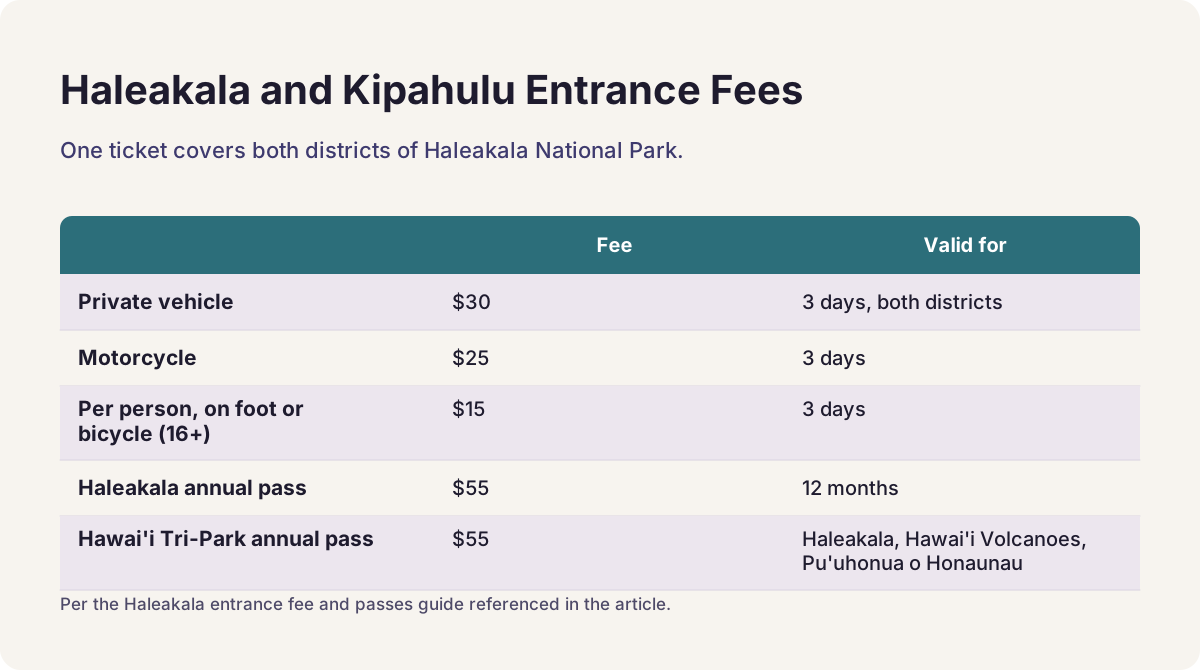
Entrance to Kipahulu costs $30 per private vehicle, valid for 3 days and covering both the Kipahulu and Summit Districts. On foot or by bicycle it is $15 per person 16 and over, and a motorcycle pays $25. The park takes credit and debit only, no cash. The Hawai'i Tri-Park annual pass is $55, and America the Beautiful passes are accepted.
That single 3 day ticket is quietly one of the better values in the National Park System, because it means a Kipahulu day and a separate summit sunrise day are covered by one payment, and the two districts genuinely justify separate days. The fee details, including pass options, are on our Haleakala entrance fee and passes guide, and the official park fees page is the source of record. One point worth flagging: fee-free days do not waive the summit's sunrise reservation, and the 2026 free-day policy applies to US citizens and residents only, so international visitors should plan on paying regardless.
| Entry type | Fee | Validity |
|---|---|---|
| Private vehicle | $30 | 3 days, both districts |
| Motorcycle | $25 | 3 days |
| Per person, on foot or bicycle (16+) | $15 | 3 days |
| Haleakala annual pass | $55 | 12 months |
| Hawai'i Tri-Park annual pass | $55 | Haleakala, Hawai'i Volcanoes, Pu'uhonua o Honaunau |
Tours handle this differently, and it is worth reading each listing's inclusions. The road-based tour operators run under their own park authorization, and several listings state that park admission is included in the ticket price, among them the Hana halfway combo, whose listing covers Haleakala National Park entry for its roughly 2 hour summit-side stop. A traveler who drives themselves pays at the entrance station; a traveler on a listed tour should confirm what the specific listing says rather than assume.
Is The Pipiwai Trail Worth The Hike?
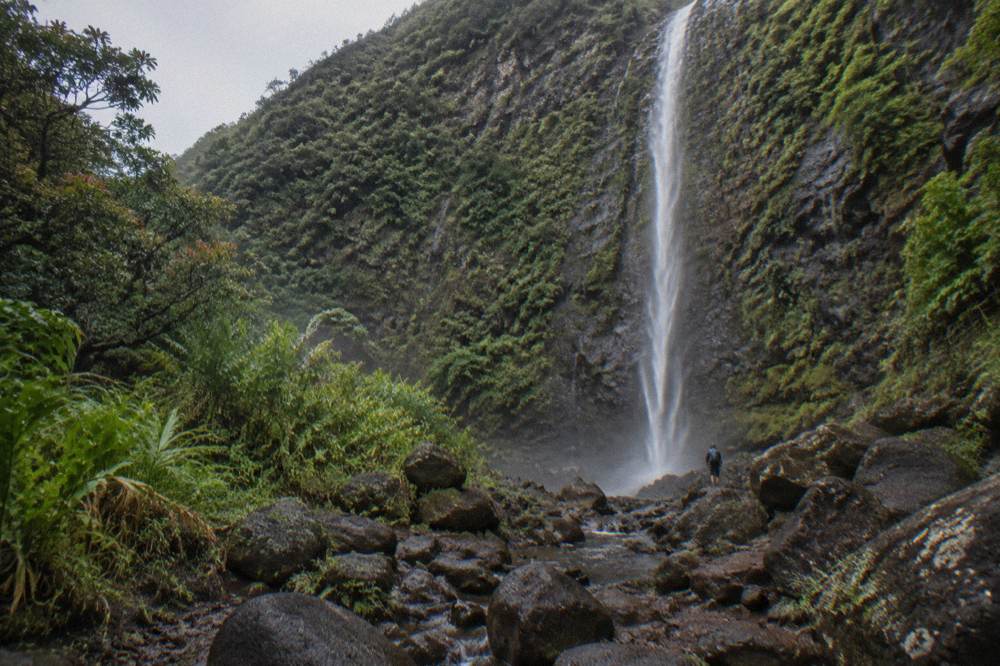
Yes, for most visitors it is the highlight of Kipahulu. The 4 mile round trip climbs 800 ft through rainforest and a tall bamboo grove to the Waimoku Falls viewing area, where the falls drop about 400 feet down a sheer cliff face. The park calls it moderately strenuous: it is muddy in places, crosses streams, and gains real elevation, but no technical skill is needed and most reasonably fit hikers finish it in 2 to 3 hours.
Go early. The Kipahulu parking area fills on busy days, the trail is far quieter before mid morning, and afternoon clouds and rain are common in a district that receives 187 inches of rain annually. Carry more water than feels necessary, wear shoes with grip, and expect the bamboo section, about a mile in, to be the moment the hike changes character from forest walk to something that photographs like a different country. The Makahiku Overlook at the half mile mark gives you a waterfall view for almost no effort, which is a reasonable fallback if the full hike is not in the plan.
The park's own guidance on the trail's specifics lives on the official hiking page. If a guided hike appeals more than a self-guided one, the summit side of the park has that format: the Haleakala Crater Hiking Experience from Hike Maui, from $208 per person, rated 4.8 from 74 reviews, runs 7 hours on the crater's Sliding Sands area with a meal included, and its listing specifies a Kahului Park and Ride meeting point, and hotel pickup is not included. It is a different district and a completely different landscape, but it is the roster's pure guided-hiking product.
Can You Visit The Pools On A Tour Instead Of Driving?
Yes. Three formats on this site's roster reach the Hana side of the island: a small-group coach combo that pairs the Road to Hana halfway with a Haleakala National Park stop, a private open-air jeep tour, and a helicopter flight over the Hana rainforest and crater. Each includes transport as its core value, since the drive is the main barrier for most visitors, and each states its park arrangements on its own listing.
The tradeoff is control versus effort. A self-drive day lets you linger at the banana bread stands and pull over at every waterfall; a tour hands back the wheel, the parking hunt and the bridge-right-of-way etiquette, and adds a guide's commentary. Kipahulu itself, the trails and the pool overlooks, you walk either way; no vehicle tour carries you past the trailheads, so comfortable shoes matter on every option.
| Tour | Format | Duration | From (per person) |
|---|---|---|---|
| Road to Hana Halfway and Haleakala National Park | Small group, hotel pickup offered | 10 hours | $259 |
| Road to Hana and Haleakala Sunset Open-Air Jeep Private Tour | Private jeep, per group | 8 to 9 hours | $1990 |
| Hana Rainforest and Haleakala Crater Helicopter Tour | Helicopter, doors on | 45 minutes | $368 |
What Should You Know Before You Go?
Bring layers, water, cash-free payment and patience. Kipahulu is remote: no gas or food is sold in the park, emergency help is at least an hour away, cell service is unreliable, and rain falls on 187 inches a year. The visitor facilities are modest, the parking lot closes when full, and the district rewards an early start far more than the summit side does, because the constraint is crowds and daylight rather than a timed reservation.
There is no sunrise reservation at Kipahulu, and no reservation of any kind for the pools, the trails or sunset anywhere in the park. The 3 to 7 a.m. vehicle reservation applies only to the Summit District on the other side of the mountain. That makes a Kipahulu day logistically simpler than a summit sunrise day, with the long Hana Highway drive as the only real constraint, and it pairs naturally with a second day up top. For the full menu of both districts, our things to do at Haleakala National Park overview lays out the options by interest and budget.
Dress for two climates. The Hana side is warm, humid and often showery, while the summit district sits at 10,023 ft where Pu'u 'Ula'ula can be below freezing before dawn and roughly 30 F cooler than the coast, a contrast that catches out visitors who pack for one or the other. If your itinerary leans toward the summit evening rather than the Hana morning, the site's Haleakala National Park Tours roster includes small-group sunset and astronomy options, among them the Haleakala Sunset and Astronomy Tour from Amazing Maui Stars, from $245 per person, rated 5.0 from 57 reviews, which spends about 4 hours at altitude in a group of up to 8. The other private-tour format worth knowing is the Private Haleakala Summit and Stroll from Kahului, from $359 per group, rated 5.0 from 69 reviews, a 5 hour private visit to the crater road and Hosmer Grove.
Weather, and only weather, decides whether any given day delivers the views, and the park does not close for ordinary rain. Check the forecast and the conditions page the evening before, and build a flexible plan.
Seven Sacred Pools Maui: The Short Version
Visit Kipahulu for the Pipiwai Trail, the Waimoku Falls and the pool overlooks, and skip any expectation of swimming. Budget $30 per vehicle, most of a day, and a very long, very scenic drive. A combo, jeep or helicopter tour offloads the driving entirely. The closure of the pools to entry is permanent policy, so plan around it rather than hoping it changes.
The district rewards the visitor who arrives early, hikes the full trail and treats the pools as scenery. It punishes the visitor who shows up at noon expecting a swim and a quick photo. Everything on this page, from the closure to the trail numbers to the drive times, comes from the park's own pages, and conditions can change, so a final check of the official Kipahulu page close to your travel date is the last step of any plan.
Common Questions About The Seven Sacred Pools
Can you swim in the Seven Sacred Pools Maui?
No. The Pools of Oheo are closed to entry and swimming under a standing National Park Service safety closure covering flash flooding, slippery rock and rockfall. You can view the pools from the Kuloa Point Trail.
Are the Seven Sacred Pools open right now?
The pools themselves are viewable but closed to entry, and that is standing policy rather than a temporary alert. The Kuloa Point Trail, the Pipiwai Trail and the Kipahulu campground remain open. Check the park's conditions page for any weather-driven change close to your date.
How do I get to the Seven Sacred Pools?
Drive the Hana Highway to Mile Marker 42, 12 miles past Hana town. The drive takes 2.5 to 3 hours from Kahului or Kihei and 3 to 4 hours from Lahaina. Tour options, including a small-group combo, a private jeep tour and a helicopter flight, cover the transport for you.
How much does it cost to visit the Seven Sacred Pools?
Entrance is $30 per private vehicle, valid 3 days and covering both the Kipahulu and Summit Districts. On foot or by bicycle it is $15 per person 16 and over, and a motorcycle pays $25. The park accepts credit and debit only.
Is the Pipiwai Trail open?
Yes. The trail runs 4 miles round trip with 800 ft of elevation gain to the Waimoku Falls viewing area, where the falls drop about 400 feet. The park rates it moderately strenuous; expect mud, stream crossings and a bamboo forest.
Is Kipahulu worth it if you cannot swim?
For most visitors, yes. The Pipiwai Trail and the coastal pool overlooks are the district's real attractions, and many travelers rate the rainforest hike above the summit experience. Treat the pools as scenery rather than a swimming stop and the day delivers.