How Long Does It Take To Do Haleakala Sunrise?
Plan your Haleakala sunrise morning with real drive times, tour durations, and a timeline that covers the alarm clock to the post-sunrise breakfast.
Planning a sunrise visit to Haleakala National Park means building a timeline that accounts for the early-morning drive, the summit cold, and the fleeting dawn. Haleakala National Park Tours breaks the morning into drive time, tour length, and sunrise timing so you can plan a realistic day. The short answer is that the full experience, from leaving your accommodation to returning, typically takes between 4 and 10 hours. The drive to the Summit District takes about 45 minutes to 1 hour from Kahului, and 1 to 1.5 hours from Kihei, while a guided tour with hotel pickup and a breakfast stop can stretch the outing to 8 or 9 hours. The sunrise itself is a fleeting 10 to 15 minutes, but the cold, high-altitude wait beforehand and the slow descent afterward consume most of the morning.
How Long Does It Take To Do Haleakala Sunrise?
The full Haleakala sunrise experience, from leaving your accommodation to returning, typically takes 4 to 10 hours. The drive adds 45 minutes to 1 hour from Kahului, 1 to 1.5 hours from Kihei, each way, while a guided tour with hotel pickup and breakfast can stretch the outing to 8 or 9 hours. The sunrise itself lasts only 10 to 15 minutes, but the cold wait and slow descent consume most of the morning.
The drive to the summit is the biggest variable. Official NPS figures put the trip from Kahului at 45 minutes to 1 hour, from Kihei at 1 to 1.5 hours, and from Lahaina at 1.5 to 2 hours. Once you reach the park entrance gate, it is another 30 minutes and 11 miles of paved road to the summit parking areas. That puts the total one-way travel time from a South Maui resort at roughly 1.5 to 2 hours before you even step out of the car. If you are driving yourself, you also need to factor in the $1 sunrise reservation required for every non-commercial vehicle entering the Summit District between 3:00 a.m. and 7:00 a.m. The reservation is booked on recreation.gov, released up to 60 days ahead at 7:00 a.m. HST, and often sells out within fifteen minutes, as detailed in the official sunrise reservation FAQ. Our sunrise reservation guide walks through the whole process.
Guided tours remove the driving stress and the reservation scramble. The 9-hour Haleakala National Park Sunrise Tour operated by Skyline Hawaii, for example, picks you up at your hotel or condo, handles the summit drive, and includes a hot breakfast after the sunrise. That door-to-door timeline is about 9 hours, with roughly 2 hours spent at the summit. Other coach tours run 8 to 10 hours depending on pickup location and the breakfast stop. Self-drive visitors often underestimate how long the cold, dark wait at 10,023 feet really feels. The summit is about 30 degrees Fahrenheit cooler than the coast, and before dawn it is regularly below freezing with wind chill, as the NPS weather page notes. Standing around for an hour in that kind of cold makes the experience feel longer than the clock suggests.
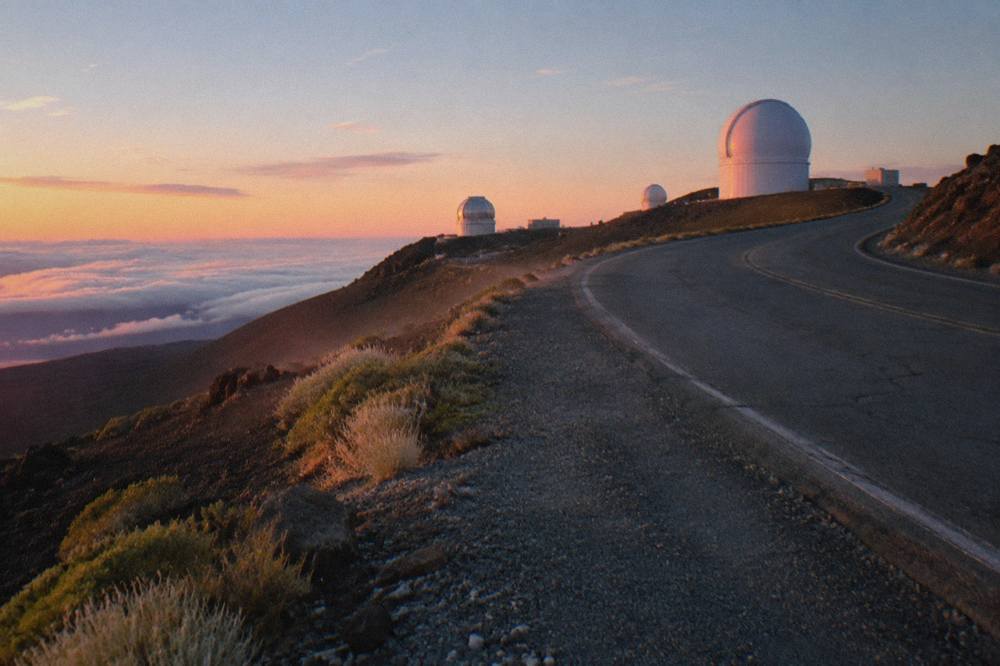
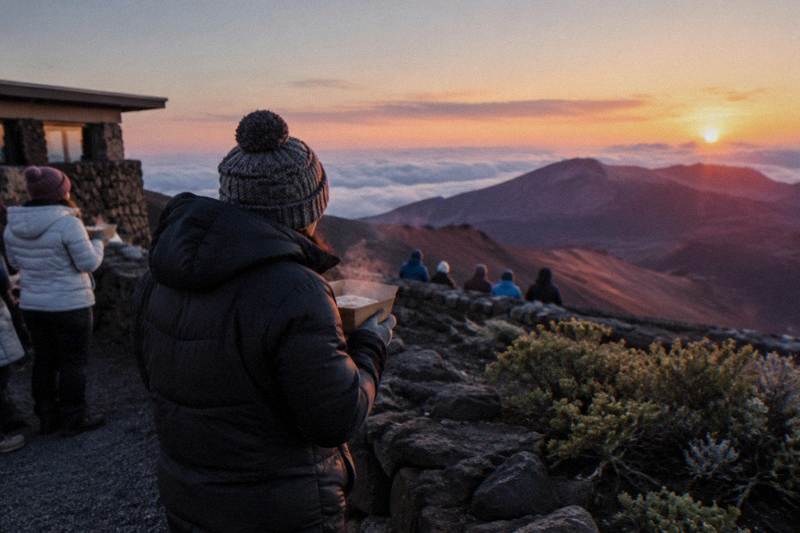
A realistic self-drive timeline from Kihei looks something like this: wake at 3:30 a.m., leave by 4:00 a.m., arrive at the summit parking lot around 5:30 a.m., secure a viewing spot, wait in the cold for the 6:20 a.m. sunrise (October timing), watch the sun break the crater rim for 10 minutes, linger for photos, then drive back down (see Crater Hike Timing). You would be back at your accommodation by 8:00 or 8:30 a.m., making the whole outing about 5 hours. From Lahaina, add another 30 to 45 minutes each way, pushing the total closer to 6 or 7 hours. That is still shorter than most guided tours, but you trade time for comfort and convenience. The winding, unlit road demands slow, careful driving in the dark, and the descent after sunrise often crawls behind a long line of vehicles leaving the summit, which can add 20 to 30 minutes to your return drive.
Altitude adds another layer to the timeline. At 10,023 feet, the air is thin enough to cause shortness of breath, and visitors who drove straight up from the coast may notice a mild headache, dizziness, or shortness of breath. Staying hydrated and avoiding alcohol the night before helps, and if symptoms worsen, the only reliable remedy is to descend. The summit parking lots hold about 150 vehicles combined, and on busy mornings they can fill before 4:30 a.m., so arriving later often means parking at a lower pullout and walking up. There are no gas stations, restaurants, or shops past the park entrance gate, and the only restrooms are at the summit visitor centers, where lines can be long just before sunrise. Bring a full tank of fuel, snacks, and water. Dress in warm layers, a hat, and gloves, and consider a blanket to sit on while waiting. Sunrise time shifts by about an hour between summer and winter, so check the exact moment for your date and plan to be in position at least 30 minutes early.
What Time Do You Need To Wake Up For Haleakala Sunrise?
To catch the Haleakala sunrise, self-drivers from Kihei or Wailea should set an alarm for 3:30 a.m. to depart by 4:00 a.m., while those in Lahaina or Kaanapali need to wake at 3:00 a.m. to leave by 3:30 a.m. Tour passengers enjoy a slightly later pickup, but mornings still begin well before dawn.
To make this concrete, the table below shows the one-way drive times to the Summit District entrance gate from the main resort areas, based on the official NPS FAQ page. Add 30 minutes from the gate to the summit parking lots, and then allow at least 45 minutes before sunrise to find a spot, use the restroom, and layer up.
| Starting Point | Drive to Park Entrance | Total to Summit Parking |
|---|---|---|
| Kahului | 45 min to 1 hr | 1 hr 15 min to 1 hr 30 min |
| Kihei | 1 hr to 1 hr 30 min | 1 hr 30 min to 2 hr |
| Lahaina | 1 hr 30 min to 2 hr | 2 hr to 2 hr 30 min |
If you book a guided sunrise tour, the operator handles the timeline. The 9-hour Haleakala National Park Sunrise Tour picks up from hotels and condos island-wide, with published monthly pickup windows that vary by season and closer to 3:30 a.m. from Kihei (see Time Needed At Haleakala). The coach makes a few stops, so the total time from first pickup to summit arrival is about 2 to 2.5 hours. That means a 3:00 a.m. wake-up is still common even on a tour, but you can doze on the ride up instead of gripping the wheel in the dark.
For visitors who want a smaller group and a shorter overall timeline, the Small-Coach Sunrise Breakfast from Valley Isle Excursions runs 8 hours with a maximum of 22 travelers. It carries a 4.8 rating from 705 reviews and starts from $264 per person. The tighter group size means fewer hotel stops, so the pickup window is narrower and the total morning can feel more efficient. That tour still gets you to the summit well before first light and includes a breakfast stop on the way down.
How Long Does The Sunrise Itself Last?
The moment the sun crests the crater rim lasts only 10 to 15 minutes, but the twilight show stretches much longer. Astronomical twilight begins well before sunrise, and the sky shifts from deep indigo to orange and pink over the next hour. Most visitors arrive 45 to 60 minutes before sunrise to watch the full color progression and stay another 20 to 30 minutes after for photos.
Sunrise times shift throughout the year, which changes your wake-up call. The table below lists the approximate sunrise time on the 15th of each month for the Haleakala summit area, computed for sea-level horizon at the park’s coordinates. In winter, sunrise is as late as 7:04 a.m., meaning you can sleep a little later. In summer, the sun rises before 5:50 a.m., so the alarm goes off even earlier.
| Month | Sunrise (HST) |
|---|---|
| January | 7:04 a.m. |
| February | 6:56 a.m. |
| March | 6:35 a.m. |
| April | 6:07 a.m. |
| May | 5:48 a.m. |
| June | 5:44 a.m. |
| July | 5:52 a.m. |
| August | 6:04 a.m. |
| September | 6:12 a.m. |
| October | 6:20 a.m. |
| November | 6:35 a.m. |
| December | 6:53 a.m. |
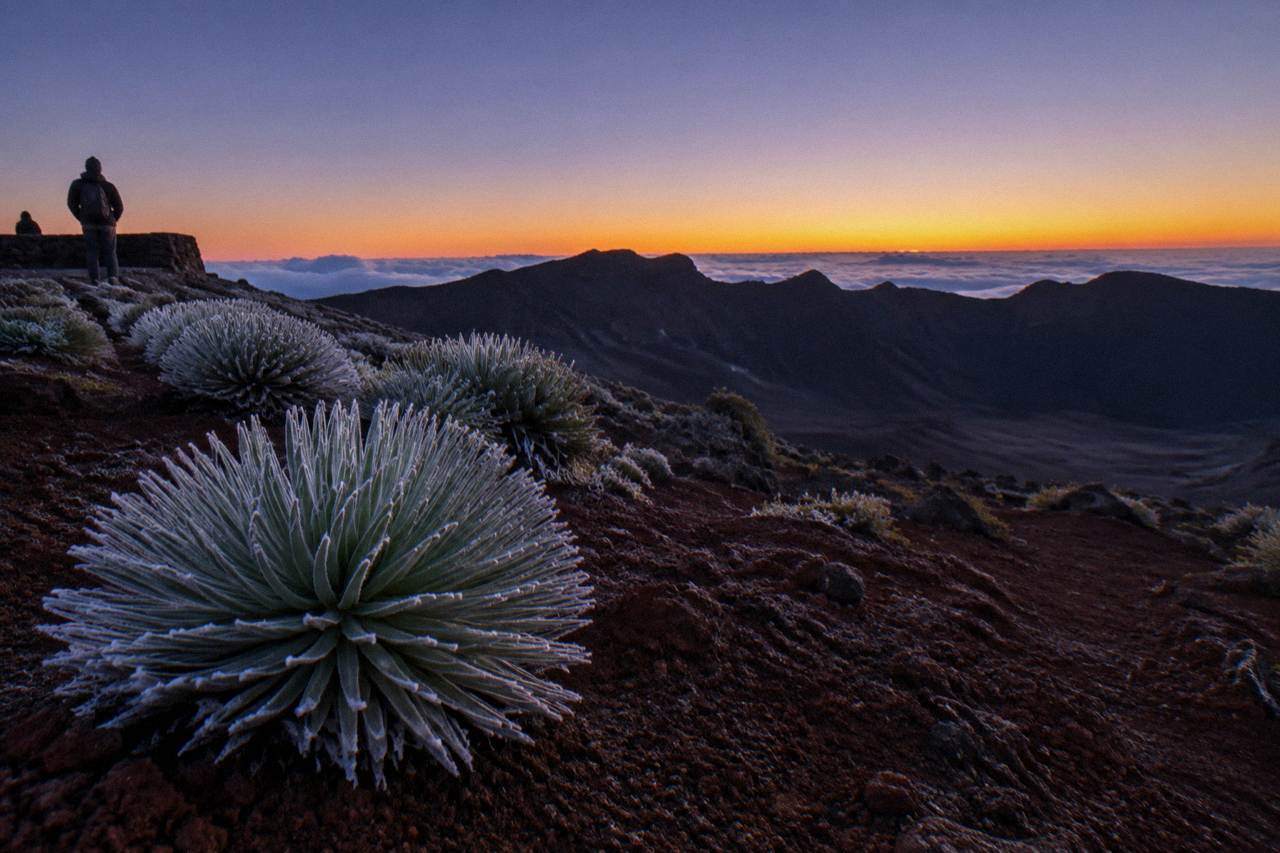
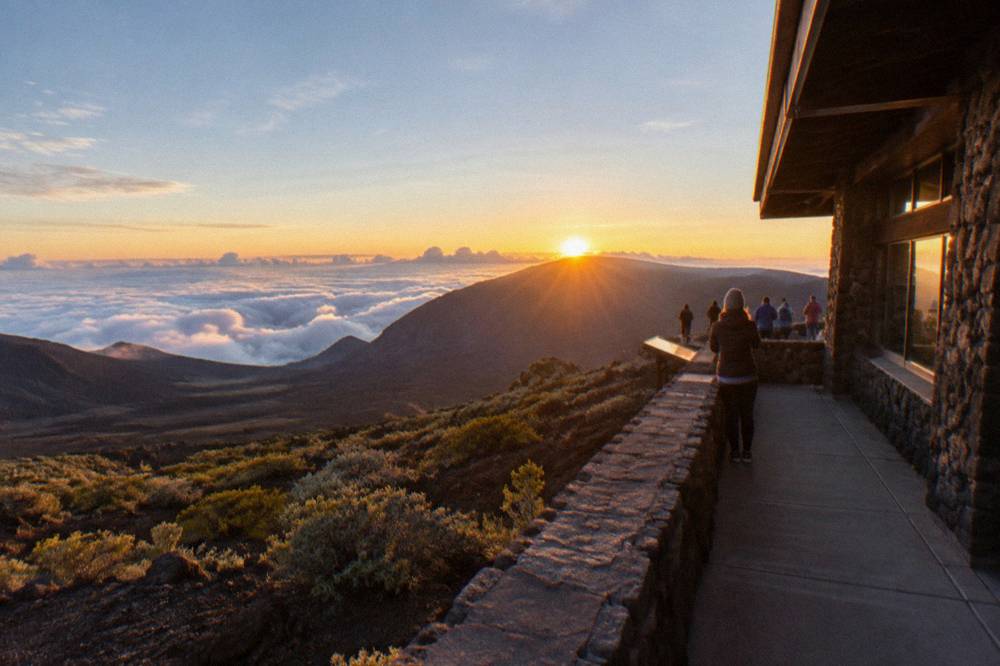
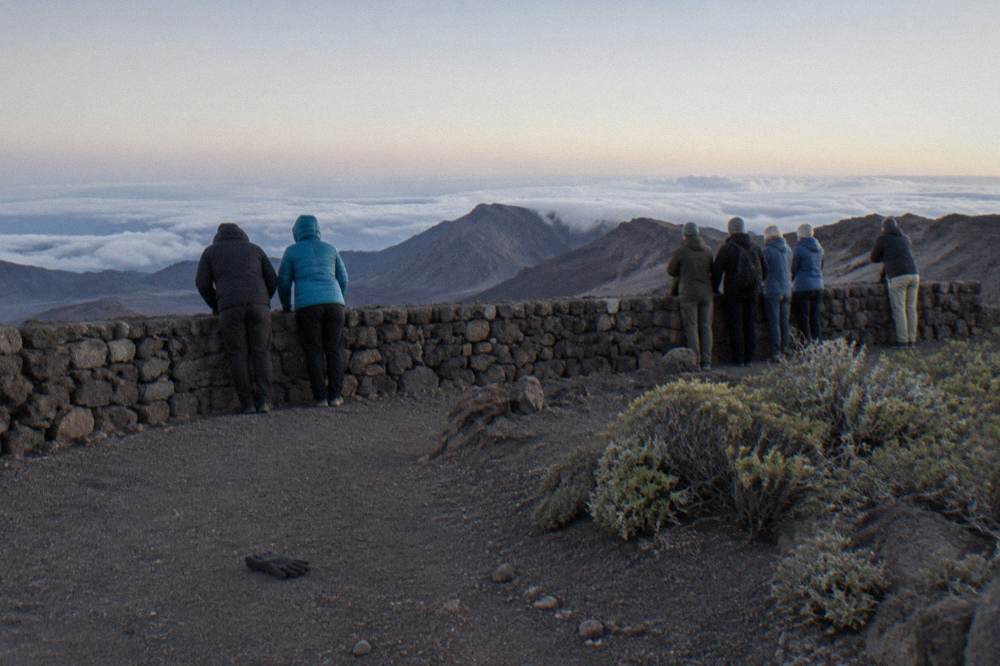
The sunrise itself is never guaranteed, weather at the summit is famously unpredictable. Clouds can roll in and obscure the horizon, but many mornings the inversion layer keeps the summit clear while the crater fills with a sea of clouds. The park’s four official sunrise viewing areas, Pu‘u ‘Ula‘ula at 10,023 feet, the Haleakala Visitor Center at 9,740 feet, Kalahaku Overlook at 9,324 feet, and Leleiwi Overlook at 8,840 feet, all offer different perspectives, but none can promise a visible sun. If clouds sock in the summit, the color show still happens above them, and the experience remains memorable, just different.
For travelers who want a longer, more leisurely sunrise morning, the Sunrise Coach with Local Breakfast from Polynesian Adventure Tours stretches the outing to a full 10 hours. It carries a 4.7 rating from 2,471 reviews and starts from $254 per person. The extra time comes from a longer breakfast stop at the Maui Tropical Plantation and a more relaxed pace. That tour is a good fit for families who do not want to rush back down the mountain.
How Long Do Guided Sunrise Tours Take?
Guided sunrise tours on Maui run from 7 to 10 hours door to door, with the majority falling in the 8- to 9-hour range. The time includes hotel pickup and drop-off, the drive to the summit, about 1.5 to 2 hours at the summit for the sunrise and viewing, and a breakfast or meal stop on the return. The exact duration depends on the number of hotel pickups, the breakfast location, and traffic on the mountain road.
The table below compares the duration, price, and group style of several sunrise tours that include hotel pickup and a meal. All prices shown are starting figures and can change depending on the date you book and group size. Ratings and review counts are as reported on the listing.
| Tour Name | Duration | Starting Price | Group Size | Rating |
|---|---|---|---|---|
| 9-Hour Haleakala National Park Sunrise Tour (Skyline Hawaii) | 9 hours | from $236 per person | Guided vehicle | 4.7 (678 reviews) |
| Majestic Haleakala Sunrise Tour (Valley Isle Excursions) | 8 hours | from $264 per person | Up to 22 | 4.8 (705 reviews) |
| Sunrise & Breakfast Tour (Polynesian Adventure) | 8 hours | from $236 per person | Coach | 4.3 (175 reviews) |
| Sunrise Spectacular with Local Breakfast (Polynesian Adventure) | 10 hours | from $254 per person | Up to 72 | 4.7 (2,471 reviews) |
| Classic Vehicle Sunrise Tour (Bike Maui / Haleakala EcoTours) | 7 hours | from $287 per person | Up to 96, no hotel pickup | 4.6 (175 reviews) |
The 9-hour Haleakala National Park Sunrise Tour sits in the middle of the pack for both duration and price. It includes hotel pickup across Maui, a guided summit experience, and a breakfast stop after the sunrise. Because the operator is one of the four NPS-authorized road-based concessionaires, the vehicle enters the park under its own commercial authorization, so you do not need to secure the separate $1 sunrise reservation. That alone can save you the stress of competing for a recreation.gov slot that sells out in minutes. If you would rather drive up on your own, our guide to why Haleakala sunrise tickets are so hard to get explains exactly what you are up against.
The Classic Vehicle Sunrise Tour, at 7 hours, is the shortest full-service sunrise tour on the roster, but it does not include hotel pickup. You meet the tour at the Kahului Park & Ride, which means you still need to drive yourself to the meeting point in the dark. That can shave an hour off the total morning for visitors staying near Kahului, but for those in Lahaina it may not save much time after factoring in the pre-dawn drive to the meeting point. The tour still provides a guided summit experience and breakfast, and it carries a 4.6 rating from 175 reviews.
Guests on the listing often comment on the well-organized timeline. One traveler wrote, “Jeff was a super knowledgeable tour guide. Everything was super tight. From the pickup time. To the timing of breakfast and the drop off. Very well run. And of course the experience is one I’ll never forget. Dress warmer than you think. It’s freezing on top of the mountain!” That review, from a 5-star rating on the Majestic Sunrise Tour, captures the reality that even a well-run 8-hour tour still means standing in the cold for a long stretch.
What Else Affects The Sunrise Timeline?
Beyond the drive and the tour duration, several factors can stretch or compress your sunrise morning. Parking lot closures, weather delays, altitude adjustment stops, and the post-sunrise crowd exiting the summit all add minutes. The park’s four highest parking lots hold about 150 vehicles total, and once they fill, rangers close the summit road until enough cars leave. On busy mornings, that can mean waiting at a lower pullout for 20 to 40 minutes.
The sunrise reservation system itself shapes the timeline. The $1 reservation is required for every non-commercial vehicle entering between 3:00 a.m. and 7:00 a.m., and the reservation holder must show photo ID and confirmation at the entrance station. No reservation means no entry before 7:00 a.m., period. The park does not sell reservations at the gate, and they are not refunded if the weather is bad. That means self-drive visitors need to build in a few extra minutes at the entrance station to present their paperwork.
Altitude also matters. The summit sits at 10,023 feet, where oxygen is lower and even a short walk can leave you winded. The NPS advises that hiking out of the crater takes about twice as long as hiking in, and altitude sickness symptoms like nausea, headache, and dizziness can appear quickly. If anyone in your group needs to rest or descend early, the whole timeline shifts. Pregnant visitors and people with heart or respiratory conditions should consult a doctor before going to the summit. There is no gas, food, or cell service in the park, and emergency help is at least an hour away.
The descent can also take longer than expected. After the sunrise, hundreds of cars and tour vans all head down the same narrow, winding road at the same time. The drive from the summit back to the entrance gate is 30 minutes in ideal conditions, but a slow-moving line of traffic can easily double that. Tour operators build this into their schedules, but self-drivers should not plan a tight morning-after itinerary.
Common Questions About Haleakala Sunrise Timing
How long is the drive to Haleakala for sunrise?
The drive from Kahului to the Summit District entrance gate takes 45 minutes to 1 hour, from Kihei 1 to 1.5 hours, and from Lahaina 1.5 to 2 hours, according to the official NPS FAQ page. Add another 30 minutes from the gate to the summit parking lots. In total, plan on 1.5 to 2.5 hours of driving each way, depending on your starting point.
What time should I leave for Haleakala sunrise?
You want to arrive at the summit at least 45 to 60 minutes before the published sunrise time to watch the full twilight show and secure a good viewing spot. From Kihei, that means leaving around 4:00 a.m. for a 6:20 a.m. October sunrise. From Lahaina, leave by 3:30 a.m. Check the sunrise time for your travel month and work backward from there.
How early do I need to arrive at the summit?
Arrive 45 to 60 minutes before sunrise. The parking lots open 24 hours, but the four highest lots fill quickly. The park recommends arriving early because once the 150-vehicle capacity is reached, the summit road closes until spaces open. On high-demand mornings, that can mean arriving 90 minutes early to guarantee a spot.
Can I see the sunrise without a tour?
Yes, you can drive yourself. You need a $1 sunrise reservation per vehicle booked on recreation.gov for the 3:00 a.m. to 7:00 a.m. window, plus the park entrance fee of $30 per vehicle. The reservation is separate from the entrance fee and is not sold at the gate. Without a reservation, you cannot enter the summit area before 7:00 a.m.
Is the sunrise tour worth the time?
For many visitors, a guided sunrise tour is worth the 8 to 10 hours because it removes the stress of driving unfamiliar mountain roads in the dark, secures summit access without the recreation.gov reservation scramble, and includes a meal. The trade-off is a longer total morning compared to a self-drive, but you can sleep or relax on the ride up instead of driving the winding road yourself.