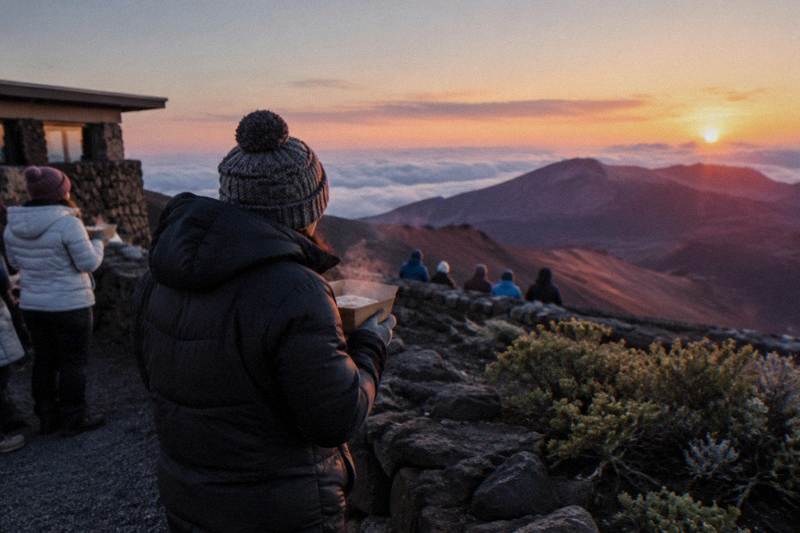
How Much Time Do You Need At Haleakala?
A realistic time budget for Haleakala: the drive up, sunrise and sunset windows, crater hikes, and how a nine-hour guided tour fits into a Maui itinerary.
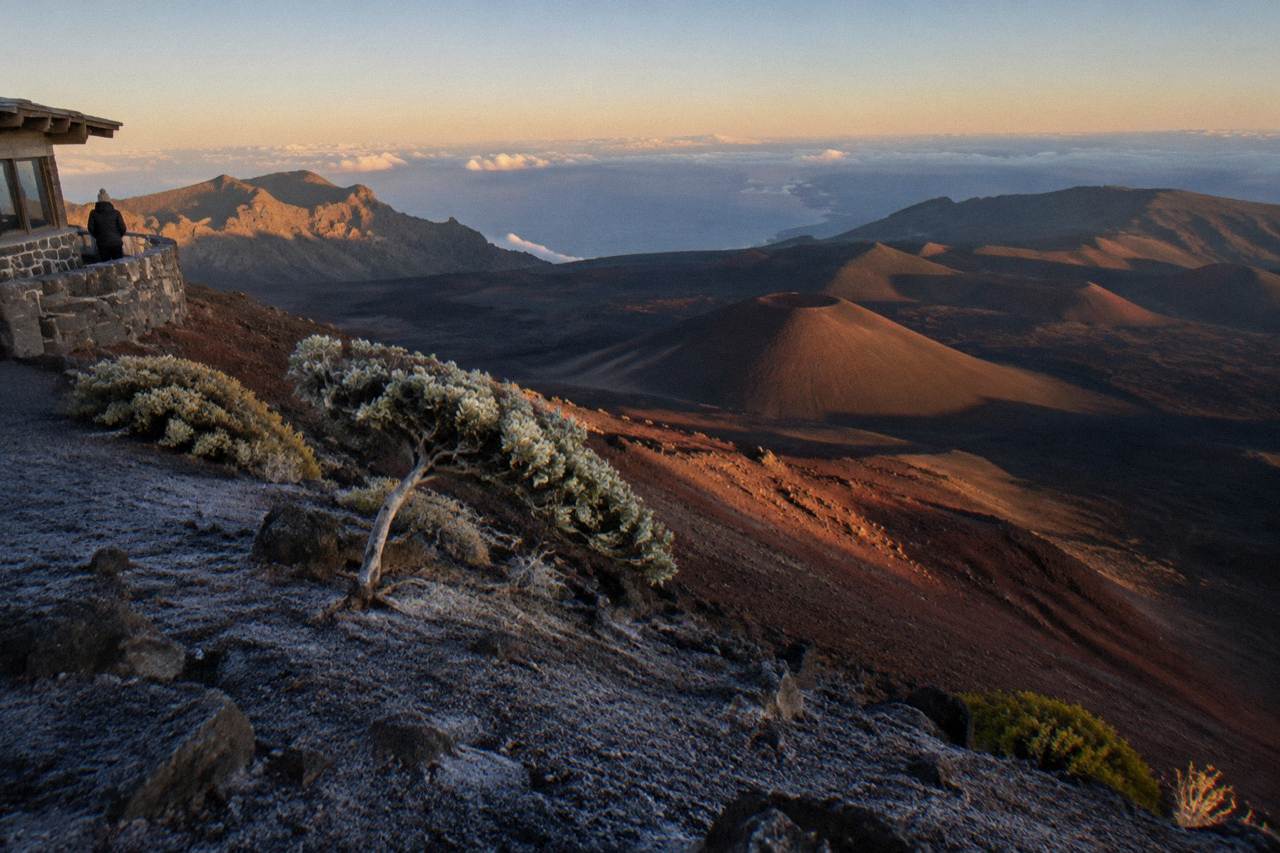
The honest answer for most travelers is that Haleakala takes more of your day than the map suggests. The National Park Service's own FAQ puts the drive from Kahului at 45 minutes to one hour just to reach the Summit District entrance, then another 30 minutes and 11 miles of paved road from the gate to the summit at 10,023 feet. Add a sunrise start, a meal stop, or a hike, and a "quick volcano visit" becomes a six-to-ten-hour commitment, which is exactly why guided sunrise tours on this site run between five and ten hours door to door. Once you've set aside the hours, a full breakdown of what a Haleakala visit costs shows how the park fees stack up against the price of a guided tour.
That surprises people who picture Haleakala as a roadside overlook. It is a working visit to a high-altitude wilderness district with no gas, no food, and emergency help at least an hour away, as the park's own summit page states. Planning the time budget honestly is the difference between a relaxed summit morning and a rushed, cold, slightly regretful one. This guide breaks the mountain into its real time blocks: the drive, the sunrise or sunset window, the hikes, and the guided options that compress all of it into a single block. Altitude is the other factor that can quietly reshape your plans, so read our guide to how often visitors feel sick at the summit to learn who is at risk and how to prevent it before you go.
How Much Time Do You Need At Haleakala?
Budget three to five hours for a summit-only visit from South or West Maui, four to six hours for sunrise or sunset because of the pre-dawn or late-afternoon drive, and a full day for a hike into the crater. Guided tours package all of it into five to ten hours depending on format, and most travelers find the nine-to-ten-hour sunrise versions fill an entire morning.
The reason the hours add up so fast is geography. Haleakala's Summit District begins at 7,000 feet, and the summit parking areas sit close to 10,000 feet, reached by a winding park road with no streetlights and no guard rails in places. The park's official FAQ page gives drive times of 45 minutes to one hour from Kahului, one to 1.5 hours from Kihei, and 1.5 to 2 hours from Lahaina, then another 30 minutes from the entrance gate to the top. Those are clean-condition figures; the park notes weather can slow the climb considerably.
Then there is the time at the top, which is not zero. Summit temperatures are about 30 F cooler than the coast, often below freezing before dawn, and the altitude itself asks for a slower pace. Most visitors want 30 to 60 minutes at the viewpoint for photos, acclimatizing, and letting the light change across the crater. A visit that treats the summit as a drive-by photo stop tends to feel thin; the crater rewards a lingering hour.
If fitting this into a packed Maui itinerary feels tight, a guided tour is the way many travelers convert an unpredictable half-day into a fixed one. The nine-hour sunrise tour by Skyline Hawaii handles hotel pickup, the pre-dawn drive, the summit window and breakfast in a single block, from $236 per person, rated 4.7 from 678 reviews, with free cancellation per the listing.
Those three formats bracket the realistic time budgets. The sunrise coach tour is the longest commitment, the sunset dinner tour shifts the same summit experience to an afternoon block, and the crater hiking experience turns the visit into an active full day. Which one fits depends less on the mountain and more on what the rest of your Maui week looks like.
How Long Does The Drive To The Summit Take?
Plan on 1.5 to 3 hours of driving each way from most resort areas: 1 to 1.5 hours from Kihei to the park entrance, 1.5 to 2 hours from Lahaina, and 45 minutes to 1 hour from Kahului, plus a fixed 30 minutes from the entrance gate to the summit lots. From Wailea or Kaanapali, a sunrise departure means leaving around 3:00 to 3:30 a.m. to reach the top before the sky brightens.
Those are the park's own published drive times, printed on its FAQ page, and they assume dry roads and confident driving. The final 11 miles climb from the entrance at Kula through switchbacks to 10,000 feet, with parking lots that close when full, as the park's sunrise page warns. In the dark, in rain, or in a rental car you are still learning, add a buffer of 15 to 30 minutes.
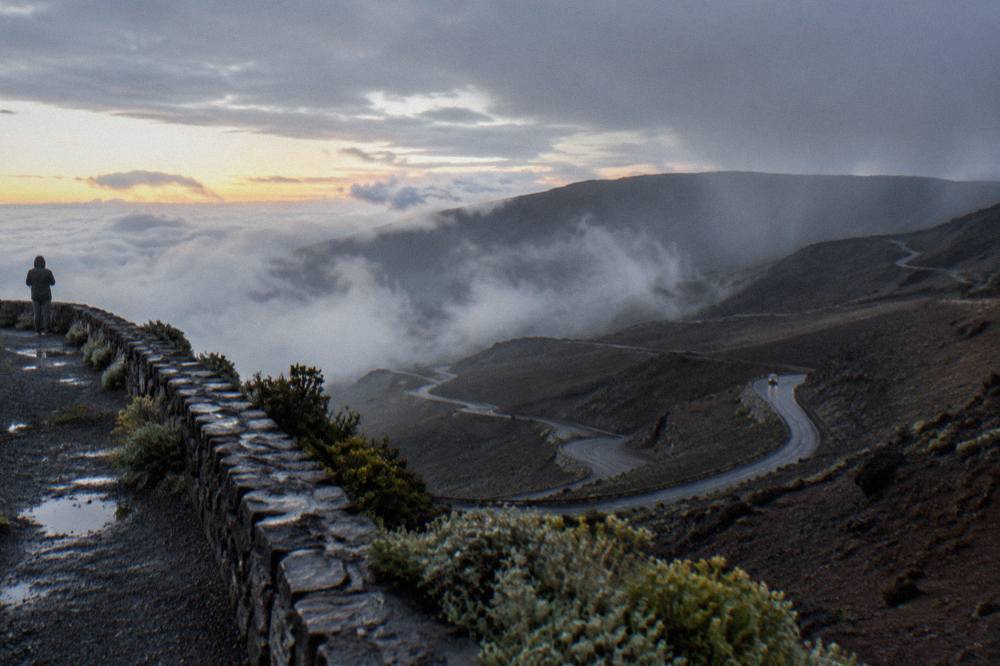
The drive times matter most for the sunrise decision. With sunrise around 6:04 a.m. in August and as late as 7:04 a.m. in January (the park's month table, computed for the 15th of each month in HST), a January start from Lahaina can mean a 4:30 a.m. departure, while an August start from Kihei means leaving by 3:30 a.m. or earlier to claim parking. One guest review of a sunrise coach tour puts it plainly: everyone slept most of the way up. That sleeping time is real time, and it is why hotel pickup is worth having. Before you set that alarm, the month-by-month guide to Haleakala sunrise times and departure hours tells you exactly when to leave based on where you are staying.
| Starting point | Drive to Summit District entrance | Entrance gate to summit | Realistic round-trip driving total |
|---|---|---|---|
| Kahului | 45 min to 1 hour | about 30 min | 2.5 to 3 hours |
| Kihei | 1 to 1.5 hours | about 30 min | 3 to 4 hours |
| Lahaina | 1.5 to 2 hours | about 30 min | 4 to 5 hours |
| Wailea / Kaanapali areas | comparable to Kihei / Lahaina | about 30 min | 3 to 5 hours |
For context on what that early drive actually buys you, the sunrise tours hub on this site compares the coach, small-coach and vehicle formats side by side. If a 3:00 a.m. alarm is a dealbreaker, note that sunset needs no reservation at all, and the sunrise versus sunset comparison guide walks through the tradeoffs in detail.
A self-drive sunrise also carries a booking task that a tour does not solve for you: the $1.00 per-vehicle sunrise reservation on recreation.gov, required for each non-commercial vehicle entering the Summit District between 3:00 a.m. and 7:00 a.m., released 60 days ahead at 7:00 a.m. HST with a portion two days ahead, and often gone within fifteen minutes. Authorized commercial tours operate under their own park authorization; a traveler driving themselves needs the reservation. The details are in the reservations guide on this site.
How Much Time For Sunrise Or Sunset At The Summit?
Budget about an hour on the mountain itself for sunrise or sunset: arrive half an hour or so before the event, and stay another half hour or more as the crater fills with light or the stars come out. Combined with driving, that makes sunrise a four-to-six-hour morning from resort areas and sunset a four-to-five-hour late afternoon and evening.
The park's sunrise page is direct about arrival timing: lots close when full, and the pre-dawn window between 3:00 and 7:00 a.m. concentrates every private vehicle into the four sunrise viewing areas, which hold about 150 vehicles total across Pu'u 'Ula'ula at 10,023 feet, Haleakala Visitor Center at 9,740 feet, Kalahaku Overlook at 9,324 feet and Leleiwi Overlook at 8,840 feet (see Sunrise Timing Guide). Arriving at the last minute risks a full lot and a hurried scramble.
Sunset works on the same physics with none of the paperwork. No reservation is required for sunset viewing, the entrance fee still applies, and the park's sunset page treats it as the unstressed alternative. The trade is a drive back down in the dark on an unlit road, which is exactly why sunset dinner tours exist: a review of the Twilight Sunset Tour with Dinner from Polynesian Adventure Tours reads, "Glad we did the tour bus and didn't drive ourselves. It got really busy and it's a long drive! Sunset is 1000xs better than sunrise, too!" That tour runs 7 hours, from $257 per person, rated 4.4 from 263 reviews.
For stargazers, add time rather than substituting it. After sunset the summit sky darkens fully within about an hour, and the small-group sunset astronomy tour by Amazing Maui Stars devotes 5 hours 30 minutes to the whole arc, with about 4 hours at 10,000 feet per its listing, from $245 per person, rated 5 from 57 reviews.
How Much Time If You Want To Hike Into The Crater?
A short crater taste takes 30 to 45 minutes: the Keonehe'ehe'e (Sliding Sands) first overlook is 0.5 mile round trip with 50 feet of elevation change. A serious crater hike takes most of a day, and the full 11-mile crossing to Halemau'u is a full-day commitment the park says takes about twice as long to hike out as in.
The park's hiking page is the source for those numbers, and it adds the caveat that matters most for time planning: at 9,780 to 6,380 feet, the trails are strenuous because of lower oxygen, and hikers should budget roughly double the time for the climb out that they spent descending. Altitude sickness symptoms, nausea, headache, dizziness and shortness of breath, are a stated concern, and visitors who are pregnant or have heart or respiratory conditions are advised to consult a doctor.
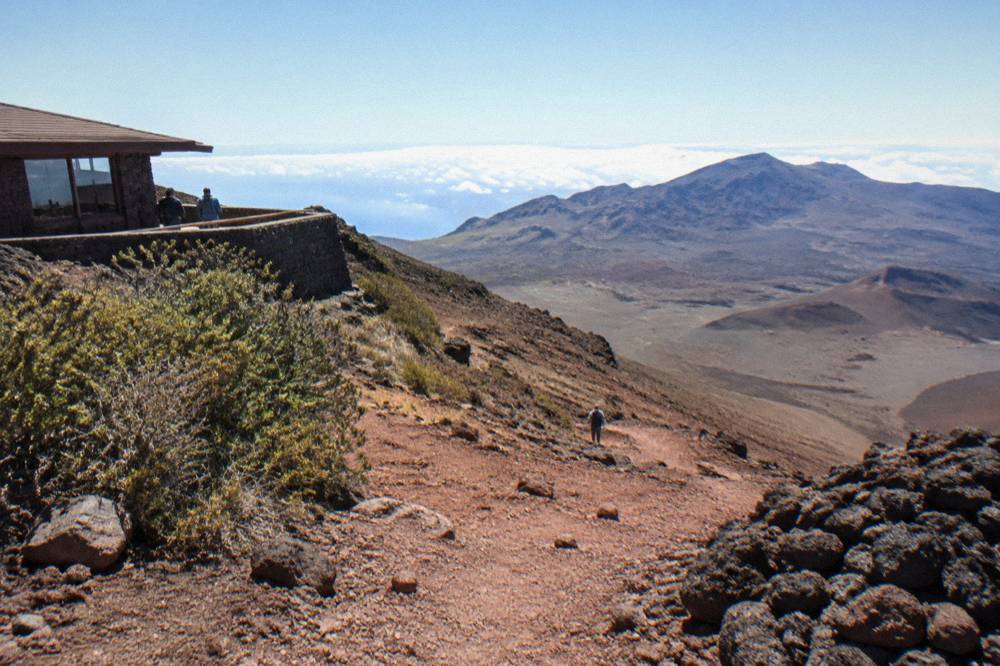
For itinerary purposes, there are three honest tiers. The first overlook is a add-on to any summit visit, not a separate activity. A half-day hike, say down to the crater floor viewpoint and back, still means a dawn start from resort areas, since the crater floor is about 3.9 miles one way from the trailhead. The full crossing is a dawn-to-dusk day with a car shuttle problem at the far end, because the park offers no hiker shuttle.
| Hiking option | Distance | Time to budget | Notes per the park's hiking page |
|---|---|---|---|
| Sliding Sands first overlook | 0.5 mile round trip | 30 to 45 minutes | 50 ft elevation change, trailhead in the visitor center lot |
| Halemau'u viewpoint | 2.2 miles round trip | 1.5 to 2 hours | 400 ft elevation change |
| Hosmer Grove loop | 0.54 mile loop | 30 minutes | Self-guided nature loop near the 7,000 ft entrance |
| Full crater crossing | 11 miles one way | full day | Ends at Halemau'u, 7,990 ft; out takes about twice as long as in |
Guided hikes shift the time burden from you to the operator. The Haleakala Crater Hiking Experience by Hike Maui runs 7 hours from $208 per person, rated 4.8 from 74 reviews, with a meal included and a four-traveler minimum to run. Its listing centers on the Sliding Sands area, so it is a structured version of the same terrain rather than a shortcut past the altitude. Departure times for these tours are tied to sunrise, so the month-by-month guide to Haleakala sunrise times will tell you how early your day starts.
The altitude is also why hikers should not squeeze the crater into the margin of another day. The park's safety guidance pairs the thin air with cold, wind and exposure; a hike that starts late turns into a race against afternoon clouds and a long drive down in the dark. If you want depth on the trails themselves, the sliding sands trail guide on this site covers the route in detail.
Can You Combine Haleakala With Road To Hana In One Day?
It is possible but punishing, and most itineraries work better split across two days. Haleakala's summit and the Kipahulu District sit on opposite sides of the same mountain: the summit is 1 to 2 hours from central Maui, while Kipahulu is 2.5 to 4 hours away past Hana, so a same-day combo means 6 to 8 hours of driving before any time on the ground.
The park's FAQ prints those Kipahulu drive times directly: 2.5 to 3 hours from Kahului or Kihei, 3 to 4 hours from Lahaina, to reach the entrance at Mile Marker 42 on the Hana Highway (see Kipahulu and Pipiwai). A same-day plan that catches sunrise at the summit and then drives the Hana Highway to Kipahulu is technically a loop of the whole volcano, and a few tours are built exactly for people who cannot spare two days, but the time math is unforgiving: it is a ten-hour-plus day.
That is the niche the combo tours on this site fill. The Road to Hana Halfway and Haleakala National Park tour by Aloha Eco Adventures runs 10 hours from $259 per person, rated 4.8 from 41 reviews, splitting the difference with a halfway Hana experience plus about 2 hours in the national park. If your heart is set on both districts in one day, a guided combo is the only version of the plan that does not put you behind the wheel for eight hours.
The alternative is to give each side its own day, and the road to Hana versus Haleakala guide on this site compares the two head to head. As a rule of thumb: if your Maui week has five or more full days, split them. If it has three, pick one side of the mountain and do it properly.
Sample Time Budgets By Trip Style
A self-drive sunset visit costs 4 to 5 hours from Kihei or Lahaina. A guided sunrise tour costs 8 to 10 hours door to door but starts with a nap on the coach. A crater hike costs a full day. The single most common planning mistake is booking a 10-hour sunrise tour and then trying to schedule anything before 2:00 p.m. the same day.
Here is how the roster's tour durations translate into real itinerary blocks. The sunrise coach tours run 8 to 10 hours including pickup and breakfast; the sunset tours run 5 to 7 hours; the express bike tours run 4 to 5 hours; and the helicopter flyover is the outlier at just 45 minutes, from $368 per person, rated 4.7 from 155 reviews, meeting at Kahului Heliport.
| Trip style | Total time to budget | What the hours are |
|---|---|---|
| Self-drive sunset from Kihei | 4 to 5 hours | Drive up, about an hour at the top, drive down in the dark |
| Self-drive sunrise from Lahaina | 5 to 6 hours | Reservation required, 3:00 a.m. departure, summit at dawn, breakfast after |
| Guided sunrise coach tour | 8 to 10 hours | Pickup 2:30 to 3:30 a.m., summit, breakfast, return by late morning |
| Small-group sunset tour | 5 to 6 hours | Afternoon pickup, summit and dinner, return by evening |
| Crater hike (guided) | about 7 hours | Trail time at altitude plus transport from the meeting point |
| Helicopter flyover | 45 minutes flight | Plus heliport check-in time at Kahului |
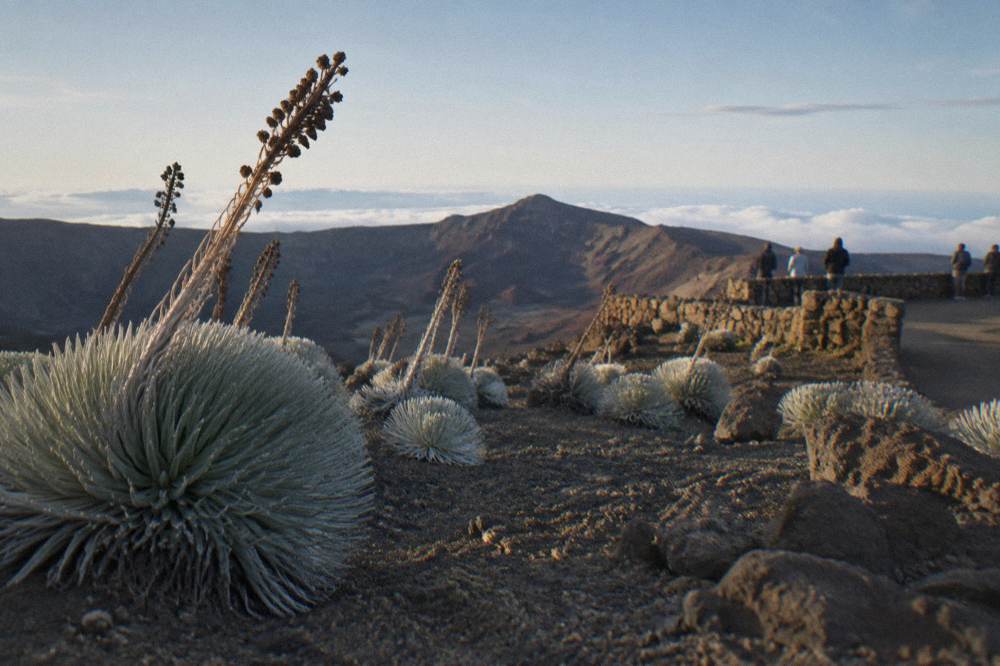
The recovery gap after a sunrise tour deserves respect too. The Skyline Hawaii nine-hour tour, this article's featured trip, returns you mid-to-late morning after a 2:30 a.m. style wake-up; the smart itinerary gives the afternoon to a beach or a nap, not a second excursion. Travelers who try to stack Haleakala sunrise and a snorkel trip on the same day usually end up remembering neither.
Common Questions About Time At Haleakala
How Much Time Do You Need At Haleakala?
Plan on three to five hours for a summit visit with photos from Kihei or Lahaina, four to six hours for sunrise or sunset including the drive, and a full day for a crater hike. Guided tours package the experience into 45 minutes to 10 hours depending on format, with sunrise coach tours at the long end.
How Long Does It Take To Drive To The Haleakala Summit?
From the park entrance at Kula, the drive to the summit is about 30 minutes and 11 miles. Reaching the entrance takes 45 minutes to 1 hour from Kahului, 1 to 1.5 hours from Kihei, and 1.5 to 2 hours from Lahaina, per the park's FAQ.
Can You Do Haleakala Sunrise And Road To Hana The Same Day?
Yes, but it is a 10-hour-plus day with 6 to 8 hours of driving. The Kipahulu District is 2.5 to 4 hours from central Maui past Hana. A guided combo tour, such as the 10-hour Road to Hana Halfway and Haleakala National Park tour, is the least exhausting version of the plan.
How Much Time Should You Spend At The Summit Itself?
Budget about an hour on the mountain: arrive half an hour or more before sunrise or sunset to claim a spot, and stay afterward as the light moves across the crater. The four viewing areas hold roughly 150 vehicles, and lots close when full.
Is Sunset Faster Than Sunrise At Haleakala?
Not by much, but it is easier. Sunset needs no reservation and no 3:00 a.m. alarm, so the same four-to-five-hour block starts in the afternoon instead. The tradeoff is driving down an unlit mountain road at night, which is why sunset dinner tours with a driver are popular.
Do I Need A Whole Day For Haleakala?
Only if you are hiking into the crater. The full 11-mile Sliding Sands to Halemau'u crossing is a dawn-to-dusk day. A summit-only visit fits comfortably in a half day, and guided sunset tours fit in a late afternoon and evening.
Whatever block you choose, book it around the mountain's own clock rather than your dinner reservation. Haleakala National Park Tours exists because that clock is unforgiving: the sunrise window opens at 3:00 a.m., the reservation inventory can vanish in fifteen minutes, and the summit is 30 degrees colder than the beach you left two hours ago. Give the volcano its half day, and it gives back the view most visitors rank among the best of their trip.