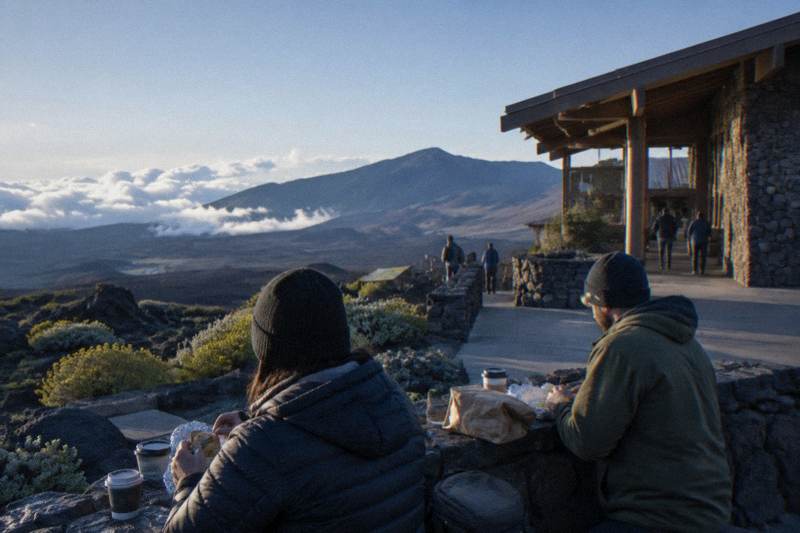
Is Altitude Sickness Common At Haleakala?
How common altitude sickness really is at Haleakala's 10,023 ft summit, who is at risk, the symptoms the park warns about, and how to prevent it before a sunrise or sunset tour.
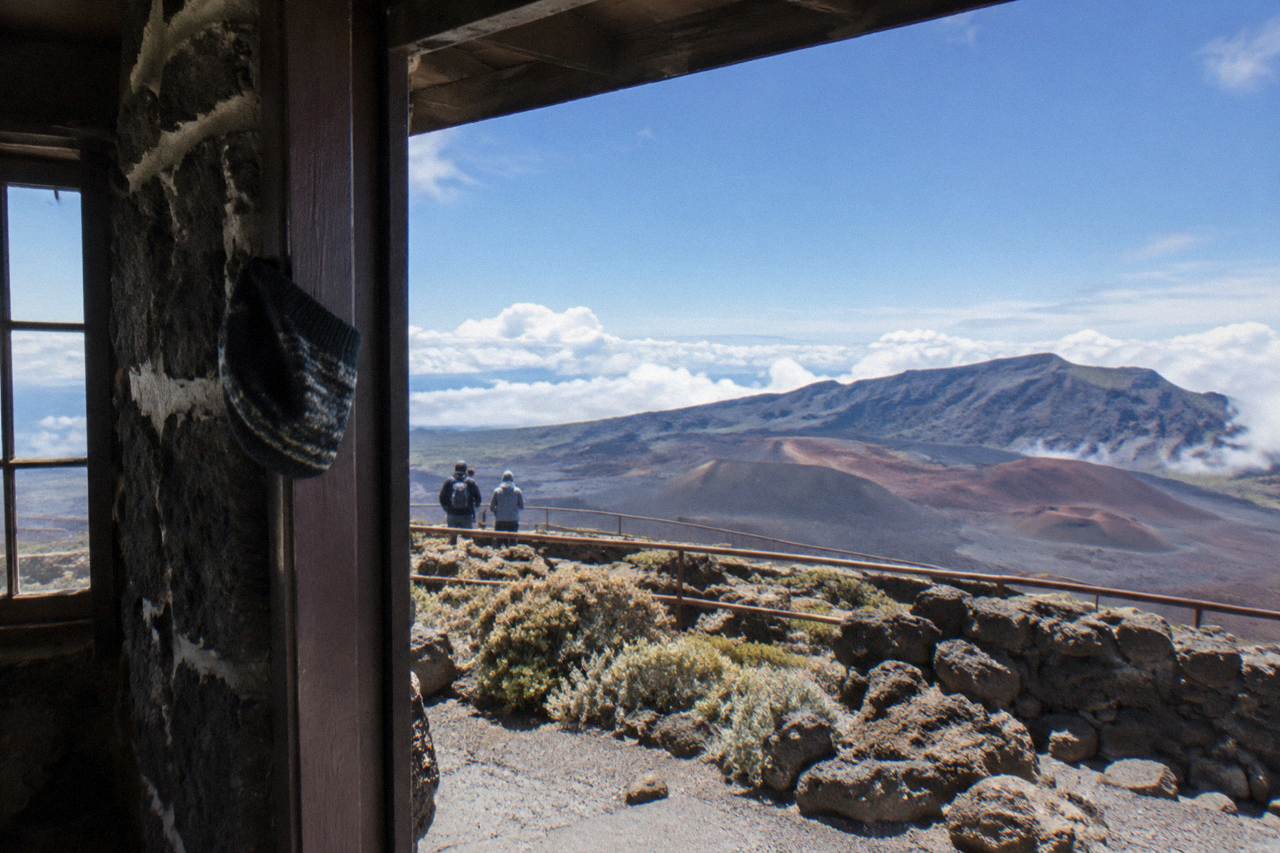
Most Maui itineraries involve zero altitude planning. Then someone books a sunrise van ride, and the same afternoon the question appears: is altitude sickness common at Haleakala? The honest answer sits in the park's own materials. The National Park Service lists altitude sickness as a standing concern on its Haleakala hiking and safety pages, names the symptoms to watch for, and advises certain travelers to talk to a doctor before going up. At 10,023 feet above sea level, the summit of Haleakala rises to 10,023 ft above sea level, high enough for altitude sickness to be a fair question. Yet most visitors reach it from a beach chair in well under two hours of driving.
That speed is the whole story. The human body acclimatizes slowly, over days, and a Maui vacation gives it roughly ninety minutes. This article walks through what the official sources actually say about frequency, symptoms, and prevention, who is most at risk, and how tour formats change the picture, including the nine-hour sunrise coach with breakfast that this site features for summit visitors who would rather not drive the crater road before dawn.
Is Altitude Sickness Common At Haleakala?
Yes, mild altitude sickness is common enough that the National Park Service treats it as a routine hazard of visiting the Summit District. The park's hiking page states that summit area trails are strenuous because of lower oxygen and lists the symptoms every visitor should recognize. The park does not publish a percentage of affected visitors, but its guidance assumes a meaningful share of visitors feel some effect at the top.
Common does not mean severe. The typical experience at Haleakala, when there is one, is a mild headache, slight breathlessness on stairs or short slopes, and a lightheaded feeling that eases within hours of descending. The summit district is what mountaineers would call a moderate altitude, high enough to trouble unacclimatized sea-level bodies but far below the elevations where serious altitude illness becomes a statistical norm. The park's framing supports this: it warns and instructs rather than discouraging visits.
The reason the park still takes it seriously is the speed of ascent. Haleakala Highway climbs from the entrance station at around 7,000 feet to the Pu'u 'Ula'ula (Red Hill) summit overlook at 10,023 feet in about 30 minutes and 11 miles of paved road, per the park's FAQ page. Add the drive from Kihei or Lahaina and a traveler can go from sea level to just over 10,000 feet inside two hours. No biology adjusts that quickly. Blood oxygen saturation falls, and the body notices.
Weather compounds the effect in ways people misread as altitude sickness. The summit runs about 30 F cooler than the coast, mornings commonly sit at or below freezing, and wind chill pushes the felt temperature lower. Shivering, fatigue, and nausea from cold look nearly identical to early altitude symptoms. The park's weather and summit district pages tell visitors to dress warmly, warn that there is no gas or food in the park, and note that emergency help is at least an hour away. Preparation covers both risks at once.
For travelers weighing whether to book a guided day or drive themselves, the featured nine-hour sunrise tour with breakfast, operated by Skyline Hawaii, from $236 per person with a 4.7 rating from 678 reviews, puts an experienced driver on the crater road and a guide on board while guests rest, hydrate, or doze. Hotel or condo pickup and drop-off is listed in the inclusions. Tours run by NPS-authorized commercial operators operate under their own park authorization; a traveler who drives themselves in the 3:00 a.m. to 7:00 a.m. window needs the recreation.gov sunrise reservation.
How High Is The Haleakala Summit, Really?
The summit of Haleakala stands at 10,023 feet (3,055 m) at Pu'u 'Ula'ula, Red Hill, and the Summit District begins at about 7,000 feet. The four sunrise viewing areas sit between 8,840 and 10,023 feet, so even the lowest overlook is higher than most peaks in the American Southwest. Air pressure at the top carries meaningfully less oxygen than at sea level.
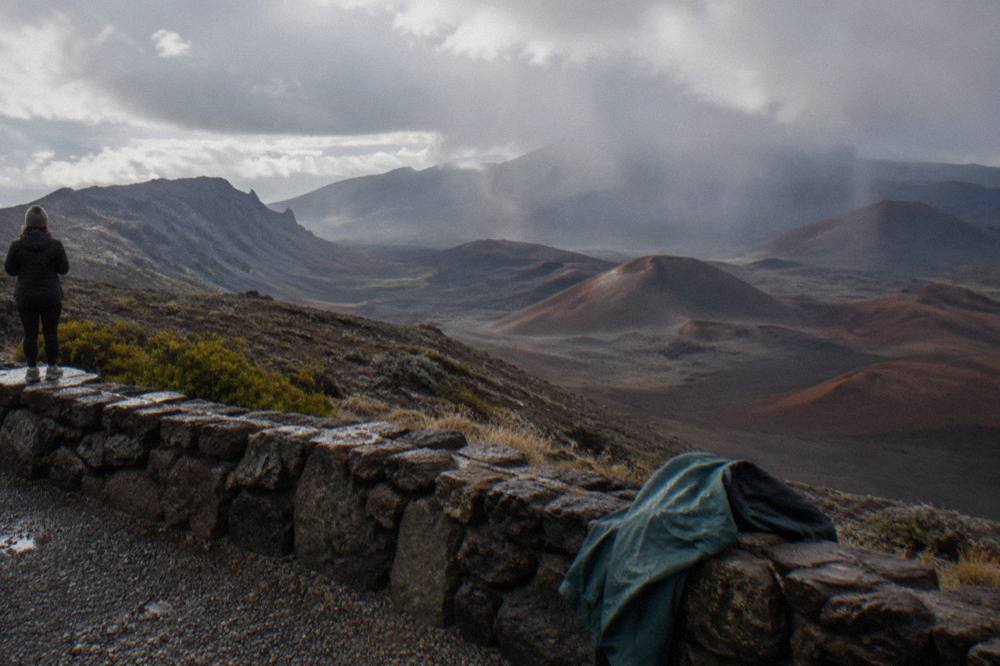
The numbers are worth lining up side by side, because "10,000 feet" is abstract until you compare it with places people know. The park's sunrise FAQ lists the four viewing locations and their elevations, and the entrance station itself already sits above the trailheads of many mainland parks.
| Location on Haleakala | Elevation (ft) | Notes from park pages |
|---|---|---|
| Pu'u 'Ula'ula (Red Hill) summit | 10,023 | Highest sunrise viewing area |
| Haleakala Visitor Center | 9,740 | Restrooms and water available 24/7 |
| Kalahaku Overlook | 9,324 | Drive-up overlook |
| Leleiwi Overlook | 8,840 | About a 10 minute hike from its lot |
| Park Headquarters | 7,000 | Restrooms and water available 24/7 |
| Entrance station | About 7,000 | Where the summit road proper begins |
Two practical facts follow from this table. First, the lowest and highest overlooks are only a twenty minute drive apart on the same paved road, so descending to feel better is genuinely easy if the summit feels rough. Second, the visitor centers at 7,000 and 9,740 feet are the only places with water and restrooms around the clock, and the park's bicycling page is the source for that. There is no gas, no food, and no cell service in the crater.
Temperature falls about 3 F for every 1,000 feet of gain, per the park's weather page. That single ratio explains the whole dress problem: a hot afternoon at the beach coexists with a summit tens of degrees colder before wind chill, and before dawn the top can sit at 32 F or below even on a day that feels tropical at sea level. Readers planning layers can start with the site's guide to how to dress for the Haleakala sunrise, and the deeper numbers live in the Haleakala summit weather guide.
Can a sunset visit lower the risk?
Somewhat, and not for the reason people assume. Altitude itself does not care whether the sun is rising or setting, but a sunset visit usually follows a full waking day on Maui, often with more fluids and food on board than a 3:00 a.m. wake-up allows. The twilight dinner tour, a 7-hour coach trip from Polynesian Adventure Tours rated 4.4 from 263 reviews, from $257 per person, reaches the park in the afternoon and returns with dinner included, and a guest review on the listing notes being "glad we did the tour bus and didn't drive ourselves," calling the sunset "1000xs better than sunrise." The listing's own text reminds readers that sunset needs no reservation.
Who Is Most Likely To Feel Symptoms At The Summit?
The park names two groups explicitly: pregnant visitors and people with heart or respiratory conditions, both of whom the hiking page directs to consult a doctor before visiting the summit. Beyond those groups, risk tracks with speed of ascent, individual physiology, effort level, and hydration, and it does not reliably track with fitness. A marathon runner can feel a headache while a sedentary companion feels nothing.
Age patterns matter for families. The park's pages do not set a minimum age for summit visits, and young children ride up with families every day, but small children cannot articulate a headache clearly, so adults have to watch for unusual fussiness, refusal of food, or sleepiness beyond the drive itself. Older adults with known cardiac or pulmonary issues belong in the consult-a-doctor group. Travelers who live at altitude, say in Denver or Flagstaff, arrive partly acclimatized and often feel nothing at all.
Effort is the multiplier the park emphasizes most. Standing at an overlook at 10,023 feet is one load on the body; hiking the Keonehe'ehe'e (Sliding Sands) trail, whose trailhead sits in the Haleakala Visitor Center lot at 9,740 feet, is another entirely. The park's hiking page calls summit area trails strenuous precisely because of the lower oxygen, and its safety page adds a planning rule that surprises flatland hikers: hiking out takes about twice as long as hiking in. Sand, cinders, and thin air turn a short-looking climb back to the rim into the hardest part of the day.
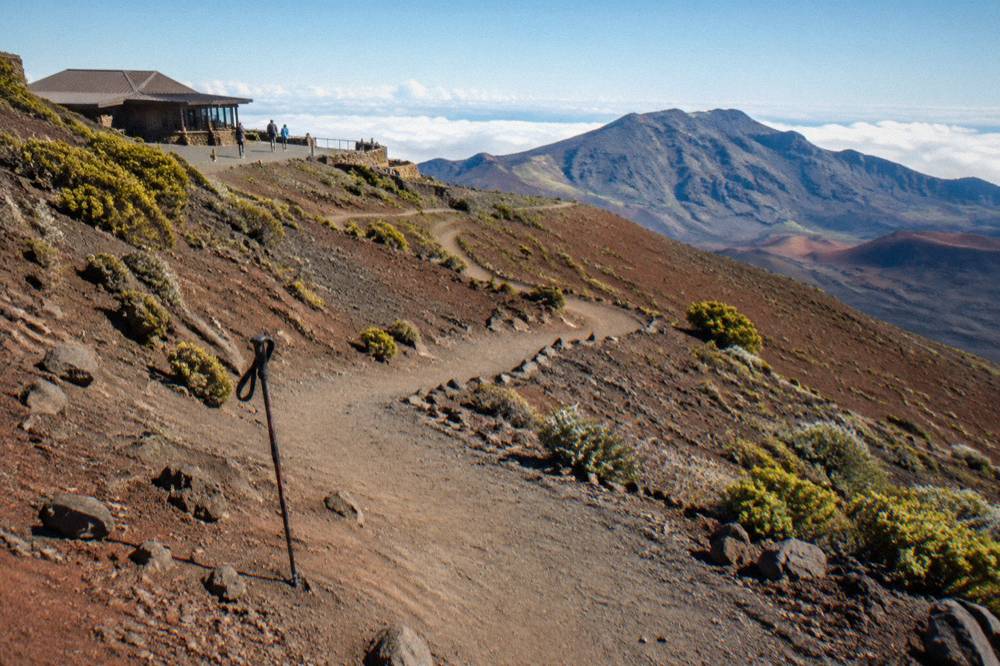
Guided hiking exists for exactly this reason. The Haleakala Crater Hiking Experience, run by Hike Maui, is a 7-hour small-group hike into the Sliding Sands area with a meal included, from $208 per person, rated 4.8 from 74 reviews, with a four-traveler minimum to run. A guide sets the pace, carries the water plan, and watches guests for symptoms on the climb out, which is the section where altitude debt comes due. The listing states park admission is included and free cancellation applies per the listing.
What Are The Symptoms To Watch For?
The park lists four: nausea, headache, dizziness, and shortness of breath. At Haleakala these most often appear within the first hour at the summit, during light walking, or on the first steps of a trail. Mild versions usually resolve with rest, water, and descent. The park's stated remedy is to descend if symptoms worsen, and descending is always fast and always available here.
| Symptom (park's list) | What it typically feels like at Haleakala | Sensible first response |
|---|---|---|
| Headache | Dull pressure within an hour of arriving at the top | Water, rest, move down a few hundred feet |
| Nausea | Low appetite, queasiness, sometimes blamed on the winding drive | Stop eating, hydrate in small sips, descend |
| Dizziness | Lightheadedness on standing or on first steps | Sit down, slow the pace, watch the rim edges |
| Shortness of breath | Breathless on stairs, short slopes, first trail minutes | Stop and rest; walk flat; avoid pushing pace |
Two traps deserve naming. One is misattribution: a dark, winding drive before dawn, little sleep, no coffee, and a cold wind produce headache and nausea without any altitude at all. The pre-dawn wake-up on a sunrise tour is genuinely brutal, and one verbatim review of the self-guided sunrise bike tour admits clouds hid the sunrise and still rates the day five stars, which says something about expectations. The second trap is the reverse: assuming a symptom is "just the drive" when it is worsening. The park's rule cuts through both: if symptoms get worse rather than better while you rest, go down.
Serious altitude illness is rare at Haleakala's maximum elevation and the park does not describe it as a typical event. But severe headache with vomiting, loss of coordination, or confusion is not a normal summit reaction and warrants immediate descent, and the summit district page's warning that emergency help is at least an hour away is the reason to act on it rather than wait it out. No cell service exists in the crater, so the response is self-rescue by car unless a ranger or tour guide is present.
How Can You Prevent Altitude Sickness At Haleakala?
Nothing guarantees immunity, but the measures with real effect are: hydrate hard the day before and the morning of, eat a real breakfast rather than fasting, keep effort low for the first hour at the top, skip alcohol the night before, and pace yourself so you sit and look before you walk. Sunrise tours with breakfast built in handle two of those automatically, which is one quiet argument for them.
The evidence-adjacent logic is simple. Mild altitude symptoms worsen with dehydration, low blood sugar, alcohol residue, and exertion, all of which are controllable on a Maui morning. Coffee fans can keep their cup; there is no park guidance against caffeine. What the park's own pages stress instead is clothing and timing: dress for conditions far below coastal temperatures, know that lots close when full, and expect no gas, food, or charging in the park. Layers solve cold, and cold compounds everything else.
A staged ascent is the mountaineering trick adapted for tourists. The drive passes Park Headquarters at 7,000 feet on the way up, and the park's bicycling page confirms water and restrooms are available there around the clock. Spending fifteen minutes at Headquarters, or at Haleakala Visitor Center at 9,740 feet, before continuing to the summit gives the body a partial adjustment window. Visitors with a flexible day can do the swap: a morning elsewhere on the island at moderate elevation, such as Upcountry Maui around Kula, then the summit in the afternoon or for sunset. However you split up the climb, our guide to the Haleakala summit's elevation, viewpoints and access lays out what waits at the top.
| Prevention step | Why it helps | Easy version on a tour day |
|---|---|---|
| Hydrate the day before | Dehydration amplifies every symptom | Water bottle at dinner and bedside |
| Eat breakfast | Low blood sugar mimics and worsens symptoms | Book a tour with breakfast included |
| Stage the ascent | Brief stops at 7,000 and 9,740 ft help | Pause at Park Headquarters restrooms |
| Limit first-hour effort | Oxygen debt builds with pace | Watch the view before walking the rim |
| Skip alcohol the night before | Residual dehydration and poor sleep | Trade the sunset cocktail for water |
| Dress warmly | Cold stress mimics and masks symptoms | Winter layers, hat, gloves, windproof |
The park's own safety page carries the detail many itineraries ignore: plan for hiking out to take twice as long as hiking in. On Sliding Sands, the first overlook is only 0.5 mile round trip with 50 feet of elevation change, an easy walk by mileage, but every step back up is at the trailhead elevation in loose sand. Travelers wanting the full crater picture can read the site's trail guide to hiking the Sliding Sands Trail before committing to anything beyond the overlook.
Does The Drive Up Change Your Risk?
Yes, the drive is the exposure. Haleakala Highway carries visitors from the 7,000-foot entrance to the 10,023-foot summit in roughly 30 minutes and 11 miles, per the park's FAQ, with no way to slow the physiology. From Kihei the full climb takes 1 to 1.5 hours of driving and from Lahaina 1.5 to 2 hours, faster than nearly every comparable altitude gain accessible by car anywhere.
The road itself adds a separate discomfort that people mislabel. It is dark before sunrise, there are no streetlights and no guard rails along stretches, and motion sickness plus nerves produce nausea that has nothing to do with elevation. This is one place where the tour-versus-drive decision genuinely intersects altitude planning: a passenger dozes, hydrates, and arrives rested, while a self-driver arrives having worked the whole way. One verbatim review of the Sunrise Coach with Local Breakfast describes exactly that: "Everyone slept most of the way up there until we got close."
Among coach options, the small-coach Majestic Haleakala Sunrise Tour from Valley Isle Excursions caps at 22 travellers, runs 8 hours, from $264 per person, and holds a 4.8 rating from 705 reviews, with South and West Side Maui hotel pickup and drop-off listed. The large-coach Sunrise Spectacular from Polynesian Adventure Tours carries up to 72 travellers over 10 hours, from $254 per person, rated 4.7 from 2471 reviews. Both include breakfast and, per their listings, park admission; both state free cancellation per the listing, and the booking page carries the cutoff. The smaller vehicle simply means fewer stops and a tighter schedule.
For self-drivers, the staged stops in the prevention section double as driving breaks: Park Headquarters at 7,000 feet for restrooms and water, then the summit. The park's FAQ confirms the summit road is paved for its whole length and the lots close when full, so on peak sunrise mornings the practical bottleneck is parking, not the road.
Do Kids, Pregnancy, And Health Conditions Change The Advice?
For pregnancy and for heart or respiratory conditions, the park's hiking page is explicit: consult a doctor before visiting the summit. For children, the park sets no summit age limit, but adults must watch for the symptoms kids cannot describe. For everyone else, the standard prevention steps apply, and travelers with recent surgery, anemia, or a history of severe altitude illness should treat that doctor conversation as mandatory.
Pregnant visitors get the direct wording because oxygen demand rises in pregnancy and the park cannot screen individual cases. Cardiac and pulmonary patients get it because lower oxygen means the heart and lungs work harder at rest, let alone on a trail. None of this adds up to a prohibition; it adds up to a phone call. A physician who knows your numbers can clear a summit overlook visit while vetoing a crater hike, which is a distinction the park leaves to that conversation.
Kids are a planning question more than a medical one. The drive is long, the pre-dawn wake-up is harder on children than on adults, and the cold at the top surprises families packed for the beach. The verbatim Sunrise Coach review quoted earlier is from a family with children aged 11 and 8 who "loved it too," which is a fair data point that it works. Infants are a different matter; they cannot report symptoms, so parents watch for unusual lethargy and irritability and keep the visit short and low-effort.
One more group deserves a sentence: recent island arrivals running on five hours of jet-lagged sleep. Sleep debt, dehydration from the flight, and a 3:00 a.m. wake-up stack every mild-symptom risk factor into a single morning. Scheduling the summit for day two or three of the trip, rather than landing day, is the cheapest prevention on this list.
When Should You Descend Or Get Help?
The park's stated rule is to descend if symptoms worsen, and at Haleakala descending means a paved 30-minute drive that drops over 3,000 feet, so it is always the fastest fix available. Headache or nausea that eases with rest and water can wait; a severe headache, repeated vomiting, loss of coordination, or confusion means leave now. Emergency help is at least an hour away and there is no cell service in the crater.
Practically, tour passengers should tell their guide rather than toughing it out; guides on the authorized road-based operators work this road daily and descending a symptomatic guest is a normal, unspectacular event for them. Self-drivers should get behind the wheel before symptoms progress to the point where driving the descent road feels shaky, which is the one scenario where the tour format has a genuine safety edge.
After descent, recovery at Haleakala is usually quick and complete. Within a few hours back at sea level, most mild symptoms have resolved entirely, with no lingering effect. The park does not describe lasting harm from typical summit visits, and its guidance is built around recognition and retreat rather than rescue.
Which Tour Formats Suit Altitude-Wary Travelers?
The formats that help most are those that remove driving, keep effort optional, and front-load food and water: the coach sunrise tours with breakfast, the small-group sunset and astronomy trips, and shorter visits that skip trails entirely. The featured nine-hour sunrise tour with breakfast, from $236 per person and rated 4.7 from 678 reviews, is the site's pick for exactly this reader: pickup at your hotel or condo, breakfast included, and a guide present all morning.
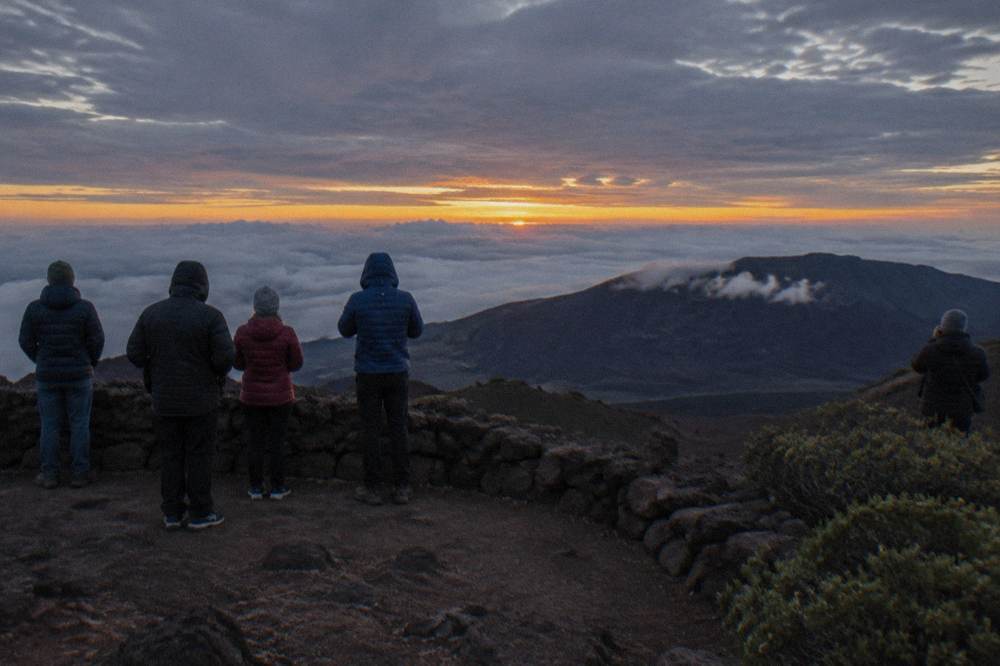
Astronomy-format tours deserve a special mention for the altitude-wary because they sit still. The Haleakala Sunset and Astronomy Tour from Amazing Maui Stars runs 5 hours 30 minutes in groups capped at 8, spends about 4 hours at 10,000 feet per the listing, and holds a 5.0 rating from 57 reviews, from $245 per person. There is no hiking; the day is watching, wrapped in layers. Sitting quietly at the top is close to the minimum-effort way to spend summit time, which is also why it pairs well with readers whose main worry is breathlessness.
At the other end of the effort spectrum, the self-guided sunrise bike ride from Bike Maui and Haleakala EcoTours, rated 4.7 from 777 reviews and from $273 per person, is worth understanding even though it is a bike product. Per the listing, riders take a van to the summit for sunrise, then ride down from about 6,500 feet at the park boundary, not inside the park, and the descent is nearly all coasting. One verbatim review of the guided Bike Maui sunrise ride notes "only a few places where I even had to pedal." For altitude purposes, it is summit exposure followed by continuous descent, which many bodies handle well, but the park's bicycling page warns hypothermia is common on the descent and that cyclists need the $15 per-person entrance pass.
For a calmer, cheaper taste of the same downhill idea, the 5-hour Express Self-Guided Bike Tour, also from Bike Maui and Haleakala EcoTours, runs from $146 per person with a 4.7 rating from 273 reviews, and skips the pre-dawn start entirely. A daytime start means better sleep, a real breakfast, and warmer summit-hour temperatures, which is a quiet trifecta for anyone nervous about altitude. The listing describes a van transfer from the shop to the national park area and a ride down the crater road.
Readers comparing all summit options in one place can start from Haleakala National Park Tours, this site's homepage, which links the sunrise, sunset, bike, hiking, and helicopter category hubs, or go straight to the deeper Haleakala sunrise tours guide.
Common Questions About Altitude Sickness At Haleakala
Is Altitude Sickness Common At Haleakala?
Mild symptoms are common enough that the National Park Service lists altitude sickness as a standing concern on its Haleakala pages, alongside nausea, headache, dizziness, and shortness of breath as the symptoms to recognize. Most affected visitors experience a mild headache or breathlessness that eases with rest, water, and descent. Serious illness at the summit's 10,023 feet is far less common, but the park directs pregnant visitors and those with heart or respiratory conditions to consult a doctor first.
How fast does altitude sickness start at the summit?
Symptoms typically begin within the first hour at elevation, often during the first walking or a short climb. Because visitors drive from sea level to 10,023 feet in under two hours, the body has had no acclimatization window, so onset can be quick. The park's remedy is simple: rest, hydrate, and descend if symptoms worsen rather than improve.
Does drinking water prevent altitude sickness at Haleakala?
Hydration does not prevent the underlying oxygen deficit, but dehydration amplifies headaches and nausea, so drinking water the day before and the morning of a summit visit genuinely reduces how bad symptoms feel. The park's pages stress hydration alongside warm clothing. Water is available 24/7 at the visitor centers at 7,000 and 9,740 feet, and nowhere else in the park.
Can children get altitude sickness at Haleakala?
Yes, children can feel the same symptoms adults do, and the park sets no minimum age for summit visits. Since young children cannot describe a headache, watch for unusual fussiness, refusal of food, or sleepiness beyond the drive itself. Keep their visit short, warm, and low-effort, and descend if anything seems off. Families do take children up routinely; a review of the Sunrise Coach with Local Breakfast describes kids aged 8 and 11 loving the morning.
Is hiking the crater riskier than standing at the overlook?
Yes, notably. The park calls summit area trails strenuous because of lower oxygen, and its safety page warns that hiking out takes about twice as long as hiking in. The Sliding Sands trailhead sits at 9,740 feet, and the climb back to the rim is where symptoms usually bite. Travelers wary of altitude should keep to overlooks or book a guided hike, such as the Hike Maui crater experience, where a guide sets a conservative pace.
What is the fastest way to feel better at the summit?
Descend. The paved road drops from 10,023 feet to the 7,000-foot entrance in about 30 minutes, and most mild symptoms improve within hours of losing elevation. Sit down, sip water, and skip further walking while you decide. On a tour, tell the guide; on your own, drive down before symptoms make the winding road difficult, since there is no cell service in the crater and emergency help is at least an hour away.