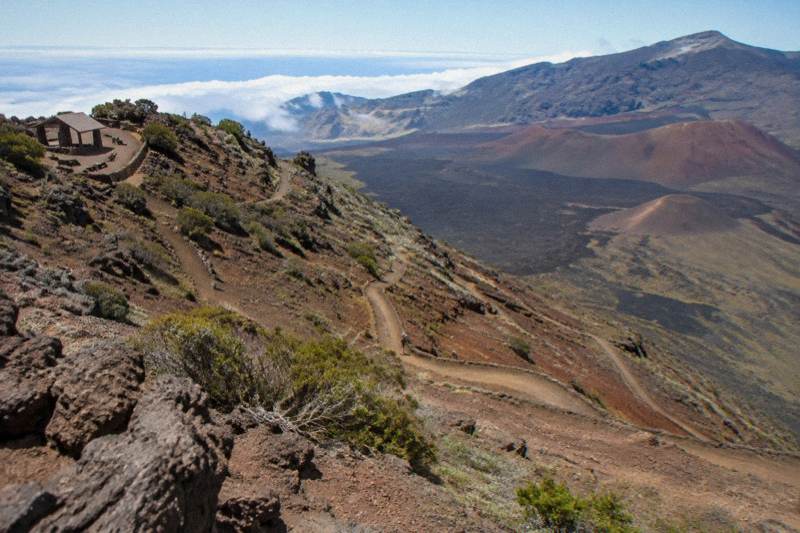
Is Haleakala A Difficult Hike?
Is Haleakala a difficult hike? An honest difficulty breakdown of Haleakala National Park trails, from the half-mile Sliding Sands overlook to the 11-mile crater crossing, with altitude, weather and guided-versus-solo advice.
Is Haleakala A Difficult Hike?
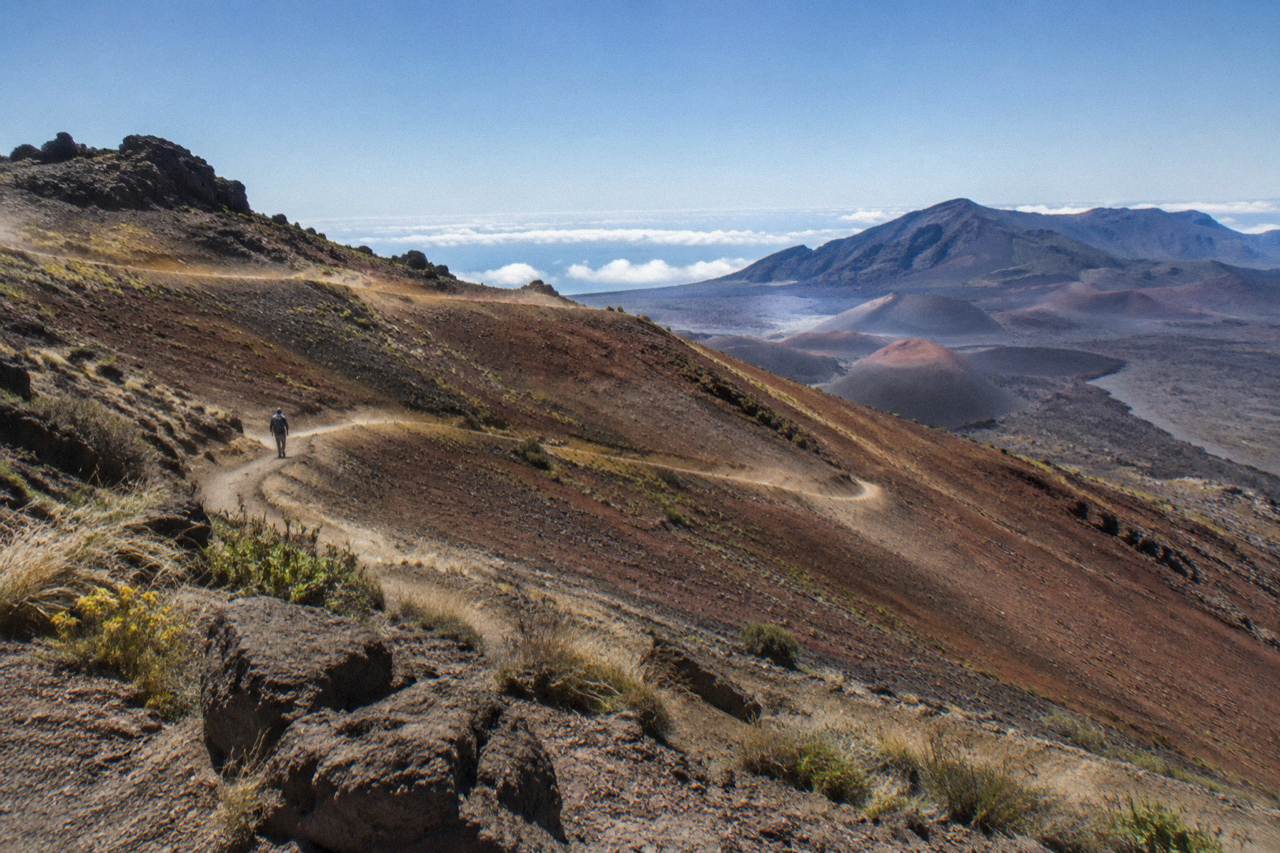
That depends entirely on which trail you choose, and the honest answer is that Haleakala offers both the easiest and the hardest day hikes on Maui. The Keonehe'ehe'e (Sliding Sands) first overlook is 0.5 mile round trip with 50 feet of elevation change, a walk almost anyone can manage. The full crater crossing on the same trail runs 11 miles one way and is rated strenuous by the park, largely because of the altitude and the loose cinder underfoot. If you're also weighing how much daylight to budget, the guide to hiking times for every Haleakala Crater trail covers everything from a short overlook stroll to the full crossing.
The park's own hiking page sorts its trails by difficulty, and the spread is wide. On one end sit the Hosmer Grove loop at 0.54 mile and the Halemau'u viewpoint at 2.2 miles round trip with 400 feet of gain. On the other end sits the 11-mile Keonehe'ehe'e crossing that descends roughly 2,500 feet to the crater floor and finishes at the Halemau'u Trailhead at 7,990 feet. Same mountain, same trailhead sign, wildly different days.
What makes Haleakala feel harder than the mileage suggests is the elevation. The trail system runs between 9,780 and 6,380 feet, and the park states plainly that summit-area trails are strenuous because of lower oxygen. Hikers who cruise identical distances at sea level regularly report moving slower here, and the park warns that hiking out takes about twice as long as hiking in. That last figure is the single most useful planning number on this page: whatever time you spent descending, double it for the climb back.
Weather is the other multiplier. The summit sits at 10,023 feet, about 30 degrees Fahrenheit cooler than the coast, and before-dawn conditions are regularly below freezing with wind chill. A hike that starts in shorts weather in Kihei can finish in temperatures the park describes as 30 to 65 F year-round, with rapid changes. The park's own guidance is on its official hiking page, and it is worth reading before committing to any crater route.
For readers deciding between a guided hike and going alone, the short version is this: the short overlooks are genuinely easy solo walks, while the deep crater routes reward experience, route-finding comfort and a healthy respect for a place where emergency help is at least an hour away. How hard it is depends on the trail you pick, the thin air, and the weather you meet at the top. The rest of this article breaks each factor down, piece by piece.
Which Haleakala Trails Are The Hardest?
The full Keonehe'ehe'e crossing to Halemau'u is the hardest documented hike in the park: 11 miles one way across the crater floor, strenuous by the park's own rating, with no hiker shuttle back to your car. The Pipiwai Trail in the Kipahulu District is the second hardest at 4 miles round trip with 800 feet of gain, and everything else in the Summit District is moderate or easy.
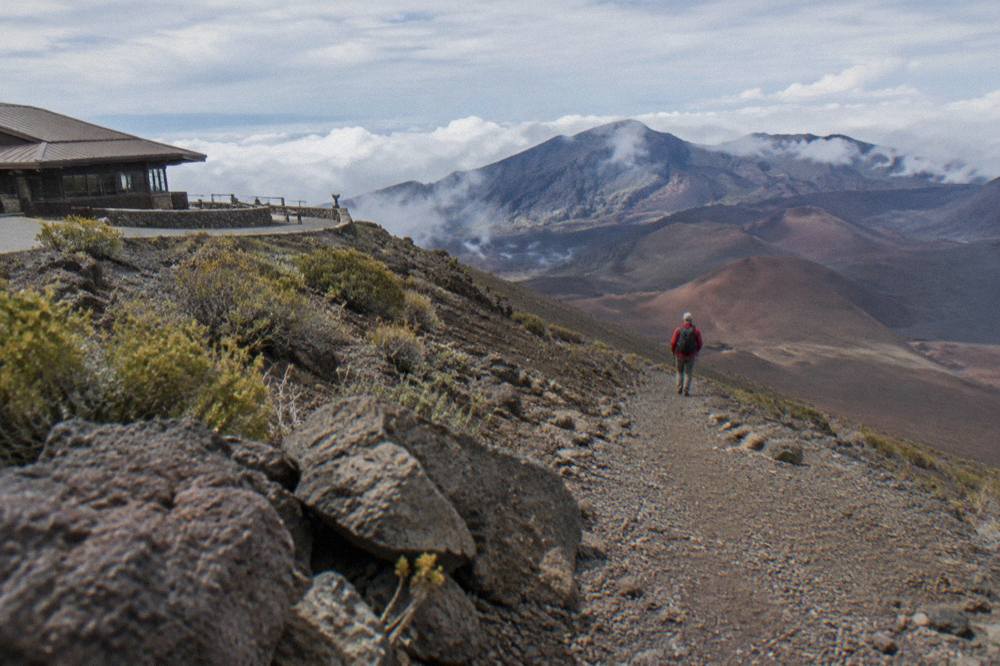
The crater crossing deserves its reputation. You drop about 2,500 feet into a bowl of loose sand and cinder, where every step gives a little back, and the park notes the crater floor sits about 3.9 miles from the Keonehe'ehe'e trailhead. The catch is the exit. There is no shuttle, so a one-way crossing means arranging a second car at Halemau'u or turning a point-to-point route into a very long out-and-back. Hikers who underestimate the return leg are the ones the rangers remember.
Below the summit, the difficulty picture looks like this:
| Trail | Round trip | Elevation change | Difficulty character |
|---|---|---|---|
| Keonehe'ehe'e first overlook | 0.5 mile | 50 ft | Easy, fine for most fitness levels |
| Hosmer Grove loop | 0.54 mile | 50 ft | Easy nature walk in the shrubland |
| Halemau'u to crater viewpoint | 2.2 miles | 400 ft | Moderate, steady climbing on the return |
| Pipiwai Trail (Kipahulu) | 4 miles | 800 ft gain | Moderately strenuous, often wet |
| Keonehe'ehe'e to crater floor and back | 3.9 miles one way | about 2,500 ft descent and re-ascent | Strenuous, doubled exit time |
| Full crater crossing | 11 miles one way | ends at 7,990 ft | Strenuous, logistics required |
Two things the table cannot show. First, the Kipahulu District averages 187 inches of rain a year, so Pipiwai's difficulty is as much about mud and slippery roots as about elevation. Second, cinder behaves like a beach: the Keonehe'ehe'e descent feels gentle and the re-ascent feels like climbing a dune, which is exactly why the park tells hikers to budget twice the time coming out. The park safety page repeats the doubled-exit rule, and experienced crater hikers treat it as law rather than advice.
If the deep-crater options sound like more than you want to organize yourself, a guided option exists. The Haleakala Crater Hiking Experience run by Hike Maui is a 7-hour small-group guided hike in the Sliding Sands area, rated 4.8 from 74 reviews, from $208 per person with a meal included and a four-traveller minimum to run. A guide does not make the terrain easier, but it removes route-finding, pacing and the self-rescue question in a place with no cell service in the crater. Compare it against the Haleakala hiking tours hub if you want the full field.
How Hard Is The Altitude At 10,023 Feet?
Altitude is the hidden difficulty at Haleakala, and the park treats it as a real medical concern rather than a footnote. The hiking page lists nausea, headache, dizziness and shortness of breath as altitude sickness symptoms, advises pregnant visitors and people with heart or respiratory conditions to consult a doctor first, and notes that the summit area trails are strenuous specifically because of lower oxygen.
The physiology is simple. At 10,023 feet there is meaningfully less oxygen per breath than at sea level, and most visitors arrive from sea level the same morning, often after a 3 a.m. wakeup for sunrise. That combination, sudden altitude plus short sleep plus immediate exertion, is why fit hikers sometimes struggle on climbs they would barely notice at home. The crater itself sits lower than the summit, but the trail system still runs up to 9,780 feet, high enough for symptoms.
The park's practical guidance is worth taking literally. Move slower than feels necessary, especially on climbs. Turn around if symptoms worsen rather than pushing to a viewpoint, because descending is the cure. Emergency help is at least an hour away in both districts, there is no cell service in the crater, and there is no gas or food sold anywhere in the park. Hikers carry everything they need from the trailhead.
Hydration and pacing matter more than fitness. A useful framing from the park weather page: the summit is about 30 F cooler than the coast, temperatures range from below freezing to 65 F, and wind chill and damp make it feel colder still. Cold, wind and exertion at altitude compound each other. Drink more water than usual, eat sooner than you think you need to, and treat any headache that arrives with dizziness as a message, not an inconvenience.
For hikers who want the high-elevation scenery with a lower physical ceiling, the first Keonehe'ehe'e overlook is the honest answer: 0.5 mile round trip, 50 feet of change, at 9,740 feet. You still stand above the clouds; you simply do it without gambling on a 2,500-foot climb out. The Haleakala summit weather guide covers what conditions to expect by month if you are picking a date.
What Does Hiking Out Of The Crater Feel Like?
Hiking out of the Haleakala crater takes about twice as long as hiking in, per the park's own safety guidance, and the reason is the surface and the slope together. Descending 2,500 feet on loose cinder feels almost effortless, and the same terrain climbed in reverse demands two steps of effort for every step of progress, at an elevation where your lungs already have less oxygen to work with.
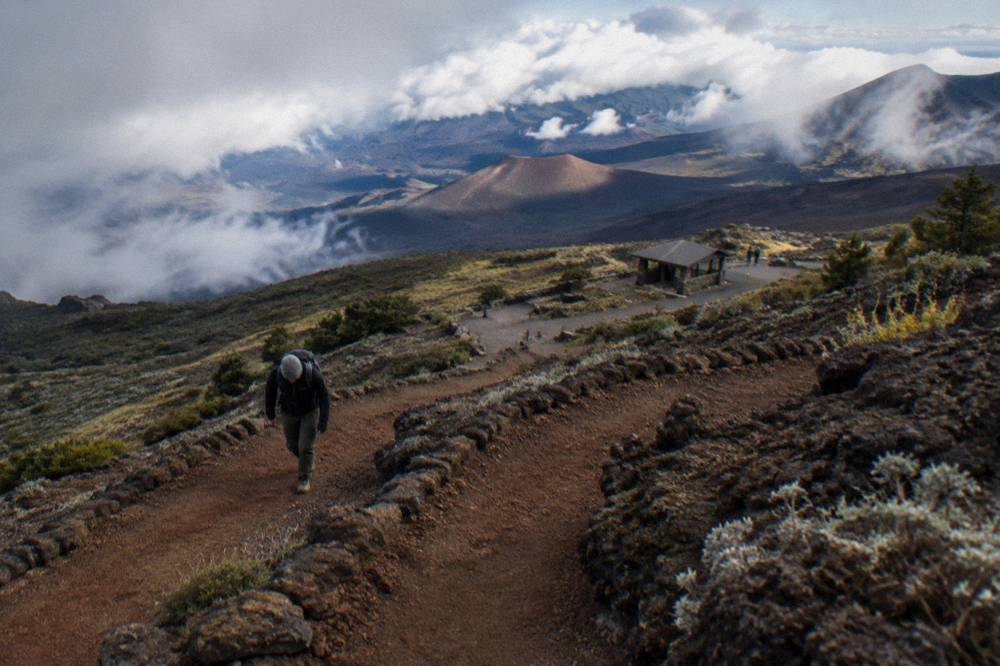
Hikers who have done it describe a predictable emotional arc. The descent is euphoric: silvery cinder, red cinder cones, the floor opening below. Somewhere on the floor, the turnaround point, the math changes. The wall you came down becomes the wall you must climb, the sun is higher, and the altitude premium on every switchback becomes personal. This is the section where the doubled-exit rule earns its place in the park's safety material, and where day hikers who started late wish they had not. The wider set of guides lives on Haleakala National Park Tours.
Time budgeting follows from the rule. If the descent to the crater floor took two hours, plan on roughly four back up, then add margin for weather and rest stops. The park offers no hiker shuttle, so an out-and-back to the floor is a serious day, and a full crossing to Halemau'u needs two vehicles staged in advance. Water is the other hard limit: none is available along the trails, and restrooms and water sit only at the two visitor centers, at Headquarters (7,000 ft) and Haleakala Visitor Center (9,740 ft).
The difficulty is real but ordinary people do it constantly, with preparation. Start at sunrise when the crater is cool rather than at midday. Carry more water and layers than the mileage suggests. Turn around at a time you set in advance, not at a landmark you hope to reach. And read the Sliding Sands Trail guide before you go, since that single trail accounts for most of the crater's hard hiking.
Guided Hike Or Go Alone: Which Is Easier?
A guide does not lower Haleakala's physical difficulty, but it removes the parts of the day that actually defeat people: route finding in open cinder terrain, pacing for the doubled exit, weather calls and the self-rescue burden of a remote, no-signal crater. Going alone is cheaper and perfectly reasonable for the overlooks and the shorter loops; for the deep crater, guided is easier in every sense except price.
The solo case is straightforward. The entrance fee is $30 per private vehicle for three days covering both districts, the short trails are well signed, and the park's trail descriptions are detailed enough to plan from. If your target is the first overlook, Hosmer Grove or the Halemau'u viewpoint, a guide adds little. Those walks are within reach of most visitors, and the free-things options at the park, trails and viewpoints, are covered in the free things to do at Haleakala guide.
The guided case kicks in below the rim. The already-mentioned Haleakala Crater Hiking Experience pairs small groups with a guide who picks the turn-around, sets the pace and carries group gear, from $208 per person. For travelers who prefer a private pace, the Private Haleakala Summit & Stroll from Kahului with Holo Holo Maui Tours runs 5 hours from $359 per group, rated 5.0 from 69 reviews, with crater road stops and crater admission included; it is a stroll rather than a workout, which is precisely the point for some hikers.
There is also a middle path worth naming: swap the hike for a different high-altitude format. Some visitors decide, honestly, that the difficulty question answers itself and choose a vehicle sunrise instead. The 9-hour Haleakala National Park Sunrise Tour with Skyline Hawaii, from $236 per person with hotel or condo pickup and breakfast, puts you at the summit for sunrise with no exertion at all; the difficulty comparison between that and an 11-mile crossing is not subtle. That decision is covered in depth in the Haleakala sunrise tours hub.
A note on weather and plans: conditions change fast at 10,000 feet and the park can restrict access in hazardous weather, so check current park conditions the day before. Guided hikes are free-cancellation per listing, read the booking page for the cutoff, and no operator can promise a clear sky.
What Should You Pack For A Haleakala Hike?
Pack for two climates at once, because that is what a Haleakala hike is: a 30-degree temperature swing between the coast and the trailhead, below-freezing starts, intense UV at altitude, and no water, food, gas or cell service anywhere in the park. The park's own pages tell you there is nothing to buy inside, so the packing list is not optional comfort, it is the safety plan.
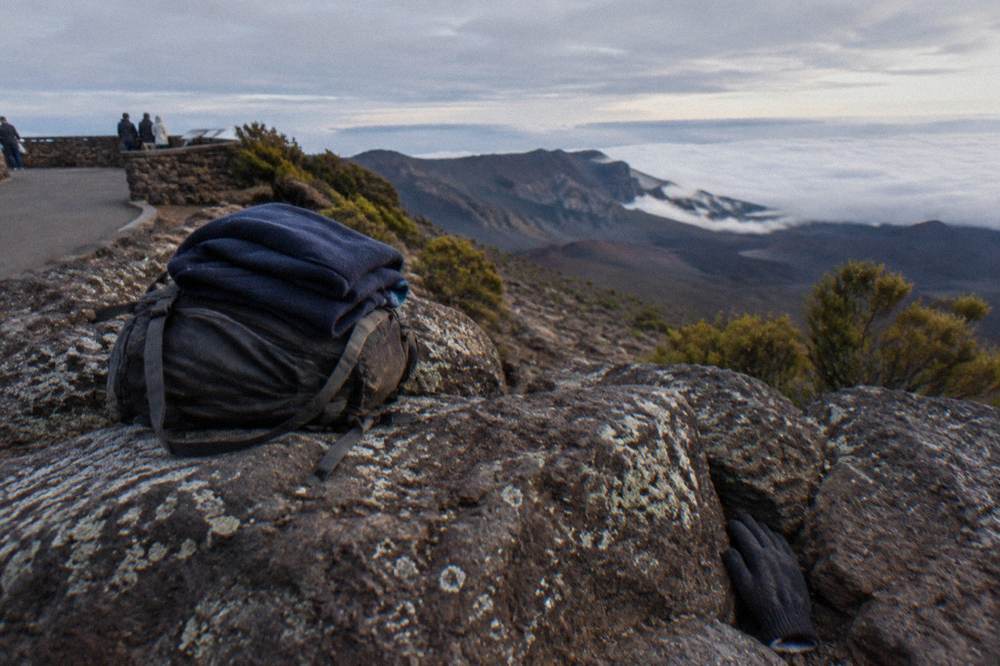
The essentials, mapped to the conditions that force them:
| Condition on the trail | What it demands | Why the park flags it |
|---|---|---|
| Summit 30 F cooler than the coast, wind chill | Warm layers, windbreaker, hat, gloves | Summit temperatures range below freezing to 50 to 65 F |
| High UV above the clouds | Sunscreen, sunglasses, lip balm | Sun exposure is severe at 10,000 ft even when cool |
| No water on any trail | More water than the mileage suggests | Water only at the two visitor centers |
| No food or gas in the park | Full day's food packed in | Nothing is sold inside either district |
| Loose cinder and rock | Sturdy footwear with grip | Descent is easy underfoot, the exit is not |
| No cell service in the crater | Offline map, printed route, whistle | Emergency help is at least an hour away |
Two additions specific to this mountain. First, altitude changes appetite and hydration cues, so drink on a schedule rather than on thirst. Second, the park notes that hypothermia is a recognized hazard even in Hawaii, and damp plus wind at altitude is the classic setup; the same conditions that make the crater beautiful can end a day early if the layers stayed in the car. If you want the sunrise-plus-hike version of the day, the how to dress for Haleakala sunrise guide covers the clothing question in detail.
Who Should Skip The Deep Crater Hikes?
Hikers who should skip the crater floor routes are those with heart or respiratory conditions, anyone advised by a doctor against high altitude, visitors with only a few hours on the mountain, and anyone unwilling to carry a full day's water and layers. The park explicitly directs pregnant visitors and people with such conditions to consult a doctor before summit-area trails, and the remoteness, an hour from emergency help, is the reason to take that seriously.
Skipping the hard routes costs surprisingly little scenery. The first Keonehe'ehe'e overlook delivers the crater's signature view for a half mile of effort. Leleiwi Overlook, one of the four official sunrise viewing areas at 8,840 feet, is a 10-minute walk from its lot. Hosmer Grove adds a forest walk and a campground feel at a friendlier elevation. And sunset needs no reservation at all, so an evening drive up for the view and the stars is a complete Haleakala experience with zero trail difficulty.
For a guided, low-exertion evening alternative, Haleakala Private Sunset Tours with Aloha Wild Tours runs 5 hours from $555 per group with crater admission included and private hotel or rental pickup on request; the listing has only 7 reviews so far, too few to characterize a rating, which we state plainly rather than dress up. It occupies the easy end of the difficulty spectrum on purpose.
The honest summary of this whole article: Haleakala is a difficult hike only if you choose one of two or three specific routes, and the park has made the choosing easy by rating and measuring every trail. Pick by number, not by photograph. Half-mile overlook or 11-mile crossing, the mountain does not change, only your day does.
Common Questions About Hiking Difficulty At Haleakala
Is Haleakala A Difficult Hike?
It depends on the trail. The Sliding Sands first overlook is 0.5 mile round trip with 50 feet of elevation change, while the full crater crossing is 11 miles one way and rated strenuous. Altitude and the doubled exit time, not distance alone, drive the difficulty.
How long does it take to hike out of the crater?
The park's safety guidance says hiking out takes about twice as long as hiking in, because of loose cinder and the 2,500-foot re-ascent at altitude. Plan a turnaround time before you descend, not a turnaround landmark.
Can beginners hike at Haleakala?
Yes, on the short trails. The first overlook, Hosmer Grove loop (0.54 mile) and Halemau'u viewpoint (2.2 miles round trip) suit most fitness levels. Beginners should avoid the crater floor descent unless guided and starting early.
Does altitude sickness happen at Haleakala?
It can. The park lists nausea, headache, dizziness and shortness of breath as symptoms, and advises pregnant visitors and people with heart or respiratory conditions to consult a doctor first. Descending relieves symptoms.
Is there water on the Haleakala trails?
No. Water and restrooms are available only at the two visitor centers, at 7,000 and 9,740 feet. Carry all the water you need for the day; nothing is sold inside the park.