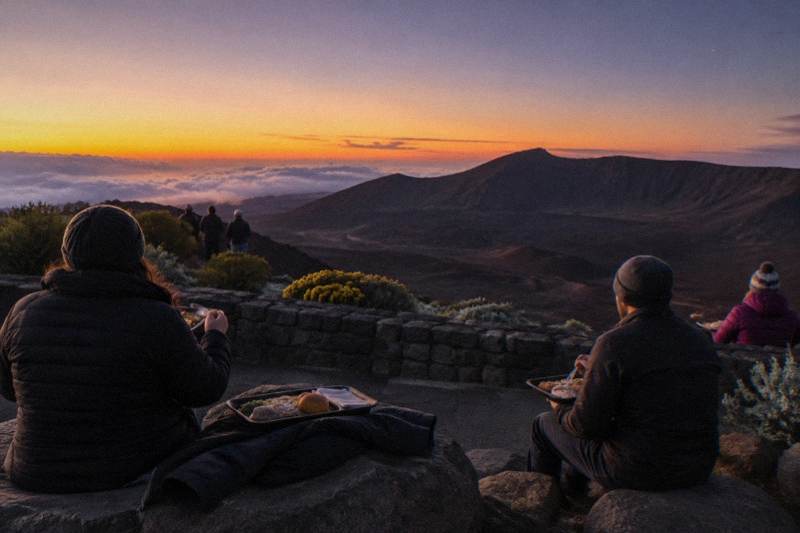
Is Sunset On Haleakala Worth It?
An honest look at whether a Haleakala sunset is worth the drive and the tour price, with no reservation needed, summit temperatures, monthly sunset times, and the sunset tours compared.
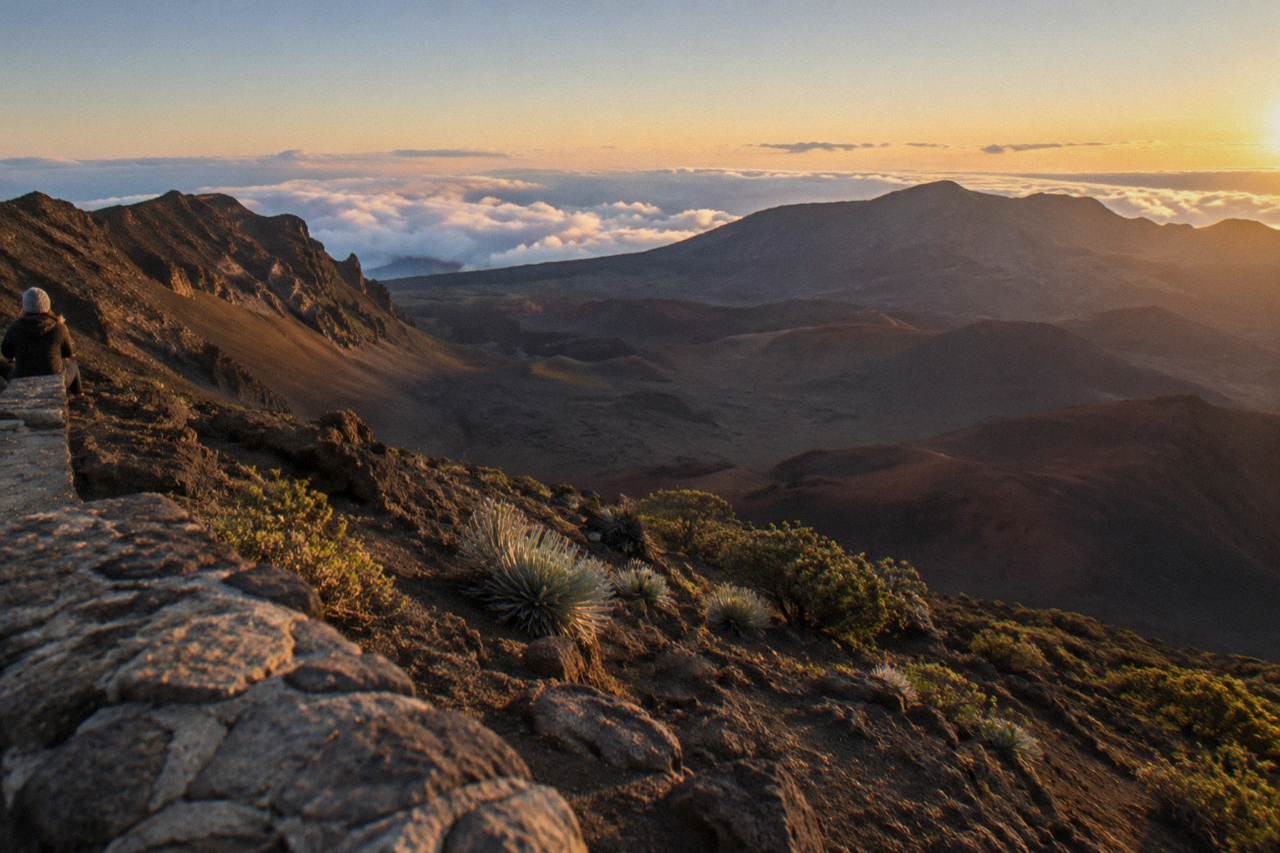
Watching the sun drop behind the Haleakala crater from 10,023 feet is the half of the mountain most visitors skip. Sunrise gets the fame, the 3 a.m. alarms, and the $1.00 vehicle reservation that often sells out within fifteen minutes on recreation.gov. Sunset asks for none of that. The park stays open 24 hours, the reservation rule only covers the 3:00 a.m. to 7:00 a.m. window, and the summit at dusk is a different mountain entirely: warmer than dawn, quieter than midday, and golden in a way the crater never is at noon. Of course, you still have to get up there, and if hairpin curves with no guardrails give you pause, our honest look at the Haleakala summit drive explains what the road is really like and when a tour that handles the driving makes more sense.
Is Sunset On Haleakala Worth It?
Yes, for most travelers sunset on Haleakala is worth it, and for some it beats sunrise outright. You get the same crater and the same 10,023 ft summit without the 3 a.m. wake-up, without the $1.00 sunrise vehicle reservation, and without the fifteen-minute sell-out scramble. The summit runs about 30 F cooler than the coast, so dusk is cold but usually gentler than pre-dawn, and crowds thin after day-trippers head down. Once the sun drops, the summit becomes one of the best stargazing spots on the island, and our honest guide to stargazing at Haleakala covers whether it is worth staying up there for the cold.
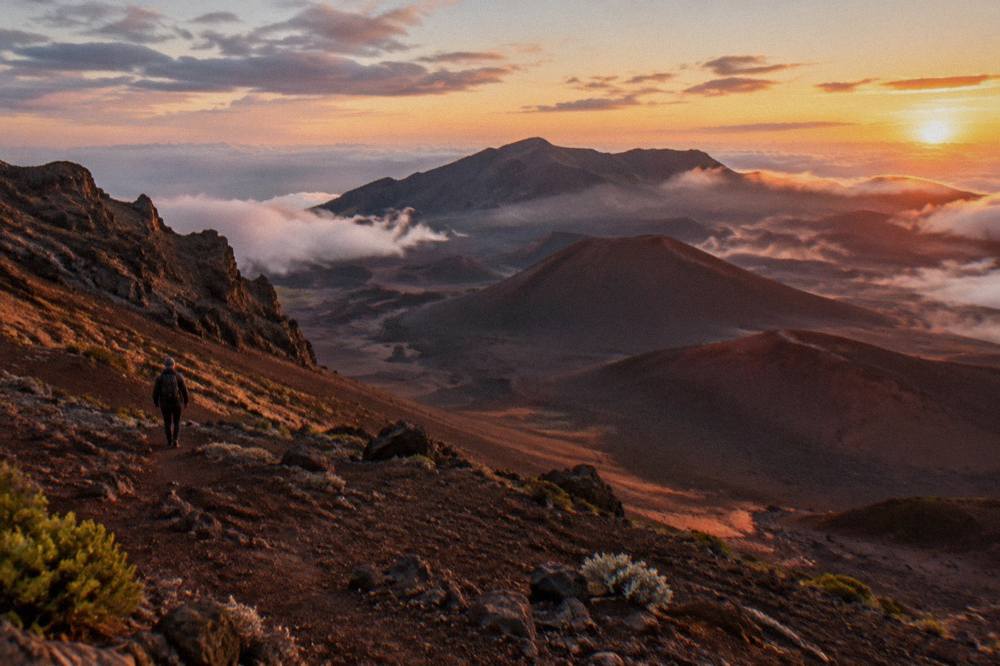
The case for sunset is really three cases stacked together. The first is logistics: sunset needs no reservation at all. The park's own sunrise page and FAQ are explicit that the reservation system exists only for the 3:00 a.m. to 7:00 a.m. window, so an evening arrival means you simply pay the entrance fee, $30 per private vehicle for three days covering both districts, and drive up. The second is the light. In the last hour before the sun drops, the crater's cinder cones shift from red-brown to copper to violet, and because the sun sets to the west over the West Maui Mountains, you watch the color move across the crater rather than explode out of it.
The third is what comes after. Darkness at the summit is among the darkest sky in Hawaii, and the park's stargazing guidance points out there are no lights on the crater road and asks visitors to switch to red lights after dark. A sunset visit rolls naturally into a stars session with zero extra driving. Sunrise visitors, by contrast, get whisked down the mountain right as the sky reward ends.
There is an honest counterweight. Weather decides everything on this mountain, and the park promises nothing about visibility. Before dusk the summit is regularly wet, windy and below freezing at any time of year, and clouds can sit at the exact altitude that hides the crater floor. If the trade wind inversion holds, and often it does, the summit sits above the cloud deck and the sunset is extraordinary. If it does not, you will watch fog. That risk exists at sunrise too, with one difference: at sunset you have not gotten up at 2 a.m. to take it.
For travelers who would rather not drive the crater road in the dark at all, tours solve that problem directly. The trio below covers the three main ways to buy the evening: a coach sunset with dinner, a small-group sunset with snacks and photos, and a small-group astronomy-focused sunset.
How Does Sunset Compare To Sunrise On Haleakala?
Sunset and sunrise share Haleakala's crater, overlooks, and weather gamble, but they split in three ways: sunrise demands a $1.00 per vehicle reservation on recreation.gov while sunset needs none; sunrise means a pre-dawn summit often at or below 32 F, while sunset arrives after the afternoon has warmed into the 50 to 60 F range; and sunrise crowds surge into the four highest lots before 7 a.m., while sunset crowds trickle out.
The reservation gap matters more than a dollar suggests. The $1.00 sunrise ticket is released up to 60 days ahead at 7:00 a.m. HST, with a portion held back until two days out, and the NPS FAQ notes inventory often sells out within fifteen minutes. One reservation per customer per three-day period, photo ID at the gate, no phone or in-person sales, and no refund for weather. A sunset visit involves none of that machinery. If your dates are short notice, sunset is not just the easier choice, it is sometimes the only self-drive choice.
The temperature gap is real too. The NPS weather guidance puts the summit about 30 F cooler than the coast, with summit readings ranging from below freezing to 50-65 F across the year. Pre-dawn is the coldest part of that range; the NPS FAQ notes summit mornings can reach 32 F or below. Late afternoon at the summit has usually climbed well off that floor. You will still want layers and wind protection at dusk, but the bone-deep cold of a 5 a.m. summit stand is a different experience.
We break the two experiences down side by side in the guide to Haleakala sunrise versus sunset, and the reader who wants the full sunrise mechanics can read the reservations guide. One sunset-only bonus: as darkness falls after the sun drops, the summit becomes a stargazing platform, which is why the sunset-stargazing category exists as its own family of tours.
A guest review on the Twilight Sunset Tour with Dinner puts the comparison bluntly: "Amazing experience and totally worth it. Glad we did the tour bus and didn't drive ourselves. It got really busy and it's a long drive! Sunset is 1000xs better than sunrise, too!" (Stefanie_R, 5 stars). Whether sunset is actually better is a matter of taste, but the review's practical point, that a long dark drive is the weakest part of a self-drive evening, is worth weighing.
Do You Need A Reservation For Sunset At Haleakala?
No. The sunrise reservation applies only to non-commercial vehicles entering the Summit District between 3:00 a.m. and 7:00 a.m., and sunset falls entirely outside that window. You pay the standard entrance fee at the gate, $30 per private vehicle for three days covering both districts, $25 per motorcycle, or $15 per person arriving on foot or by bicycle, and that is the whole transaction.
Fee-free days do not waive the sunrise reservation, but they have nothing to waive at sunset because sunset never needed one. That simplicity is the quiet selling point of an evening visit. The NPS fees page prints the full schedule: annual park pass $55, Hawai'i Tri-Park pass $55 for US citizens and residents, and the America the Beautiful family of passes accepted as printed. The park takes credit and debit only, no cash, which matters on a road with no services.
Two cautions keep the picture honest. First, no reservation does not mean no crowd. Parking lots close when they fill, and the summit lots are small. Arriving well before the sun drops, an hour or more ahead, is standard practice in peak season. Second, conditions change: weather can close the road or the park itself, and the park's own conditions page is the source to check on the day.
If you would rather hand the whole evening to someone else, tours run under their own park authorization. The NPS lists four authorized road-based tour companies, Haleakala Ecotours, Valley Isle Excursions, Skyline Eco-Adventures and Polynesian Adventure Tours, on its road-based concessions page, and a traveler on any authorized commercial tour is not the one chasing a vehicle reservation. That freedom applies at sunset exactly as it does at sunrise.
What Does A Haleakala Sunset Tour Cost?
Haleakala sunset tours cost from $222 per person to $555 per group across the five live sunset and stargazing listings, with the three group tours clustered between $222 and $257. Options include the $257 Twilight Sunset Tour with Dinner, the $245 Amazing Maui Stars Sunset and Astronomy Tour, the $222 MauiHoppin Sunset, Snacks and Photos tour, and private sunset transport starting at $314.
Here is the full sunset field as the listings print it.
| Tour | Operator | From (per person) | Rating | Duration | Group |
|---|---|---|---|---|---|
| Twilight Sunset with Dinner | Polynesian Adventure Tours | $257 | 4.4 from 263 reviews | 7 hours | Coach, up to 24 |
| Sunset, Snacks and Photos | MauiHoppin | $222 | 4.4 from 32 reviews | 5 hours | Small group |
| Small-Group Sunset Astronomy | Amazing Maui Stars | $245 | 5 from 57 reviews | 5 hours 30 minutes | Up to 8 |
| Private Sunset with Dinner | Bike Maui and Haleakala EcoTours | $314 | 4.3 from 29 reviews | 6 hours | Private vehicle |
| Private Sunset Tour | Aloha Wild Tours | $555 | 7 reviews, too few for a star claim | 5 hours | Private |
Read the table by what you are buying rather than by price alone. The Twilight Sunset Tour with Dinner, the featured pick on Haleakala National Park Tours, is the logistics answer: about seven hours, pickup and drop-off from specific Maui hotels, dinner included, and about 1.5 hours inside Haleakala National Park per the listing, rated 4.4 from 263 reviews. The listing states free cancellation, with the cutoff printed on the booking page.
The Small-Group Sunset Astronomy Tour with Amazing Maui Stars is the sky answer: eight travelers maximum, roughly four hours spent up around 10,000 ft, and a 5.0 rating from 57 reviews, a strong score but from a small pool. There is no hotel pickup, so you drive to the meeting point yourself. The Sunset, Snacks and Photos tour with MauiHoppin is the lightest and cheapest group option at five hours from $222, with park entry paid by the operator per the listing; it has no hotel pickup either.
Every cancellation policy on the roster reads the same way: free cancellation per listing, and the cutoff is on the booking page. Cutoffs vary by product and are not printed on the roster, so check the listing before you count on it.
The private floor is a different product category. The Private Sunset Tour with Aloha Wild Tours prices at $555 per group for a five-hour private evening with hotel or rental pickup on request; its listing carries only 7 reviews, too few for any rating claim, which we note plainly rather than dressing up. The Private Sunset with Dinner from Bike Maui and Haleakala EcoTours starts at $314 per person for a six-hour private vehicle evening, rated 4.3 from 29 reviews.
How Cold Is The Summit At Sunset?
Expect the summit to run about 30 F cooler than the coast, with year-round readings from below freezing to 50-65 F, so a sunset visit typically starts in the 40s or 50s F in shirt-sleeve-at-sea-level conditions and drops fast once the sun goes. Wind chill and damp can push the felt temperature well below the thermometer, and the park warns there is no gas, no food, and emergency help at least an hour away.
The park's own numbers make the packing list for you. The NPS weather page puts the summit about 30 F below coastal temperatures, and the FAQ notes that summit mornings reach 32 F or below before warming to 50-60 F in the afternoon. Sunset sits on the falling edge of that daily curve: pleasant enough in the last hour of daylight, noticeably cold twenty minutes after the sun drops, genuinely cold an hour later if you stay for stars. The difference between a miserable evening and a great one is usually a real jacket, not a hoodie, plus long pants and something windproof.
Altitude deserves a sentence of respect as well. At 10,023 ft the air holds less oxygen, and the NPS hiking page lists nausea, headache, dizziness and shortness of breath as altitude sickness signs, advising pregnant visitors and anyone with heart or respiratory conditions to consult a doctor. Pacing yourself on the short walk from the parking lot to an overlook is enough for most people. Our piece on how to dress for the Haleakala sunrise covers the same layering math, and every bit of it applies at dusk.
One sunset-specific note: after dark there are no lights on the crater road and no guard rails along stretches of it, which the park's stargazing page flags directly. That is the single strongest argument for a tour if you are nervous about the drive down; the coach driver does it nightly.
What Time Should You Arrive For Sunset On Haleakala?
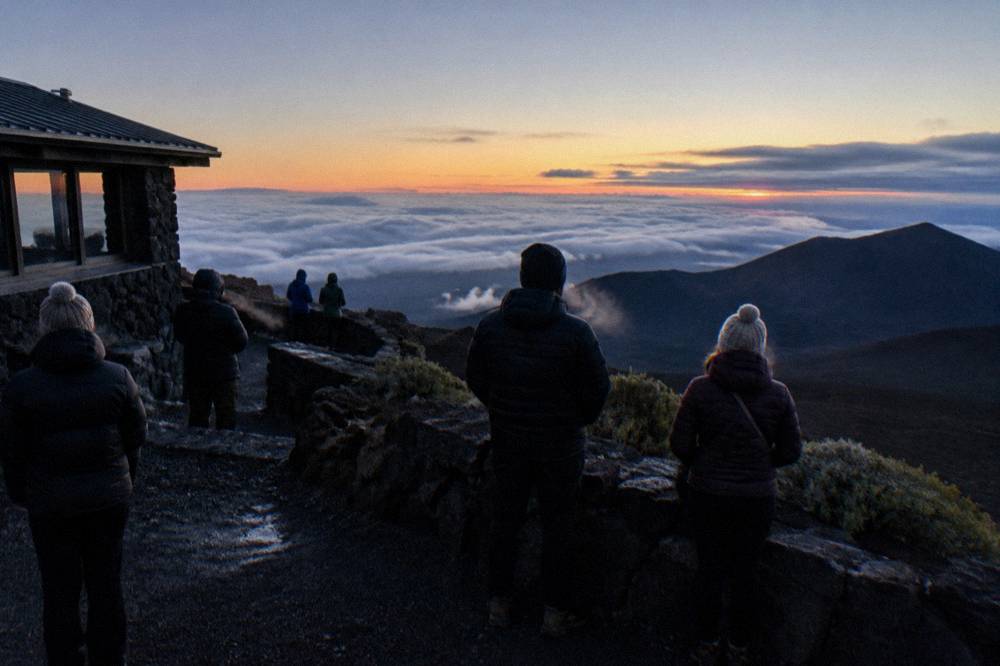
Sunset at the summit ranges from about 17:45 in late November to about 19:09 in mid-July, a spread of nearly an hour and a half across the year, so your arrival time has to move with the season. Plan to be at an overlook at least an hour before the listed time, both to claim parking before lots close when full and to catch the full color build.
Then add your drive time: about 30 minutes from the entrance gate to the summit, on top of Kahului at 45 minutes to 1 hour, Kihei at 1 to 1.5 hours, and Lahaina at 1.5 to 2 hours to reach the gate.
The monthly clock, computed for the 15th of each month in HST:
| Month | Sunset At Haleakala (15th, HST) | Month | Sunset At Haleakala (15th, HST) |
|---|---|---|---|
| January | 18:04 | July | 19:09 |
| February | 18:23 | August | 18:56 |
| March | 18:35 | September | 18:29 |
| April | 18:43 | October | 18:02 |
| May | 18:54 | November | 17:45 |
| June | 19:06 | December | 17:47 |
A winter sunset around 17:45 means leaving Lahaina by about 14:30 to arrive with margin; a July sunset at 19:09 lets you keep most of a beach day first. Either way, the drive is the commitment. The road from the entrance to the summit is 11 miles of paved switchbacks taking about 30 minutes, and the park asks that you not stop on the road itself but use the overlook lots.
Tours handle this arithmetic for you, which is part of what the ticket buys. The Twilight Sunset Tour with Dinner runs about seven hours door to door, the astronomy tour about five and a half, and the MauiHoppin sunset about five, so the listed duration tells you how much of your afternoon each one claims.
Which Haleakala Sunset Tour Fits You Best?
Match the tour to your priority, not the price tag. If you want dinner, hotel pickup and the simplest evening, the Twilight Sunset Tour with Dinner from $257 is the group pick. If the night sky is the point, the eight-person Sunset and Astronomy Tour from $245 spends about four hours up near 10,000 ft. If you want the shortest, cheapest evening with photos, the MauiHoppin sunset from $222 runs five hours, and private evenings start at $314.
The private tier deserves a fair hearing for families and anyone on a honeymoon-style trip. A private sunset vehicle means the schedule bends around you, the vehicle is yours alone, and pickup logistics are arranged on request rather than fixed to a hotel list.
The Bike Maui and Haleakala EcoTours private sunset is the mid-tier private option at six hours from $314, and it adds dinner; its 4.3 rating comes from 29 reviews, a modest pool we report as-is.
For a wider field than sunset alone, the Haleakala sunset tours guide walks every evening listing, and the stargazing hub covers the after-dark specialists. The reader weighing a night on the mountain against a night on the Big Island can also compare the two summits directly.
Can You Stay After Sunset For Stargazing?
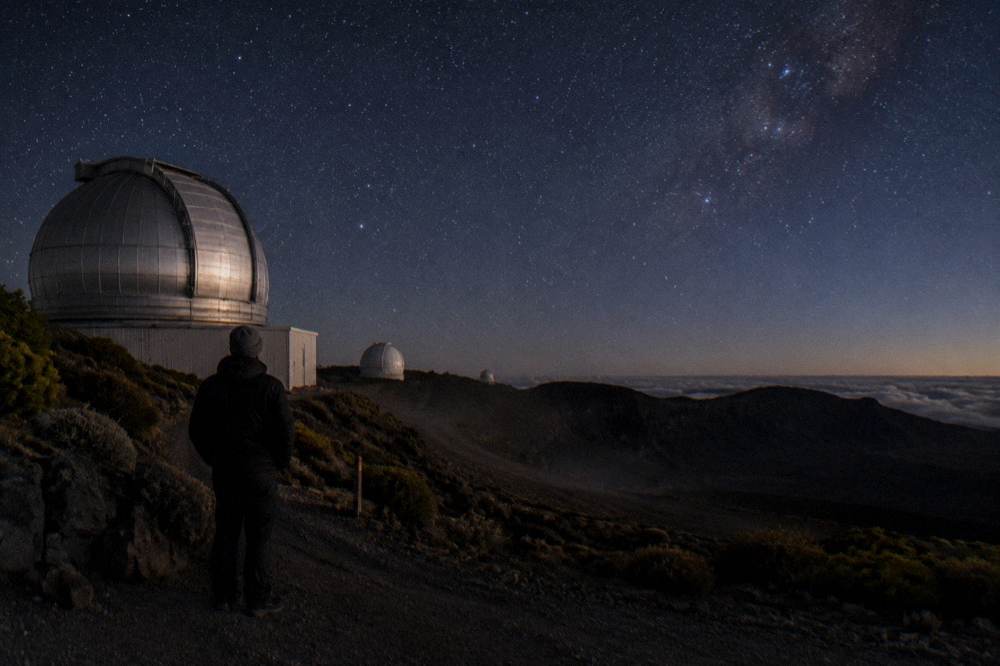
Yes, and it is the strongest value argument for the evening. The park is open 24 hours, sunset needs no reservation, and there is no reservation for after-dark stays either; the only overnight rule is that sleeping happens in designated campgrounds, Hosmer Grove in the Summit District or Kipahulu, booked through recreation.gov. Stay at an overlook with a red light, and the sky simply keeps improving for an hour or two after the sun drops.
The park's stargazing guidance is short and practical: dress warmly, bring something to sit on and snacks, use red light rather than white, and remember there are no lights or guard rails on the road for the drive down. New moons make the darkest skies, and clear, stable air is more common in the summer and fall months than in the wetter November-to-March rainy season, though the park promises nothing and clouds can always win.
This is where the astronomy tour earns its slot. Amazing Maui Stars runs a small-group format capped at eight travelers with roughly four hours up high, which typically bridges sunset and prime stargazing hours in one booking. The 5.0 rating comes from 57 reviews, a genuinely strong score even if the pool is small. Self-drivers can replicate the evening for the price of entrance, at the cost of doing the dark descent themselves.
The Pools of 'Ohe'o note, for completeness: in the Kipahulu District, the pools are closed to entry and swimming as a standing park rule and can be viewed from the Kuloa Point Trail, but Kipahulu is a separate district hours from the summit and not part of any sunset evening.
So, is sunset on Haleakala worth it? If the question means "will I see something that justifies the drive," the crater at dusk, the temperature you can actually enjoy, and the free night sky afterward answer yes for most travelers, weather permitting as always. If the question means "is it worth it over sunrise," the honest answer is that sunset trades sunrise's above-the-clouds drama for convenience, warmth, and a slow build of color, and plenty of visitors who have done both, including the one quoted above, prefer it.
Common Questions About Sunset On Haleakala
Is Sunset On Haleakala Worth It?
For most travelers, yes. Sunset delivers the same 10,023 ft crater as sunrise without the 3 a.m. alarm, the $1.00 vehicle reservation, or the pre-dawn cold, and it rolls into stargazing at no extra cost. Weather still decides visibility, so nothing is guaranteed, but the risk is the same as sunrise with a much softer setup.
Do You Need A Reservation For Sunset At Haleakala?
No. The reservation requirement covers only the 3:00 a.m. to 7:00 a.m. window for non-commercial vehicles. For sunset you pay the entrance fee, $30 per private vehicle for three days, and drive up. Parking lots close when full, so arrive at least an hour before sunset time.
How Cold Is It At The Summit At Sunset?
The summit runs about 30 F cooler than the coast, with year-round readings from below freezing to 50-65 F. Sunset typically starts cool and drops fast after the sun goes, and wind chill makes it feel colder. Bring a real jacket, long pants and wind protection.
What Is The Cheapest Haleakala Sunset Tour?
The Sunset, Snacks and Photos tour with MauiHoppin starts at $222 per person for a five-hour small-group evening, the lowest price among the live sunset listings. The Twilight Sunset Tour with Dinner starts at $257 with dinner and hotel pickup, and the astronomy tour starts at $245.
Can You Watch Stars After Sunset At Haleakala?
Yes. The park is open 24 hours and no reservation applies after 7 a.m. Stay at an overlook with a red light; overnight sleeping is allowed only in designated campgrounds booked through recreation.gov. The Small-Group Sunset Astronomy Tour bridges sunset and stargazing in one booking.
Is Sunset Or Sunrise Better At Haleakala?
Sunrise offers the classic above-the-clouds moment but requires a reservation that often sells out within fifteen minutes and a summit that can be at or below 32 F. Sunset needs no reservation, is warmer, has thinner crowds, and leads into stargazing. Travelers who have done both split on which is better, and weather can make either one unforgettable or invisible.