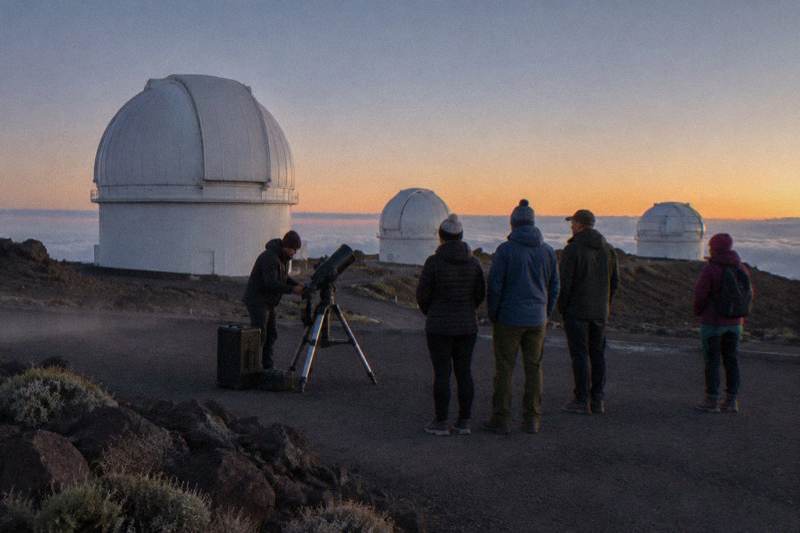
Is Stargazing At Haleakala Worth It?
An honest look at whether stargazing at Haleakala is worth the drive, the cold and the ticket price, with official summit weather facts and the sunset and astronomy tours that run after dark.
Is Stargazing At Haleakala Worth It?
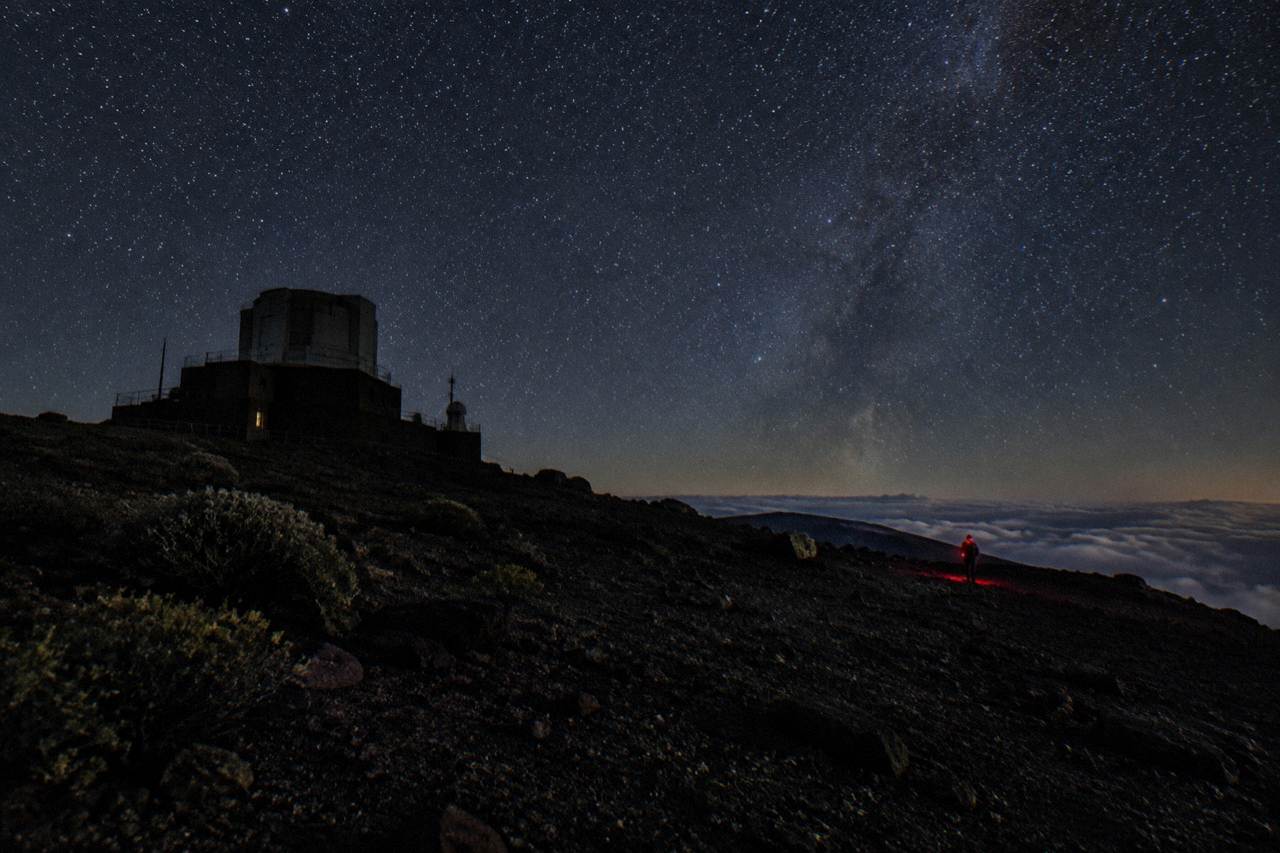
Yes, for most visitors stargazing at Haleakala is worth it, with one honest caveat: weather decides. The summit sits at 10,023 feet above the inversion layer that traps island haze, the park reports year-round summit temperatures from below freezing to highs of 50 to 65 F, and no reservation is needed to enter after dark. If the sky cooperates, the view of the Milky Way is among the best reachable by car anywhere in Hawaii. If you're torn between the two island summits, our guide to choosing between Mauna Kea and Haleakala compares height, weather, and access side by side.
The case for the summit after dark rests on simple physics. Haleakala rises 10,023 feet to Pu'u 'Ula'ula (Red Hill), and the park's weather page notes that temperature drops about 3 F per 1,000 feet, leaving the summit roughly 30 F cooler than the coast. That climb puts you above much of the moist marine air that hugs the islands, and it is the reason observatories were built on Hawaiian summits in the first place. The Haleakala National Park Tours site covers the full roster of after-dark options, from self-driving to the small-group astronomy tours, and this article works through the decision honestly.
The park's own stargazing page keeps its advice practical: dress warmly, bring something to sit on, bring snacks, expect no lights and no guard rails on the road, and turn off white lights in favor of red. That is the shape of the experience. It is a cold, dark, uncomplicated pleasure, and whether it is worth it depends almost entirely on your tolerance for a late mountain drive and your luck with clouds.
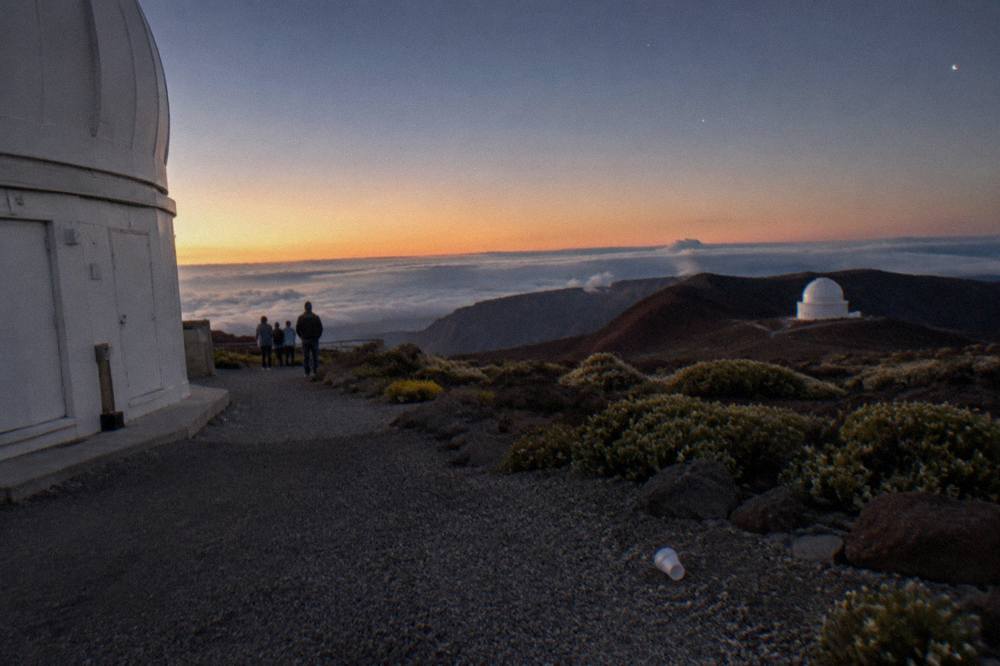
For readers who already know they want a guided evening rather than a self-driven one, the strongest match on the roster is the small-group sunset astronomy tour, which pairs the sunset with telescope time in a group capped at eight travellers. The trio below compares it against a coach sunset with dinner and a private sunset option, the three main ways to be on the mountain after dark without driving yourself.
Why Is The Haleakala Night Sky So Good?
The summit's elevation puts it above the typical cloud inversion, the air is stable and dry much of the year, and the park has almost no light pollution of its own at 10,023 feet. Together those three factors produce skies that the park itself promotes for stargazing, and they are the reason a sunset visit so often turns into an unplanned hour of star-watching from the parking areas.
Start with the inversion layer. Trade winds push moist air up the island's flanks, and it commonly condenses into a cloud deck well below the summit, somewhere in the middle elevations of the mountain. Haleakala's summit district begins at 7,000 feet and tops out well above that deck, so on many evenings the summit stands in clear air while the coast below is overcast. The park's weather page describes the summit as roughly 30 F cooler than the coast, a gap that reflects how much atmosphere, and how much haze, you have climbed out of.
Light pollution is the second factor. The nearest significant population centers, Kahului and Kihei, sit 20 to 40 miles away and thousands of feet below, their glow largely stopped by the mountain itself. There is no development inside the park beyond the visitor centers, no streetlights on the crater road, and the park asks night visitors to use red lights only. The result is a horizon-to-horizon dark sky that few places in the United States within a short drive of resorts can match.
Stability matters too. NOAA's 1991 to 2020 climate normals for the Haleakala station at 6,962 feet, published data from roughly 3,000 feet below the summit, show the driest months are June at 0.5 inches of rain and July at 2.2 inches, while November and December run 5.3 and 6.6 inches. The practical reading: summer and early fall evenings are statistically your best bet for a clear sky, winter is a coin toss with better odds than the coast but real cloud risk. A peer-reviewed study of Haleakala sky conditions found an average cloud-free line of sight of about 66 percent overall, which is a fair way to say that roughly one night in three will disappoint somewhere on the island. If those cloud odds have you weighing your options, our head-to-head comparison of Mauna Kea and Haleakala covers the weather, access, and cost differences between the two summits.
The park's own guidance, on its official stargazing page, is notably matter-of-fact. It promises nothing about what you will see. It tells you what to bring and how to behave, and it notes that overnight stays are allowed only in designated campgrounds. That restraint is worth matching in your own planning: go expecting a spectacular sky, but plan for the possibility of standing in fog.
What Does It Cost To Stargaze At Haleakala?
Self-driving after dark costs the standard entrance fee, $30 per private vehicle valid for 3 days in both districts, with no reservation needed because the $1 sunrise reservation applies only to the 3:00 a.m. to 7:00 a.m. window. Guided evening tours run from $222 per person for a small-group sunset with snacks and photos up to $314 per person for a private sunset with dinner.
The fee structure favors the evening visitor. The famous recreation.gov reservation, the one that sells out within fifteen minutes, exists to manage sunrise crowds between 3:00 and 7:00 a.m. only. After that window the gate is open to anyone who pays entrance, and sunset and stargazing need no reservation at all, as the park confirms on its fees and passes page. You can arrive at 5 p.m., watch the sun drop, stay for the stars, and drive down having paid nothing beyond the entrance fee.
| Option | Cost | What it includes | Group size |
|---|---|---|---|
| Self-drive, any evening | $30 per vehicle, 3 days | Entrance to both districts, sunset and night sky from any open viewing area | Your own party |
| Small-Group Sunset Astronomy | from $245 per person | About 5 hours 30 minutes, roughly 4 hours at altitude, telescope time | Up to 8 travellers |
| Sunset, Snacks and Photos | from $222 per person | 5-hour small-group sunset tour, park entry paid by operator | Small group |
| Twilight Sunset with Dinner | from $257 per person | 7-hour coach tour with dinner, about 1.5 hours in the park | Up to 24 travellers |
| Private Sunset with Dinner | from $314 per person | 6-hour private vehicle sunset tour with dinner and crater admission | Private party |
The tour column is not decoration. Driving down the crater road after dark is the single biggest hesitation readers raise, and it is a fair one. The park notes there are no streetlights and no guard rails, the drive from the entrance gate to the summit takes about 30 minutes in daylight, and emergency help is at least an hour away. A guided tour removes that variable entirely, which is precisely the trade the three guided options above are selling. For a side-by-side comparison of what each guided option actually includes, the full breakdown of Haleakala stargazing tours covers the details.
For budget-minded readers, the honest math is that a $30 vehicle pass covers the whole party, versus two per-person seats on the small-group sunset and astronomy tour at its listed price. What the tour adds is a telescope, a guide who knows the sky, and someone else handling the dark mountain road. Our guide to free things to do at Haleakala covers the no-cost side of the mountain in more depth, including that the sunset viewing itself carries no reservation.
What Is The Best Time Of Year For Stargazing At Haleakala?
June through September offers the driest, most stable evenings on record, with June averaging just 0.5 inches of rain at the upper weather station, and summer nights bring the Milky Way core high over the summit. Winter skies can be superb between storms, but November through March is the rainy season, and summit temperatures before dawn and after dusk are regularly below freezing year-round.
The rainfall numbers tell the cleanest story. Monthly precipitation at the Haleakala station runs 4.5 inches in January, 4.2 in February, drops through spring to 2.9 in May, then collapses to 0.5 inches in June, 2.2 in July and 2.7 in August before climbing again to 5.3 in November and 6.6 in December. A September or October visit sits in a reasonable middle band, 2.6 and 2.4 inches, with earlier sunsets that get you to the stars at a civilized hour.
Sunset time matters more than most visitors expect, because it sets your clock for the whole evening. The table below shows sunset on the 15th of each month, computed for the summit's coordinates, alongside the summit-appropriate temperature range the park publishes. Note the park's guidance that summit readings run about 30 F below the coast, and that wind chill makes it feel colder still.
| Month | Sunset (HST) | Summit temp range | Station rainfall |
|---|---|---|---|
| January | 18:04 | Below freezing to 50s F | 4.5 in |
| March | 18:35 | Below freezing to 50s F | 4.7 in |
| May | 18:54 | 30s to low 60s F | 2.9 in |
| July | 19:09 | 30s to low 60s F | 2.2 in |
| September | 18:29 | 30s to low 60s F | 2.6 in |
| November | 17:45 | Below freezing to 50s F | 5.3 in |
The moon is the other clock. A full moon washes out faint stars and the Milky Way entirely, while the nights around a new moon are the darkest available, and the park's stargazing guidance assumes genuinely dark conditions. Check a lunar calendar before you lock a date, because a technically clear sky under a bright moon will still underwhelm anyone who has driven two hours uphill expecting the Milky Way.
One planning note that surprises people: you do not need to stay until midnight. Astronomical darkness comes surprisingly early in the tropics, falling not long after the last sunset color fades, so an evening that begins with the sunset at 6:30 p.m. is delivering prime sky by 8 p.m. That is why the 5-hour sunset and astronomy format works so well, it starts at the golden hour and ends with the sky fully dark.
Is A Guided Stargazing Tour Better Than Driving Yourself?
A guided tour is better if the dark crater road worries you, if you want a telescope and someone to interpret the sky, or if you are staying somewhere that makes a late-night drive home unappealing. Driving yourself is better for photographers on flexible schedules and anyone who wants to linger past a tour's fixed departure, and it costs $30 per vehicle instead of $245 or more per person. If those hairpin turns and dark descents are what's holding you back, our honest look at the Haleakala summit road covers exactly what to expect before you commit to driving yourself.
The small-group sunset astronomy tour by Amazing Maui Stars, rated 5.0 from 57 reviews, is the roster's dedicated stargazing product: from $245 per person, about 5 hours 30 minutes long, capped at 8 travellers, with roughly 4 hours at altitude per the listing. The listing does not mention hotel pickup, so plan on making your own way to the meeting point. What a format like this buys is dwell time, the guide unpacks a telescope, and the group stays on the mountain as the sky rotates through its best material.
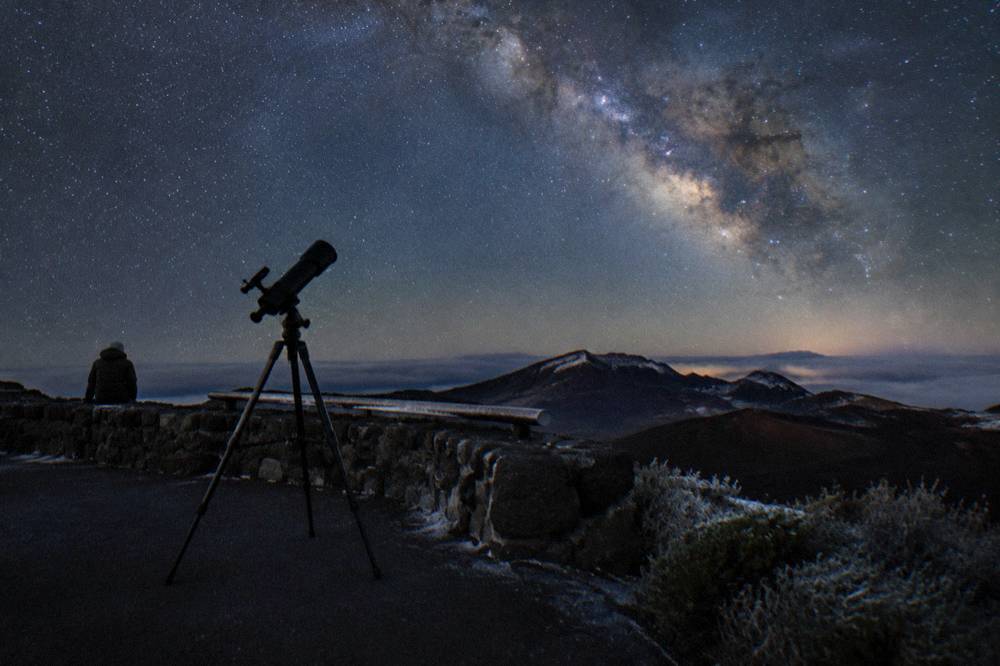
The broader evening lineup splits into three formats. The coach sunset with dinner, from $257 per person and rated 4.4 from 263 reviews, is a 7-hour trip for up to 24 travellers that spends about 1.5 hours in the park; it is a sunset experience with dinner rather than an astronomy program, though a guest review on its listing, "Sunset is 1000xs better than sunrise, too!", captures the mood. The private sunset with dinner, from $314 per person, hands a party their own vehicle. And for travelers pairing stargazing with a dawn visit, the large-coach sunrise spectacular with local breakfast, from $254 per person and rated 4.7 from 2,471 reviews, is a different animal entirely, but its pre-dawn departure means guests routinely see the stars before the sun, as a reviewer on the Mountain Riders sunrise bike tour noted, describing "a clear night and seeing the stars before sunrise (see One Day At Haleakala)."
The self-drive case deserves a fair hearing. You keep your own schedule, you can chase the clearest overlook, and the four sunrise viewing areas, Pu'u 'Ula'ula at 10,023 feet, Haleakala Visitor Center at 9,740 feet, Kalahaku at 9,324 feet and Leleiwi at 8,840 feet, are all open after dark with no reservation. The costs are concentration on a winding road with no lights and no guard rails, cold that catches beach-goers off guard, and the fact that no gas or food is sold in the park. If those are manageable, the sky is free beyond the entrance fee.
There is a middle path worth naming: the sunset with snacks and photos tour by MauiHoppin, from $222 per person and rated 4.4 from 32 reviews, a 5-hour small-group evening in which the operator pays park entry. It is the least expensive guided way to be on the mountain at dusk with someone else driving, and guests often stay into early darkness on the way down.
How Cold Is It Really, And What Should You Wear?
Expect summit temperatures between below freezing and the low 60s F at any time of year, with wind chill pushing the felt temperature lower, and the park warns that conditions before dawn and after dusk are regularly wet, windy and below freezing. Wear winter layers, a real jacket, long pants, closed shoes and a hat, the same kit you would pack for a mainland winter evening, not a beach sunset.
The park is blunt on this. Its summit district page states temperatures are at least 20 degrees colder than sea level and often below freezing, its weather page gives the year-round summit range as below freezing to highs of 50 to 65 F, and its FAQ notes mornings can reach 32 F or below. Stargazing means standing still in the dark, which is the worst-case use of that temperature range. A beach chair and a blanket earn their place here, exactly as the stargazing page suggests.
Altitude deserves a sentence too. At 10,023 feet the air is thin enough that the park's hiking guidance flags nausea, headache, dizziness and shortness of breath as possible symptoms, and advises pregnant visitors and people with heart or respiratory conditions to consult a doctor. Move slowly, drink water, and take any symptoms seriously by descending. The park's weather page and current conditions page are the two links worth checking the day you go, since conditions change and weather can close the park.
Practical kit list, drawn from the park's own suggestions: warm layers you can add and shed, something insulated to sit on, snacks and water since nothing is sold in the park, a red-light headlamp or flashlight, and a full tank before you leave the highway. If you want the deeper version of this packing question, our article on how to dress for the Haleakala sunrise covers the same cold in more detail, and the clothing logic is identical.
Can You Stargaze Without A Tour Or A Telescope?
Yes. The park's stargazing guidance is written for self-directed visitors, the summit road is open 24 hours, no reservation applies after 7:00 a.m., and the naked-eye sky above the summit is the main event. A telescope adds detail to planets and faint objects, but the Milky Way, the bright constellations and meteors need no equipment at all.
This is worth saying plainly because tour marketing can imply the sky is gated. It is not. Anyone who pays entrance can drive up after sunset, park at one of the overlooks, and look up. The park asks only that you use red lights, stay on paved areas, take out what you bring in, and sleep nowhere except designated campgrounds. Hosmer Grove campground, reserved through the online system, even lets you wake at altitude for a second sky session before dawn, though a cyclist or camper entering between 3:00 and 7:00 a.m. by vehicle still needs the sunrise reservation; a person arriving on foot or by bicycle does not, per the park's FAQ.
What the unaided eye actually gets is substantial. From a true dark site the Milky Way's glowing band is visible horizon to horizon, Jupiter and Saturn show as steady bright points, and meteors appear regularly on any given night. A telescope or good binoculars upgrade planets into discs with moons and rings, and pull out faint clusters, which is the genuine value of the guided astronomy format rather than access to the sky itself.
The honest weakness of the DIY route is not the sky, it is everything around it: the fatigue of a late drive, the cold you underestimated, and the temptation to leave early. Tours solve the logistics and supply the interpretation. DIY gives you the same stars for $30 per vehicle and full control of the clock.
So, Is It Worth It? The Honest Verdict
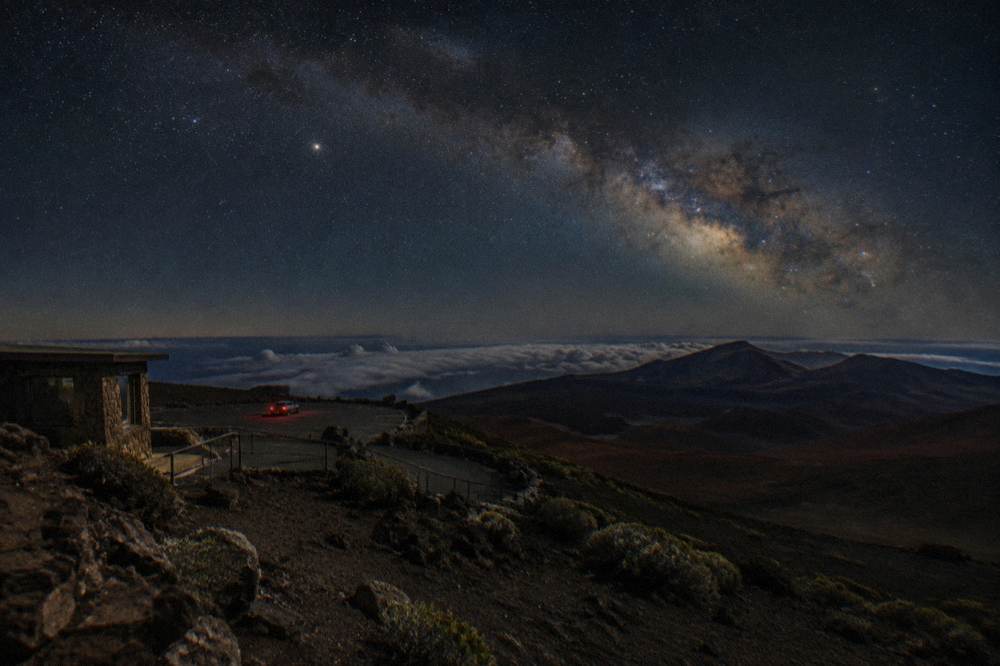
For most visitors, yes: stargazing at Haleakala delivers a sky that is genuinely rare at this latitude and this accessibility, and the self-drive version costs almost nothing beyond park entrance. The caveats are real, roughly a third of nights underperform on clouds, the cold is severe by beach standards, and the value of a guided tour depends on how much you want the telescope, the guide and the driven road rather than the sky itself.
The reader this article is written for, someone deciding whether to book an evening tour, can use a simple decision rule. If you are a confident driver comfortable with mountain roads at night, self-drive first, pay $30, and save the tour for a return trip. If the dark road, the altitude or the planning burden is the obstacle, book the small-group sunset and astronomy format, because that is the product built precisely around the night sky, in a group of eight with roughly four hours at altitude.
Either way, hedge your expectations the way the park itself does. The NPS never promises a visible sunset, clear skies or stars, and neither will we: weather decides. What the facts do support is that the odds are as good as they get in Hawaii, the cost of finding out is low, and the upside, a Milky Way arching over a silent volcanic summit, is the kind of evening people plan entire return trips around.
If stars before dawn appeal as much as stars after dusk, the sunrise formats put you on the summit while the sky is still dark, with breakfast on the far side of it. The evening trio below remains the cleanest comparison of the after-dark guided options: the astronomy specialist, the coach dinner sunset and the private sunset.
Common Questions About Stargazing At Haleakala
Is stargazing at Haleakala worth it?
For most visitors, yes. The summit stands 10,023 feet above much of the island's haze, the park promotes its night sky officially, and self-driving after dark costs only the $30 per vehicle entrance fee with no reservation. Roughly a third of evenings will disappoint on clouds, so go prepared for weather rather than expecting a guarantee.
Do you need a reservation to stargaze at Haleakala?
No. The $1 per vehicle recreation.gov reservation applies only to vehicles entering the Summit District between 3:00 a.m. and 7:00 a.m. Sunset and evening stargazing need no reservation, just the standard entrance fee. Fee-free days do not waive the sunrise reservation, but they do not affect evening visits at all.
What is the best month for stargazing at Haleakala?
June through September combines the driest weather station record, June averages 0.5 inches of rain, with summer's high Milky Way and a civilized schedule, since astronomical darkness arrives shortly after sunset fades. Check a lunar calendar too, and aim for nights near the new moon for the darkest sky.
How cold is stargazing at the Haleakala summit?
Cold by beach standards. The park reports year-round summit temperatures from below freezing to highs of 50 to 65 F, notes conditions before dawn and after dusk are regularly wet, windy and below freezing, and warns that wind chill makes it feel colder. Bring winter layers, a hat, something insulated to sit on and a red light.
Can you see the Milky Way from Haleakala without a telescope?
Yes. From the summit overlooks on a clear, moonless night the Milky Way's band is visible to the naked eye, along with bright planets and regular meteors. A telescope, like the one the small-group astronomy tour brings, adds planetary detail and faint objects, but it is an upgrade, not a requirement.
Is it safe to drive down from Haleakala after dark?
It is legal and common, but demanding. The park notes the crater road has no streetlights and no guard rails, the drive from the entrance gate to the summit takes about 30 minutes, and emergency help is at least an hour away. If that sounds stressful, a guided sunset or astronomy tour puts an experienced driver on that road instead of you.