Can I Do Road To Hana And Haleakala In One Day?
Yes, but only with the right plan. Drive times, realistic one-day options and what a combined Road to Hana and Haleakala day actually looks like.
Can I Do Road To Hana And Haleakala In One Day?
Yes, you can do Road to Hana and Haleakala in one day, but almost nobody should attempt both full drives alone in a single day. The official park drive times put Kahului 45 minutes to 1 hour from the Summit District and 2.5 to 3 hours from Kipahulu, the coastal end of the Hana Highway. A guided combo tour, a sunset swap instead of sunrise, or a helicopter shortcut are the three plans that actually hold together.
The temptation is understandable. Maui trips are short, and the island's two headline experiences both involve long, slow, scenic drives. Road to Hana is 64 miles of one-lane bridges, blind curves and waterfall stops along the northeast coast. Haleakala is a 10,023-foot volcano you reach by climbing a paved road from the island's upcountry middle (see Where To Stay). They share a mountain but almost nothing else, and the geometry of the island is what makes the pairing brutal: the Hana Highway runs east, the summit road runs upslope from the center, and the two endpoints are separated by hours of driving even though they look close on a map.
Travelers who try the naive version usually describe the same collapse. They leave Kahului before dawn for the summit, come down cold and tired mid-morning, then start the Hana drive around 11 a.m., exactly when the highway is at its most congested. By Mile Marker 20 they are watching the clock instead of the waterfalls, and by Hana they are turning straight around to beat sunset. It can be done that way. It just is not much of a vacation, and it converts two of the slowest, stop-heavy experiences in Hawaii into one long commuting day.
The one-day question has a real answer, though, and it is not "no". It is "pick the right version of one day". This article walks through the actual drive-time math, why self-driving both is so punishing, the three realistic combinations, and how the tours on this site's roster slot into each of them. If you want the short version: a small-group combo tour exists for exactly this question, a private open-air jeep version exists if budget is no object, and a helicopter flight sees both landscapes in 45 minutes if driving is the part you want to cut.
What The Official Drive Times Actually Say
The National Park Service publishes drive times that settle the feasibility question on their own. Kahului sits 45 minutes to 1 hour from the Summit District but 2.5 to 3 hours from Kipahulu, the district at the end of the Hana Highway. Lahaina sits 1.5 to 2 hours from the summit and 3 to 4 hours from Kipahulu, and the summit road itself takes about 30 minutes from the entrance gate to the top.
Those numbers are the park's own FAQ figures, and they describe driving time only, with no stops, no traffic and no parking waits. The Hana Highway in practice is slower than its posted times because the whole point is to stop: at waterfalls, at the black sand beach at Wai'anapanapa, at banana bread stands, at overlooks. A Road to Hana day that is worth the drive is a stops day, not a driving day. Add those stops on top of the 2.5 to 3 hours each way from Kahului and the Hana half alone eats most of a daylight budget.
| Starting point | To Summit District | To Kipahulu (end of Hana Hwy) | One day, both, round trip minimum |
|---|---|---|---|
| Kahului | 45 min to 1 hr | 2.5 to 3 hrs | About 8 hrs driving, no stops |
| Kihei | 1 to 1.5 hrs | 2.5 to 3 hrs | About 9 hrs driving, no stops |
| Lahaina | 1.5 to 2 hrs | 3 to 4 hrs | About 11 hrs driving, no stops |
Read that last column carefully. That is the floor, the bare minimum wheel time for a West Maui traveler attempting both drives in one day, and it contains zero minutes at a waterfall, zero minutes at the summit and zero minutes for food. Every stop, photo and bathroom break comes out of the same daylight. The park's FAQ page is the source for these figures, and it is worth internalizing them before any itinerary that contains the word "both".
The direction you attempt first matters less than people assume. Sunrise-first means you summit before 6 a.m., descend by mid-morning and then chase the Hana Highway with the crowds. Hana-first means you leave at dawn for the coast, drive back through Kahului in the afternoon and climb to the summit for sunset instead of sunrise. That second ordering is the one that genuinely works for self-drivers, and we come back to it below, because sunset at Haleakala needs no reservation.
Why Self-Driving Both In One Day Breaks Down
Three separate constraints break the double-header: total drive time that reaches 8 to 11 hours before any stop, a sunrise reservation system that requires a 3 to 7 a.m. entry window booking, and the Hana Highway's own congestion, which peaks from late morning onward. Each one is manageable alone; stacked in one day they compound.
Start with the sunrise problem. If summit sunrise is part of the plan, a self-driving vehicle needs a $1.00 sunrise reservation from recreation.gov on top of the entrance fee, valid for the 3:00 a.m. to 7:00 a.m. entry window, and inventory often sells out within fifteen minutes of release. One reservation per customer per three-day period, photo ID at the gate, no phone or in-person sales. That forces a pre-dawn start on the summit half, which then pushes the entire Hana half into the busiest, hottest, most gridlocked hours of the coastal road. Our separate guide to how sunrise reservations work covers the mechanics in detail.
Then there is what "Road to Hana" actually is. It is not a destination but a 64-mile sequence of one-lane bridges, and the experience degrades sharply under time pressure. Travelers who report loving it built in four to six hours of stops. Travelers who report hating it drove it round trip with a summit appointment hanging over them. The park's Kipahulu District, at Mile Marker 42 past Hana town, is the classic turnaround payoff: the Pipiwai Trail runs 4 miles round trip with 800 ft of elevation gain to the Waimoku Falls viewing area. Doing that hike justice costs half a day on its own, which is exactly why it is the first thing sacrificed in a combined itinerary.
Finally, the logistics around the park itself are unforgiving. There is no gas or food inside Haleakala National Park, emergency help is at least an hour away, and conditions on both the summit road and the Hana Highway can change fast; the park's current conditions page is the right last check before any big driving day. Weather decides what you see, and a socked-in summit or a rainy coast can quietly delete the payoff of either half.
The Three Realistic Ways To Do Both In One Day
One guided small-group combo tour covers Hana Highway highlights and Haleakala in a single 10-hour day, a private open-air jeep tour does the same on your own schedule at a much higher price, and a 45-minute helicopter flight sees the Hana rainforest and the crater from above without driving either road. Everything else is a compromise between them.
The first and most direct answer is the small-group combo. Road to Hana Halfway and Haleakala National Park, run by Aloha Eco Adventures, is built around precisely this question: it takes a small group halfway along the Hana Highway to the highlight stops, then crosses the island to spend about two hours in Haleakala National Park, all in roughly 10 hours, from $259 per person, rated 4.8 from 41 reviews, with pickup offered from Central, South and West Side hotels. It is the only roster product that genuinely attempts both landscapes in one guided day. The trade is honest and stated in the name: "halfway" means you do not drive the full highway to Kipahulu, you get its greatest-hits stretch instead, and the summit visit is a daylight stop rather than a sunrise or sunset event.
The second is the money-is-no-object version. The Road to Hana and Haleakala Sunset Open-Air Jeep Private Tour from Lani Wanderlust runs 8 to 9 hours in a private open-air jeep, hits the Road to Hana and a Haleakala Crater stop, and finishes with sunset, from $1990 per group priced per group as the listing prices it. It carries only four reviews, too few a pool for any star rating claim, but the format solves the two problems a self-driver cannot: someone else handles the driving on two demanding roads, and the sunset finish removes the sunrise reservation from your plate entirely, since sunset viewing needs no reservation at all.
The third cuts the driving out of the equation. The Hana Rainforest and Haleakala Crater Helicopter Tour from Air Maui Helicopter Tours flies over both landscapes in 45 minutes, from $368 per person, rated 4.7 from 155 reviews. It is a flyover, not a landing, so you trade boots-on-the-ground time at waterfalls and the crater rim for the only vantage that shows how these two landscapes fit together around one mountain. One guest review on the listing captures the effect, noting that "The ride was short (45 min) but didn't really feel that way" and that the island seemed far bigger from the air than expected.
| Option | Time | From (per person) | Rating and reviews | What you give up |
|---|---|---|---|---|
| Small-group combo coach | 10 hrs | $259 | 4.8 from 41 reviews | Full highway to Kipahulu; summit at midday |
| Private open-air jeep | 8 to 9 hrs | $1990 | 4 reviews, too few for a star claim | Nothing on route; a lot of budget |
| Helicopter flyover | 45 min | $368 | 4.7 from 155 reviews | Ground time at both stops |
| Self-drive both (sunrise plan) | 12+ hrs | $31 vehicle fees | Not applicable | Stops, sanity, and likely the reservation |
The guided combo deserves the plainest framing: for a traveler spending one day on Maui's two big sights, the small-group Hana and Haleakala combo is the product that answers this article's question directly, and its Check availability link is on that page.
The Sunset Swap: The Self-Driver's Best Version
If you insist on driving yourself, flip the order and drop sunrise: do Road to Hana first at dawn, then climb Haleakala for sunset, which requires no reservation at all. Sunset viewing needs only the standard entrance fee, and the 30-minute drive from the entrance gate to the summit is far kinder in evening light than in pre-dawn dark.
This is the version that actually works, and it works because of one asymmetry in the park's rules. The $1.00 sunrise reservation exists only for the 3:00 a.m. to 7:00 a.m. window and applies to non-commercial vehicles in the four highest lots. Sunset has no reservation system. A self-driver who gives up summit sunrise buys back the entire pre-dawn logistics burden: no recreation.gov alarm, no 15-minute sellout scramble, no frozen half-ascent in the dark on a road with no streetlights and no guard rails.
The shape of the day is then humane. Leave Kahului or Kihei around 7 a.m. for the Hana Highway while most of the rental fleet is still at breakfast. Take the stops you came for, decide at Hana town whether to push to the Kipahulu District or turn back, and roll back through Kahului mid-afternoon. The entrance to the Summit District is on the way home anyway, and the climb from the gate takes about 30 minutes. Arrive an hour or more before the posted sunset time, dressed for a summit that runs about 30 F cooler than the coast and often below freezing before dawn and after dusk.
Figure your sunset target from the month, not from memory: around 6:56 p.m. in August, 6:54 p.m. in May, as early as 5:45 p.m. in November. Our month-by-month sunrise and sunset time guide has the full table computed for each month of the year.
The evening half has one more advantage worth naming: it stacks. Sunset at the summit blends straight into stargazing, because the park is open 24 hours and the same parking lots serve both. That is a two-experience evening for one drive, and it is why several roster tours are built as sunset products rather than sunrise products. Haleakala Sunset and Astronomy Tour from Amazing Maui Stars, from $245 per person and rated a perfect 5 from 57 reviews, spends about 4 hours at altitude in a group capped at 8, and guests keep far more of their sleep than any sunrise plan allows (see Altitude Sickness).
What You Give Up With Each Shortcut
Every combined plan trades something real. The halfway combo skips the Kipahulu District and the Pipiwai Trail, the helicopter skips the ground entirely, the sunset swap skips summit sunrise, and the private jeep mostly skips your budget. Knowing which loss you can live with is the whole decision.
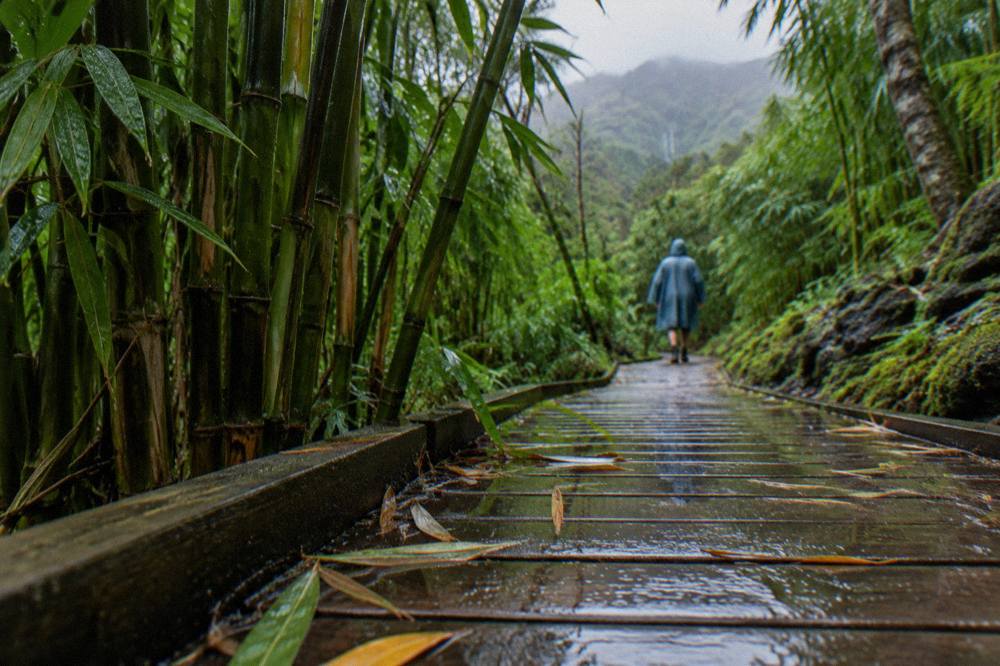
The costliest cut is Kipahulu. The district sits 12 miles past Hana town at Mile Marker 42, and its Pipiwai Trail, 4 miles round trip with 800 ft of gain through bamboo to the Waimoku Falls viewing area, is for many travelers the single best hike on Maui. Any plan that turns around before it, including the halfway combo and most self-drive double-headers, replaces that with the highway's roadside stops. Those stops are genuinely good. They are not a 400-foot waterfall at the end of a bamboo forest. If Pipiwai is your priority, the honest answer is that Road to Hana deserves its own full day, and our Pipiwai Trail and Kipahulu guide plans that day properly.
The sunrise cut is softer than it sounds. Summit sunrise is the postcard moment, but summit sunset plus stars covers much of the same emotional ground at a fraction of the logistical cost, and a guest review on one sunset dinner tour puts it bluntly: "Sunset is 1000xs better than sunrise, too!" That is one opinion, not a fact about light, but it reflects a real pattern in guest reviews: sunset goers report a relaxed day; sunrise goers report a memorable one built on a 3 a.m. wake-up. Which of those you want is a temperament question, and our sunrise versus sunset comparison works through it side by side.
The helicopter's cut is ground truth itself. You will not stand at a waterfall or feel the crater's silence; you will see the scale of the island and the crater's full rim in a way no road allows. Some travelers treat it as a complement rather than a substitute: fly one morning, drive one road another day, and cover more of Maui in two days than most visitors manage in four. On Haleakala National Park Tours we keep the whole roster side by side precisely because these overlaps exist, and the crater tours guide shows every way in.
Practical Rules If You Attempt It Yourself
Four rules keep a self-driven double-header from unraveling: start Hana before 7:30 a.m., turn around at a fixed time regardless of where you are, buy nothing on the summit road you did not bring, and target sunset, not sunrise, on the volcano. Break any one of them and the day stops being fun.
The fixed turnaround time is the rule people break. Decide it in advance, in Hana-town or Kipahulu terms, and honor it even if the last three stops looked tempting. The math is unforgiving: from Hana town back to the summit entrance is three-plus hours of driving with a 30-minute climb still to come, so a 2 p.m. departure from Hana gets you to the summit around 5:30 p.m., tight for a 6 p.m. sunset. Every 15 minutes you linger past the turnaround comes directly out of your summit margin.
Provision for both environments. The Hana Highway half wants water, sunscreen and cash-adjacent patience for fruit stands; the summit half wants serious layers, because the park's own guidance puts the summit about 30 F cooler than the coast, with wind chill and damp making it feel colder still, and there is no food, no gas and no cell service in the crater. The entrance fee is $30 per private vehicle, valid 3 days and covering both districts, which at least means you pay once for Kipahulu and the summit; the park's fees page prints every pass option, including the $55 annual pass that already pays for itself on a second visit.
Check conditions the night before, both of them. The Kipahulu page and the park's conditions page are the two to load, because rain on the east side and cloud on the summit are independent events, and a combined day needs both halves to cooperate. Weather decides visibility everywhere on this island; no plan, guided or solo, can promise a clear crater or an open waterfall view.
Which Plan Fits Which Traveler
Choose the small-group combo if you want both landscapes in one guided day at a mid price, the private jeep if the day must follow your own script, the helicopter if driving is the chore, and the sunset swap if you want to drive yourself and keep the flexibility. Families with kids and anyone who cannot face a 3 a.m. wake-up should skip sunrise entirely.
The combo suits first-time visitors on a short Maui stay, and the coach format absorbs the logistics that ruin self-driven attempts: pickup from Central, South and West Side hotels, park admission handled, and a driver who knows which stops are worth the stop. The jeep suits a celebration trip or a family that wants the itinerary bent around a photographer's pace. The helicopter suits anyone with limited mobility on the ground, tight schedules, or a second day already committed elsewhere. The sunset swap suits confident drivers who like owning the clock and accept that they will see maybe 60 percent of each thing.
One group deserves a direct warning: travelers with young children. Both full drives in one day with kids in the back is the version of this plan that ends in tears, usually around Hour Nine. A guest review of one sunrise coach tour shows the other direction a family can take: "We went with our 2 kids aged 11 and 8. They loved it too! We were picked up at our resort. Everyone slept most of the way up there until we got close." One guided half, done properly, beats two halves done angrily, and the fuller set of options is laid out in our things to do at Haleakala guide.
Common Questions About Road To Hana And Haleakala
Can I Do Road To Hana And Haleakala In One Day?
Yes, but only in one of a few forms: a guided combo tour that covers the halfway stretch of the Hana Highway plus about two hours in the park, a private jeep version, a helicopter flyover, or a self-driven Hana-then-sunset plan. Attempting both full drives plus summit sunrise alone in one day is not realistic.
How far is Haleakala from Road to Hana?
From Hana town to the Summit District entrance is roughly three hours of driving, and the gate-to-summit climb adds about 30 minutes more. Kahului, the natural pivot point between the two, sits 45 minutes to 1 hour from the summit and 2.5 to 3 hours from Kipahulu at the far end of the Hana Highway.
Do I need a sunrise reservation if a tour takes me up?
The reservation applies to non-commercial vehicles entering the Summit District between 3:00 a.m. and 7:00 a.m. Tours run by NPS-authorized commercial operators operate under their own park authorization. A traveler who drives themselves in that window needs the $1.00 per-vehicle reservation from recreation.gov.
Is sunset at Haleakala easier than sunrise?
Logistically, much easier. Sunset viewing needs no reservation, just the standard entrance fee, and the drive up happens in daylight. Temperatures still run about 30 F cooler than the coast, and it is often below freezing before dawn and after dusk, so layers matter as much at sunset as at sunrise.
Can you do the Pipiwai Trail and Haleakala in one day?
Not comfortably. Pipiwai is 4 miles round trip with 800 ft of gain and sits at Mile Marker 42 past Hana town, and the drive from there to the summit district is around three and a half hours. If Pipiwai matters to you, give Road to Hana its own day and visit Haleakala separately.